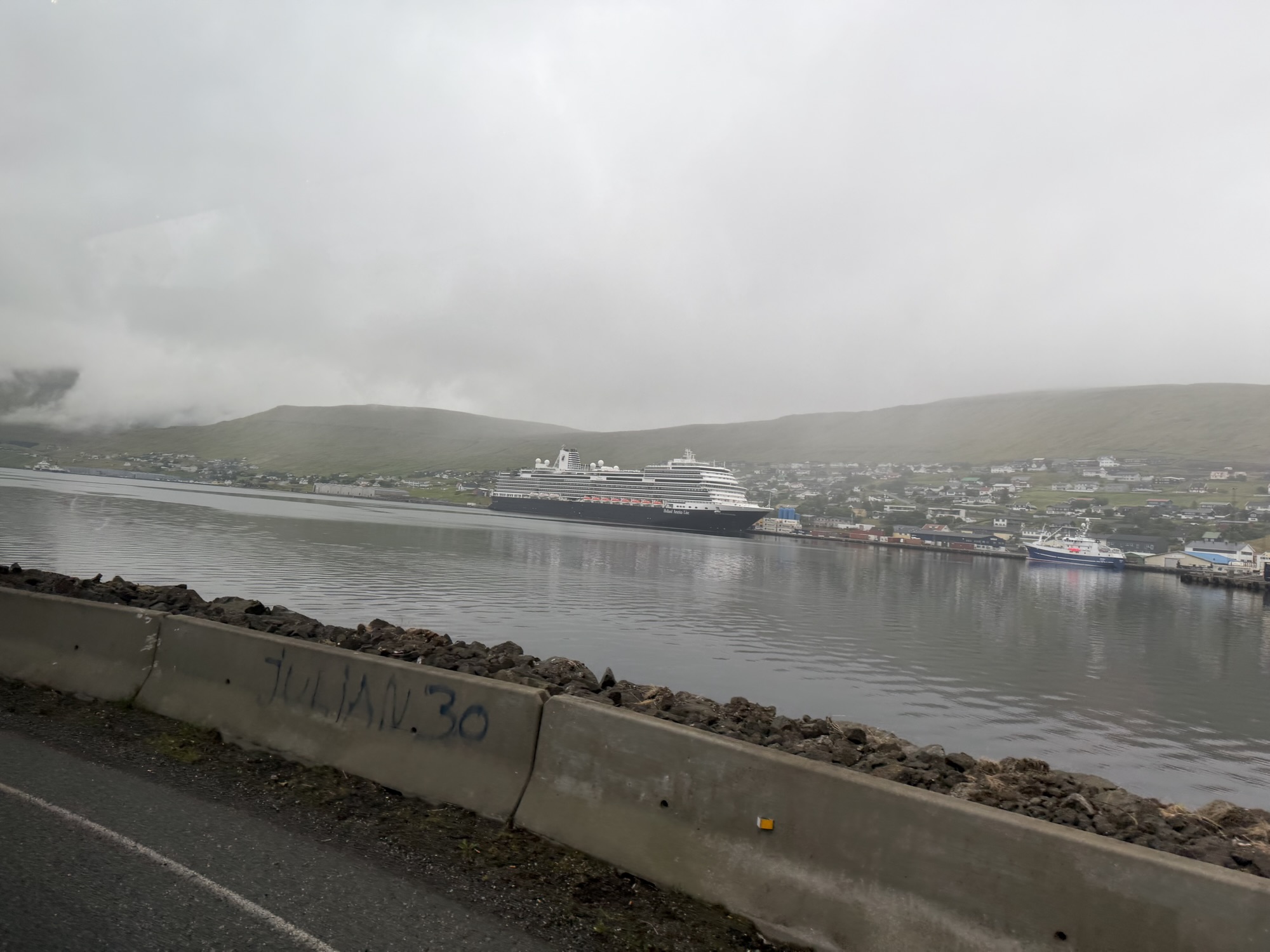
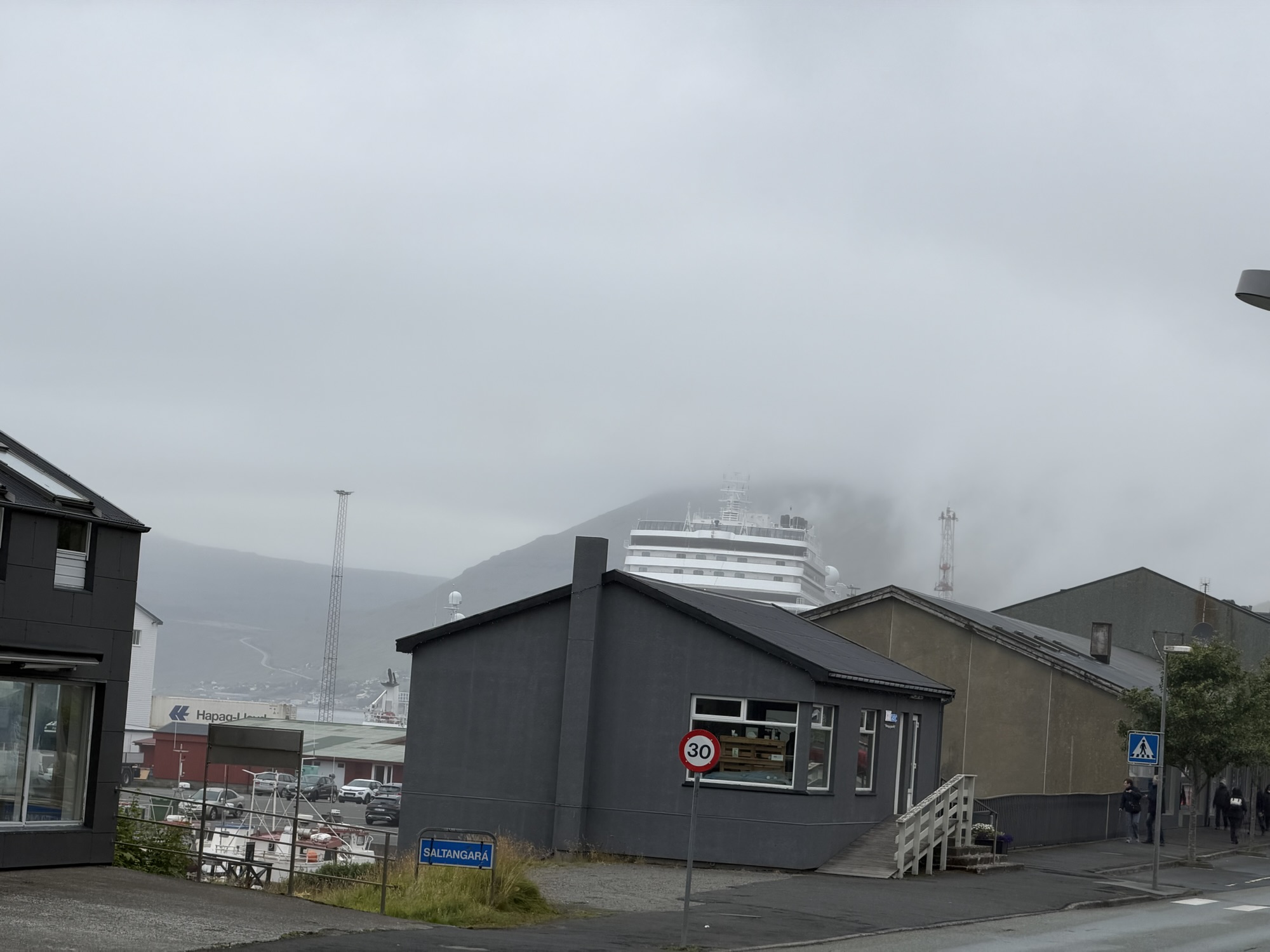
Sunday, August 16, 2026 found us at anchor off Runavík, on the Faroese island of Eysturoy — a green, fog-wrapped speck of a nation halfway between Norway and Iceland, exactly where the Vikings would have expected to find it on their way west. It was a foggy, misty day but exactly the kind of day Nana likes.
A Change of Plans
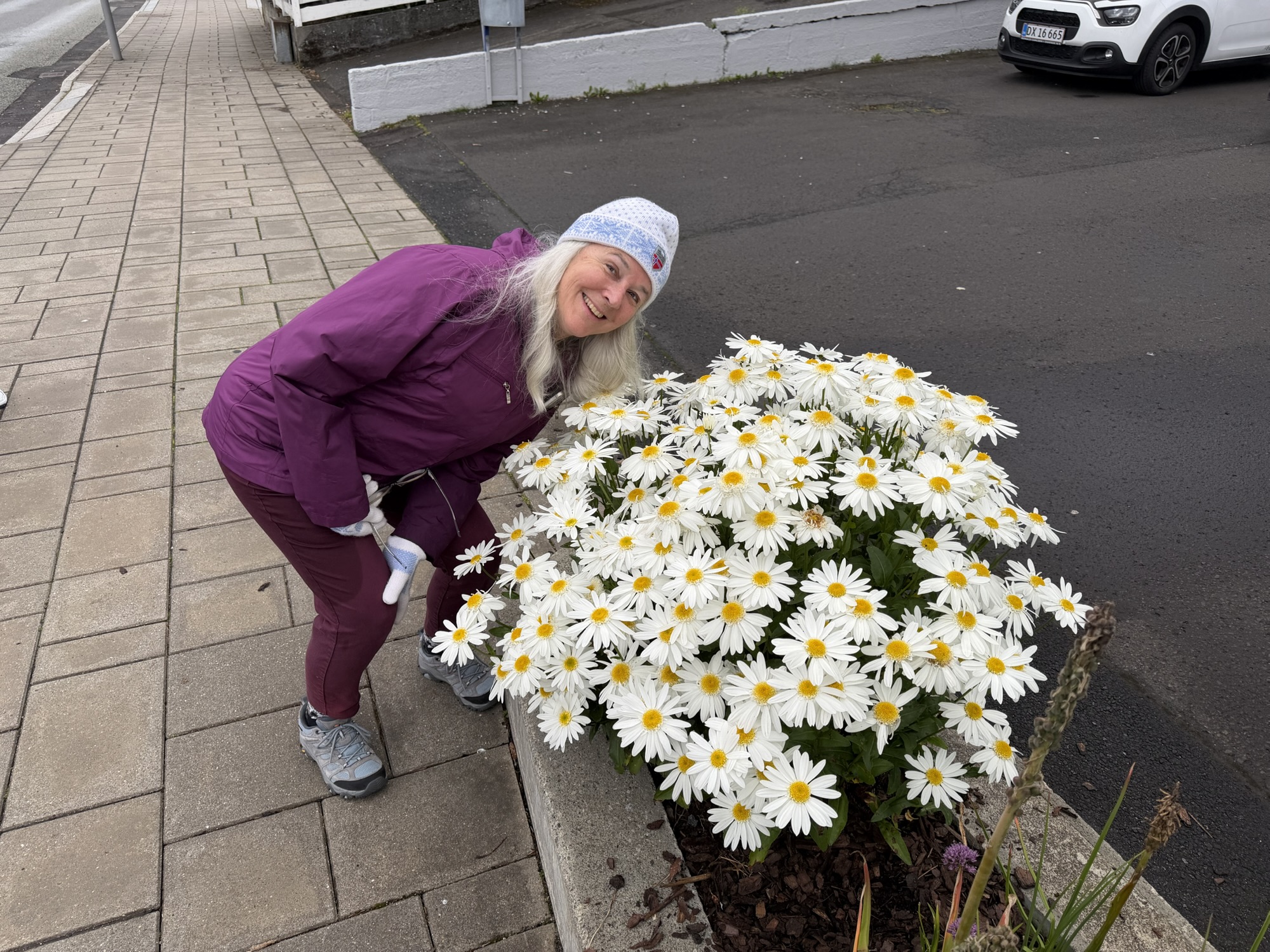
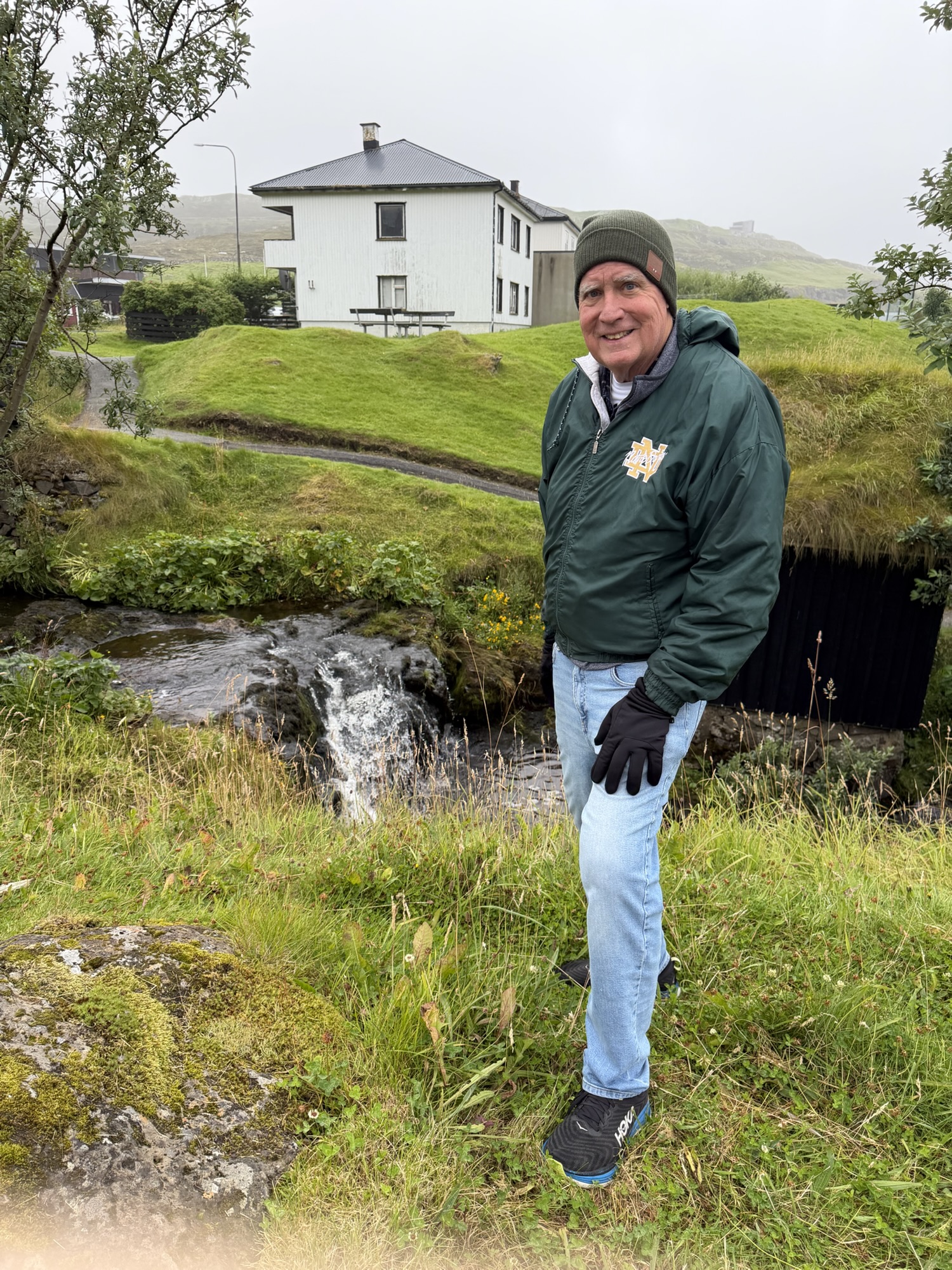
We’d hoped to be on the waitlisted excursion, the Gjógv & Northern Eysturoy excursion, but the list didn’t move, so Nana and Papa did what seasoned cruisers do: we improvised. A short walk from the tender dock brought us to Visit Runavík, the local tourist office, where a “Think Local First” bus tour was boarding — DKK 400 (about $54) for an hour and fifteen minutes with a local guide, no big-ship packaging required. It turned out to be one of those happy accidents that makes for the better story anyway. We had a little wait for our bus, so we walked the sleepy town and kept running into locals stationed around Runavík just to help tourists — “Ask Me” volunteers, friendly and eager to point us in the right direction, a first for us on this trip. Along the way Nana found her summer flowers, and Papa found a small waterfall.

Sheep Islands
Before we even boarded, our guide explained where “Faroe” comes from. Most scholars trace it to the Old Norse Færeyjar — “sheep islands.” Sheep were first brought here in the 9th century and have been woven into island life ever since; the animal even appears on the Faroese coat of arms. To this day the Faroese sheep tend to have very little flocking instinct, having no natural predators, and simply range freely in small groups across the hillsides — which explains the little woolly clusters we saw grazing sideways on slopes that looked nearly vertical from the water.
Through the Jellyfish
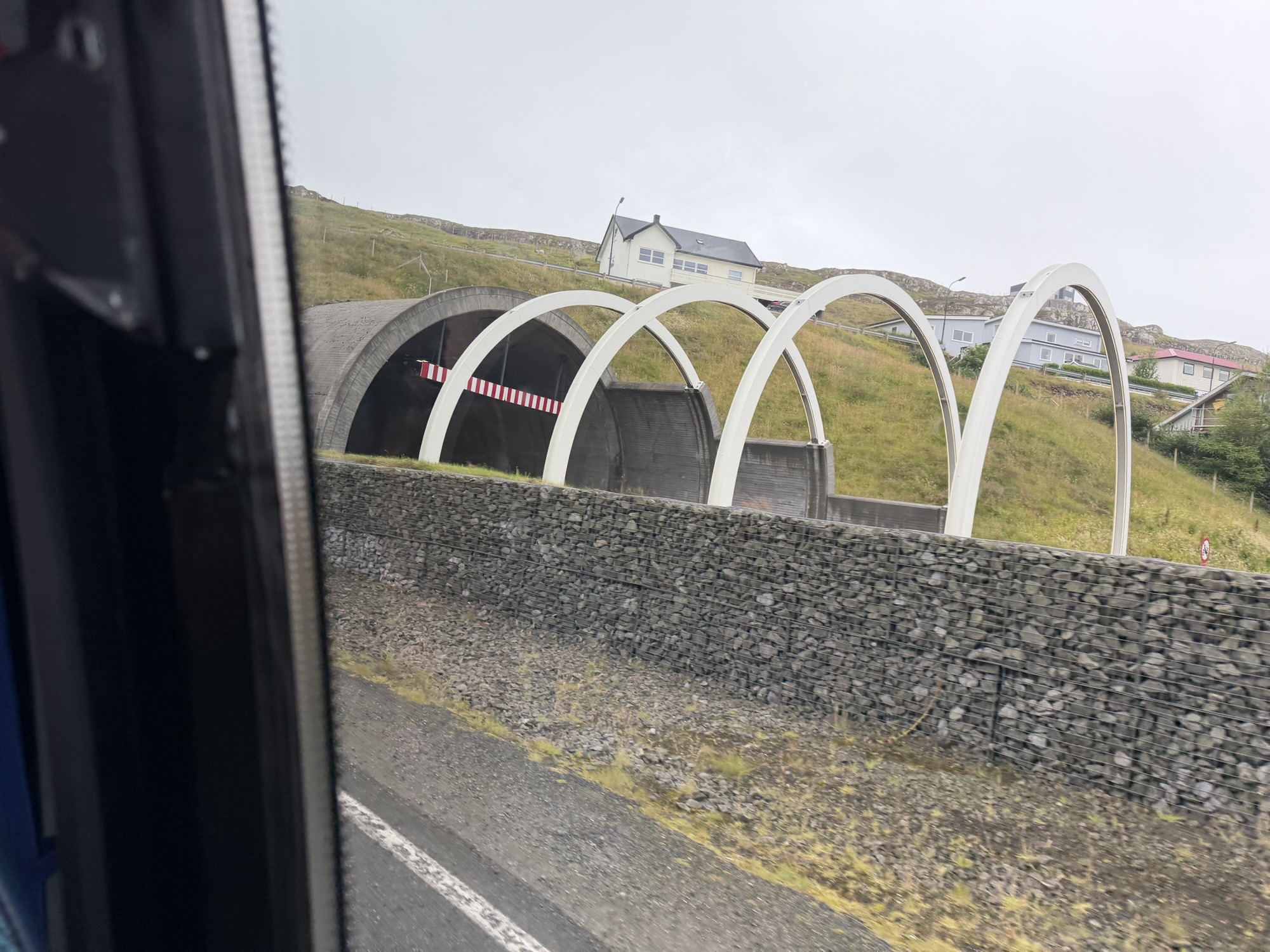
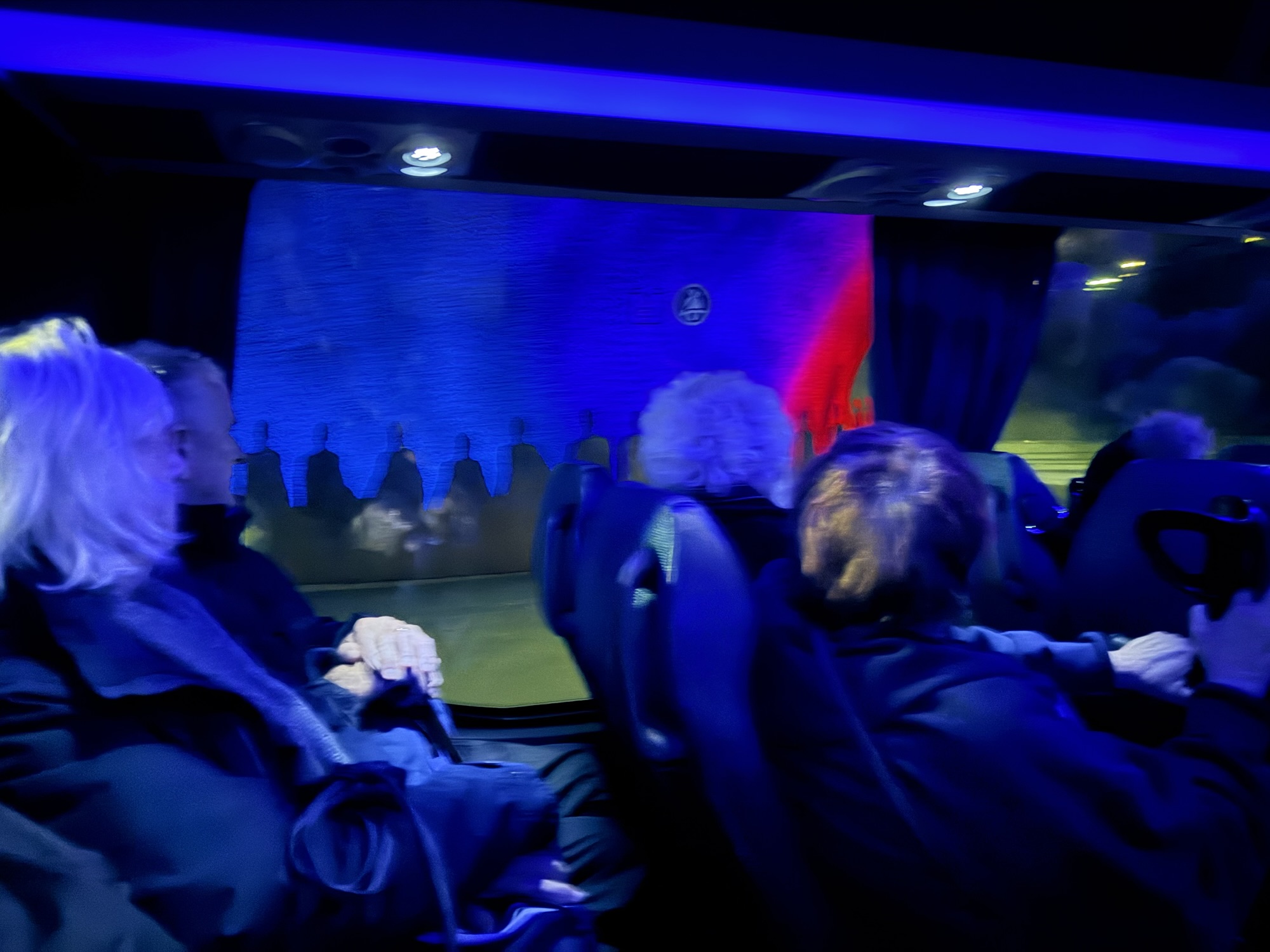
The tour’s centerpiece was a drive through the Eysturoyartunnilin — the Eysturoy Tunnel — and its famous “Jellyfish,” the world’s first undersea roundabout. The tunnel runs under the Tangafjørður sound, connecting Runavík on the eastern side of the fjord to Strendur on the western side, and plunges 189 meters beneath the seabed at its deepest point. Nana and I felt the road curve downward into darkness, and then, all at once, we were circling a chamber lit in shifting blues, pinks, and golds — an illuminated central pillar designed by Faroese artist Tróndur Patursson, looking for all the world like a UFO had landed under the North Atlantic. Our guide added a detail we loved: the idea for an undersea tunnel connecting the islands was first floated by a young student named Tóki Højgaard, from the small village of Rituvík, one of the little fjord-side hamlets we passed on the route. The tunnels have tolls but the time savings for people traveling is huge. The whole country has 53,000+ people so it is very very small.
Atlantic Sheepdogs at Work
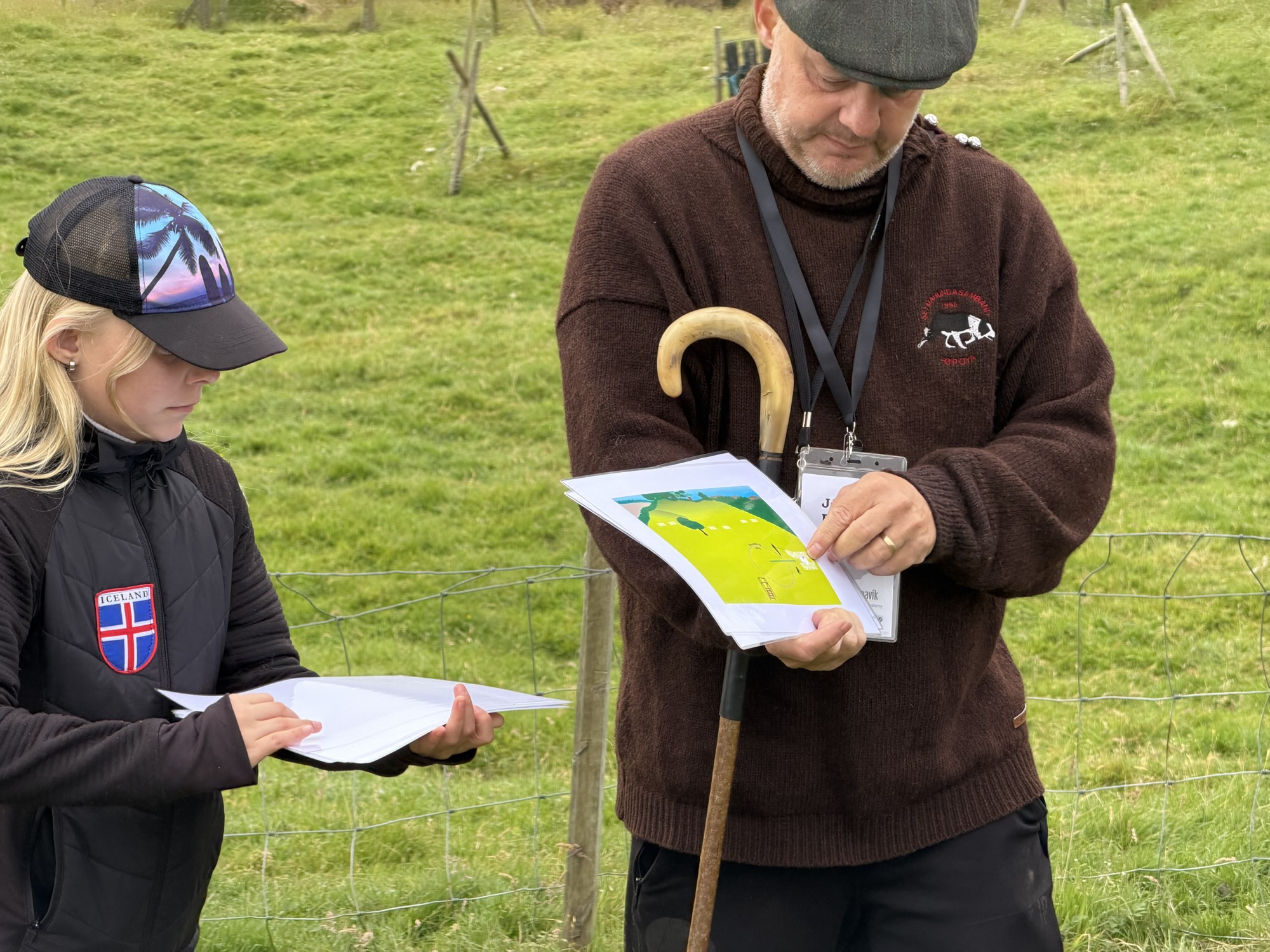
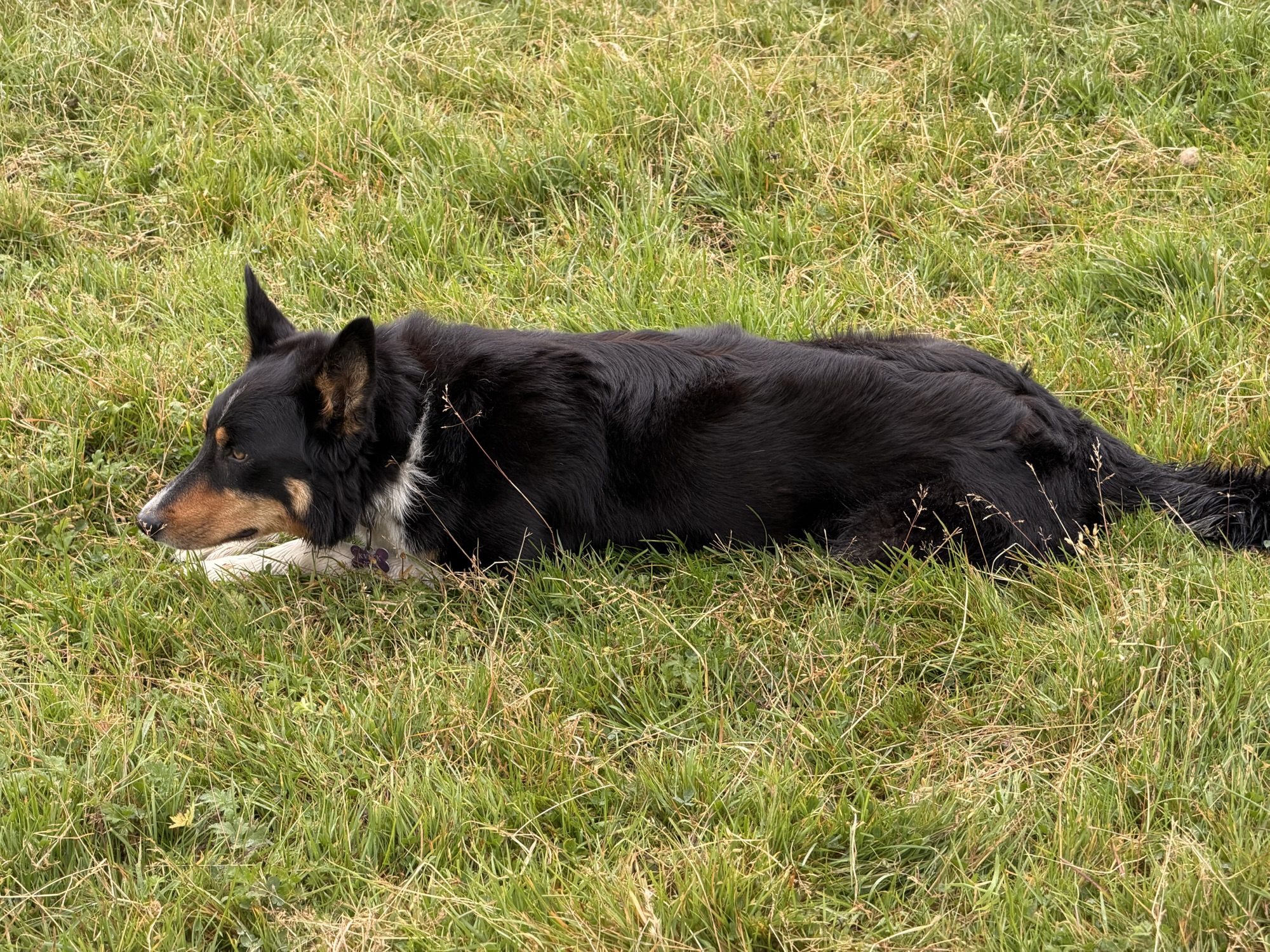
One of the stops on the route was a working sheep farm, where we watched a local farmer send his dogs out across the hillside to gather a scattered flock. It’s a skill passed down for generations here — herding sheep on terrain steep enough to make a mountain goat nervous, using nothing but whistles and a well-trained dog’s instinct. Nana had a lot of questions for the farmer — we raised sheep ourselves years ago back in Rockford, Illinois, and could have used a couple of those dogs on our own place.


Village Lamba, Lake Toftavatn, and a Memorial by the Water
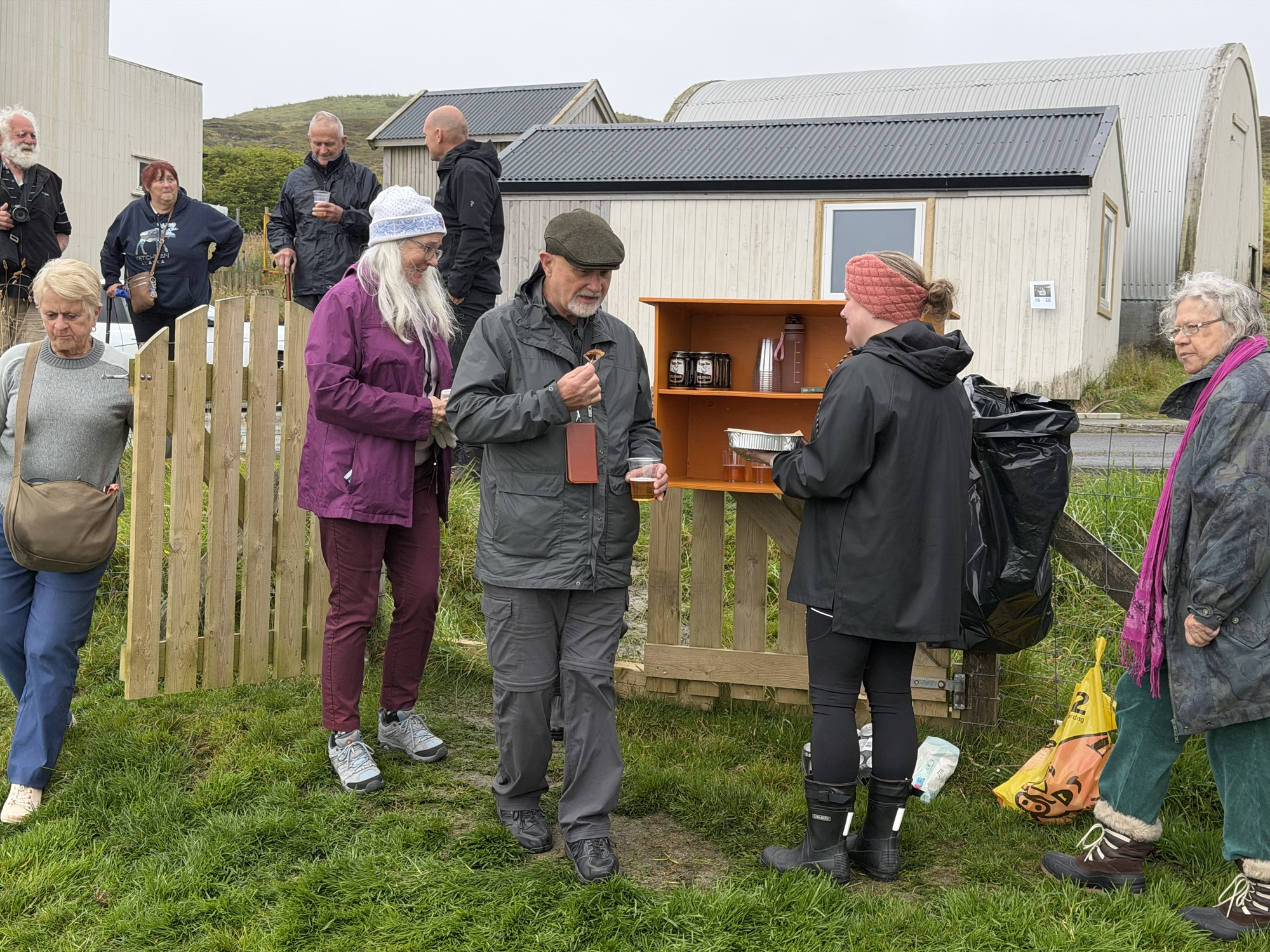
The bus wound on past the fishing village of Lamba, its boats pulled up on the shingle, and along the shore of Lake Toftavatn, where the hills seemed to fold straight down into the water. Near the end of the route stood a memorial monument — a quiet stop before we circled back to Visit Runavík.
Seventy-five minutes after we’d resigned ourselves to a waitlist, we stepped off the bus having seen more of Eysturoy — sheep, sagas, and an undersea jellyfish included — than the excursion we’d missed likely would have shown us.
Next stop: Stornoway, Isle of Lewis, Scotland.


[heart] Nunes, Renato reacted to your message: ________________________________