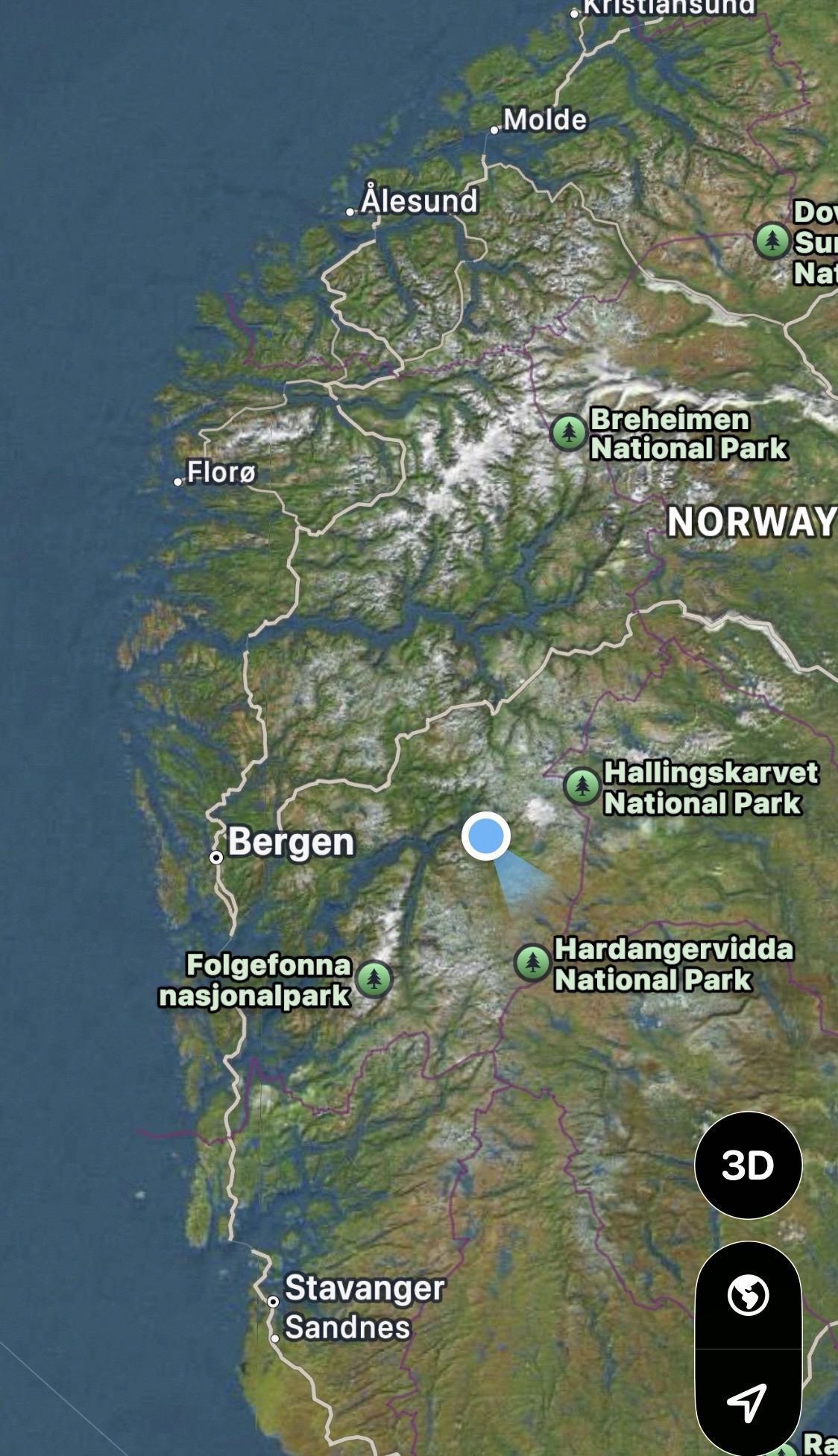
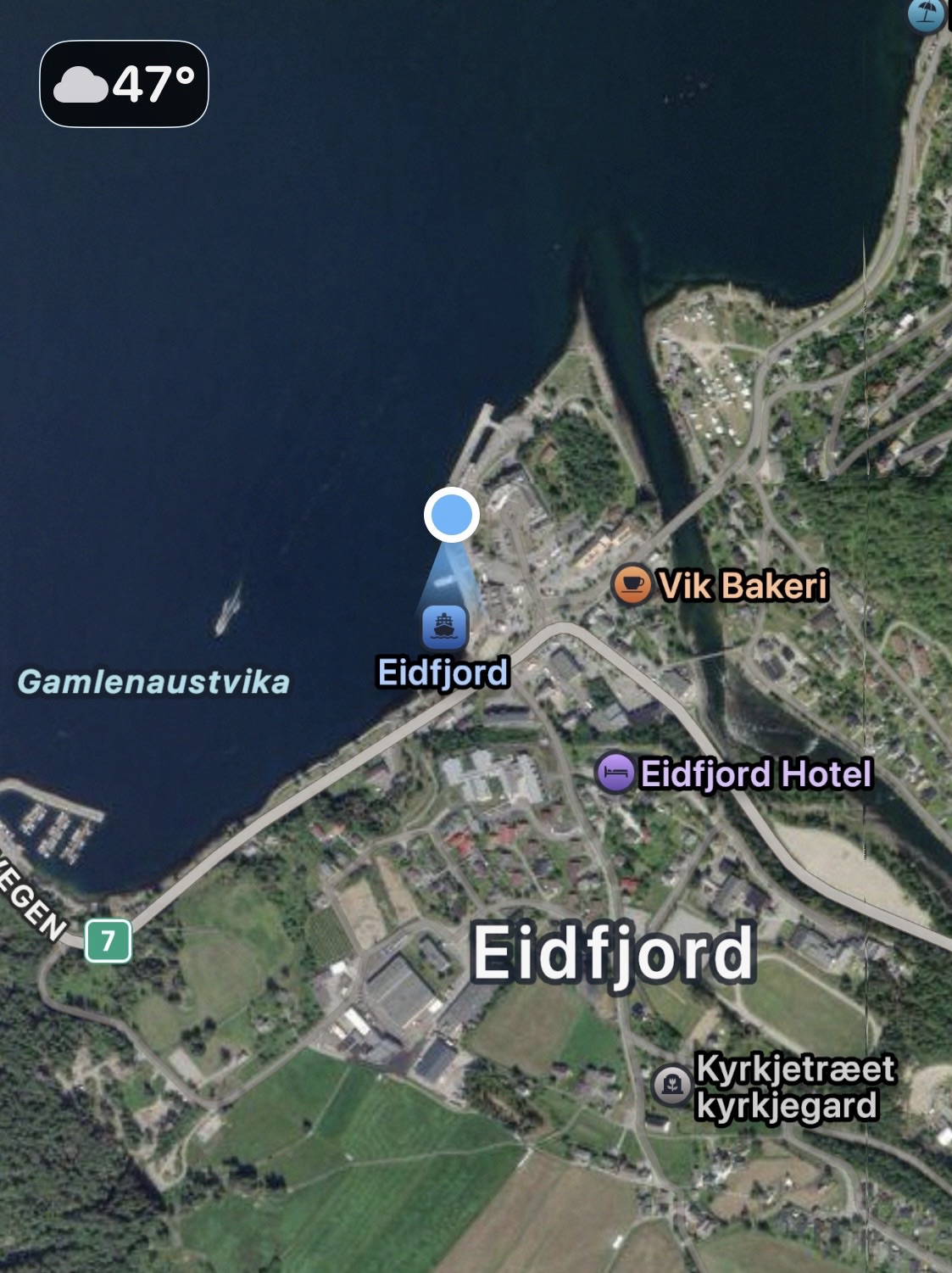
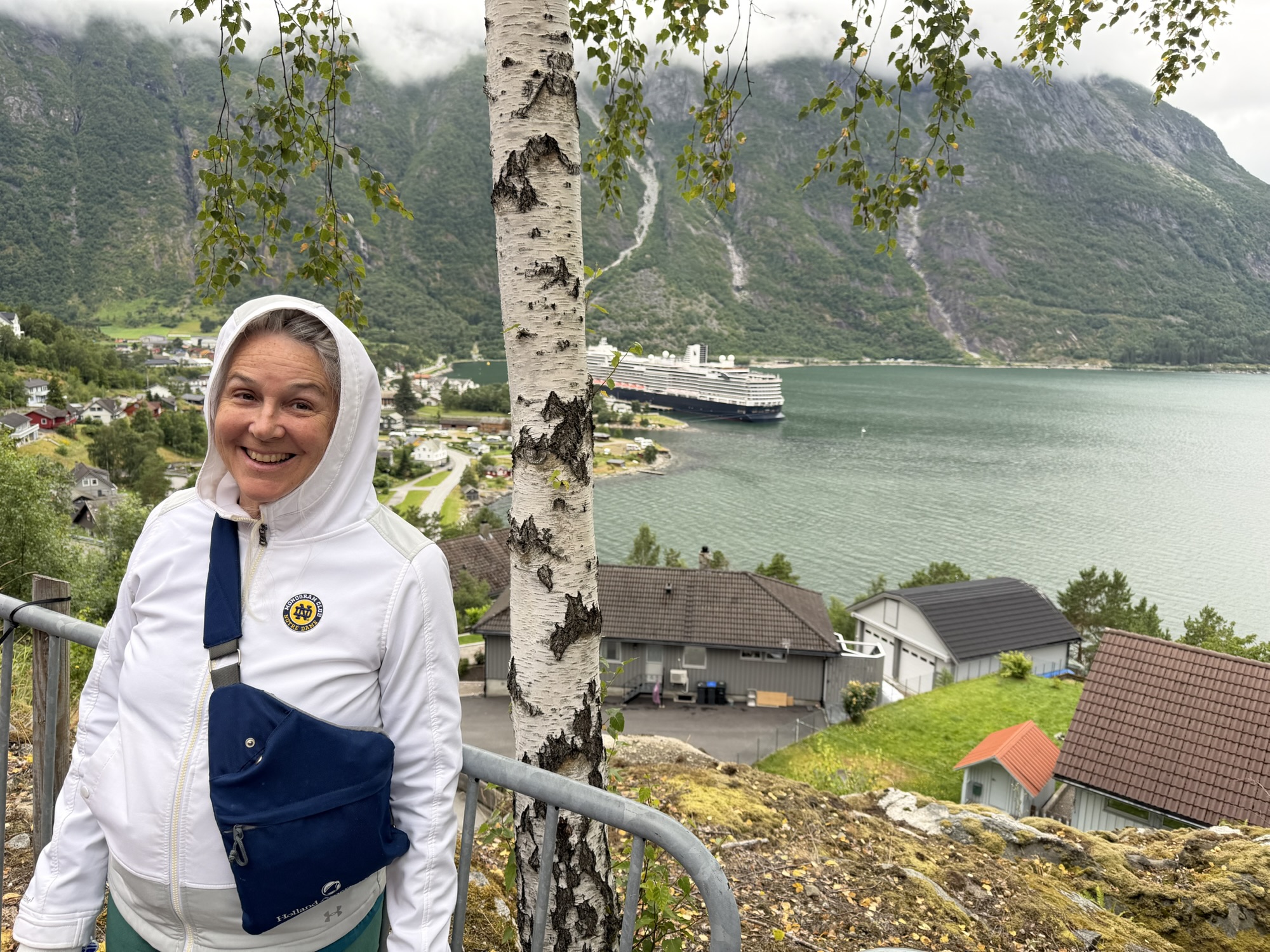
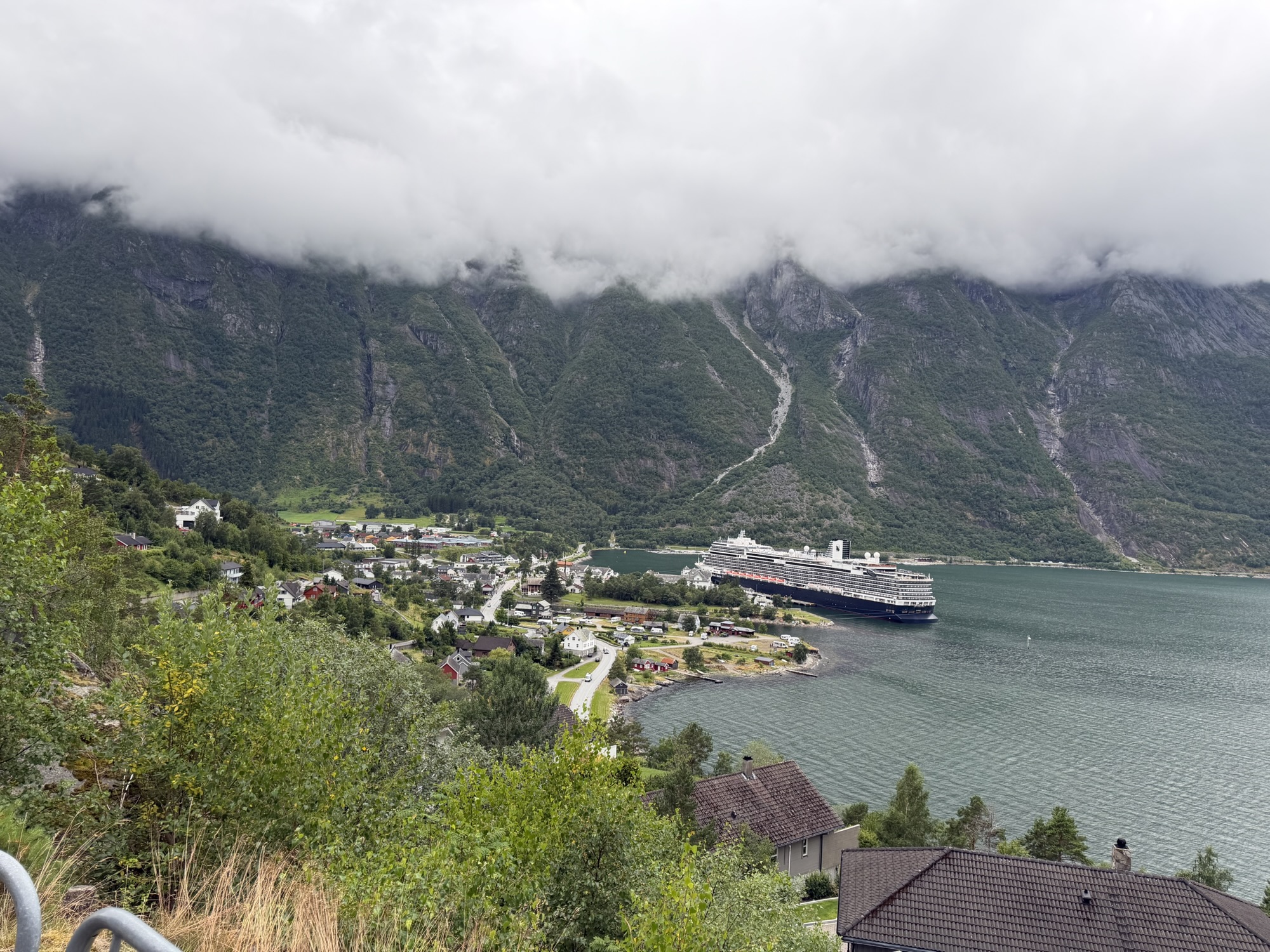
On July 28th we find our ship tucked deep inside the Hardangerfjord was one of those moments that makes cruising feel almost cinematic. Eidfjord is a tiny village at the head of the fjord, surrounded by sheer cliffs, waterfalls, and mountains that seem to rise straight out of the water — and getting there was an adventure in itself.
Threading the Needle
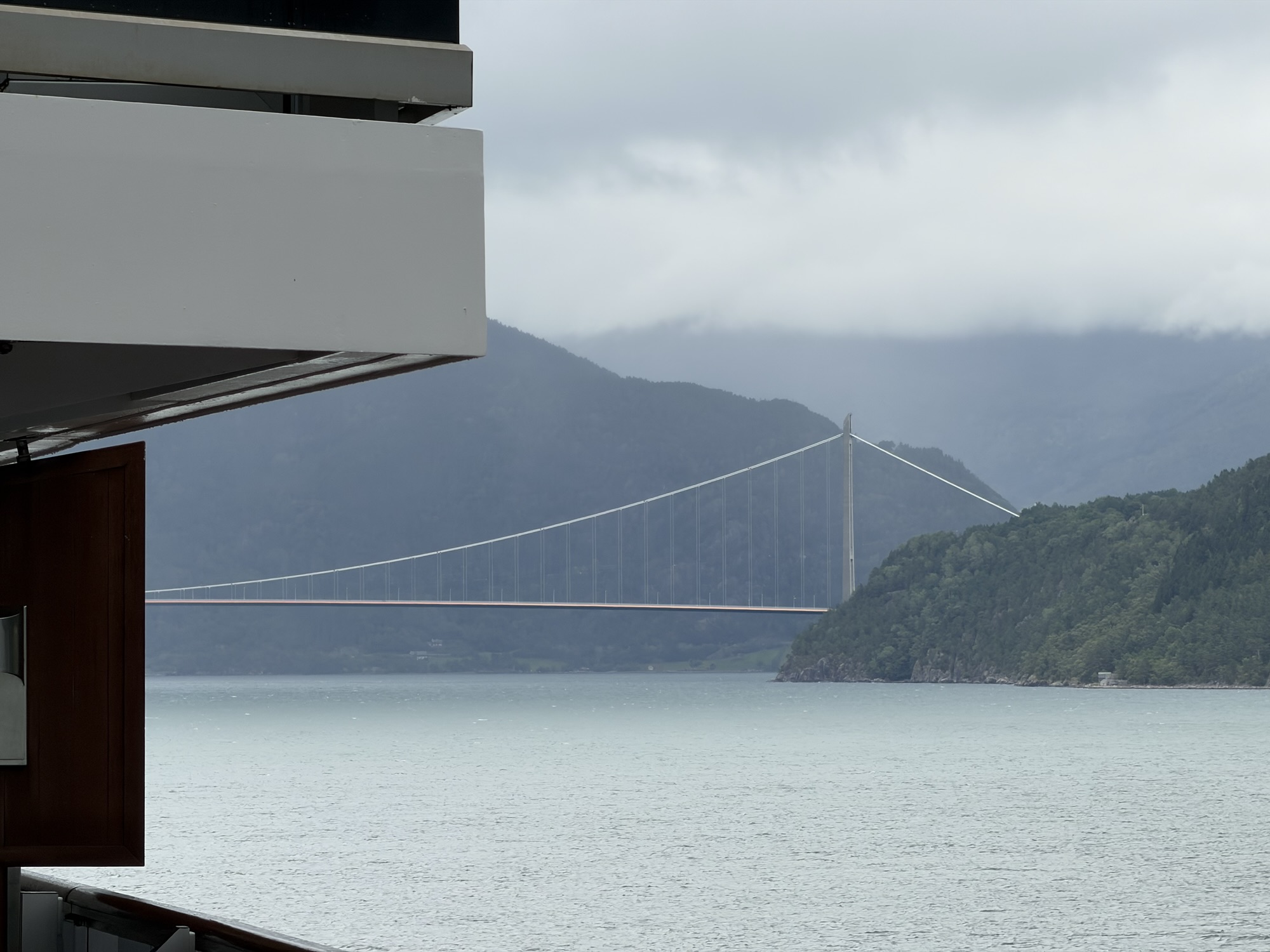
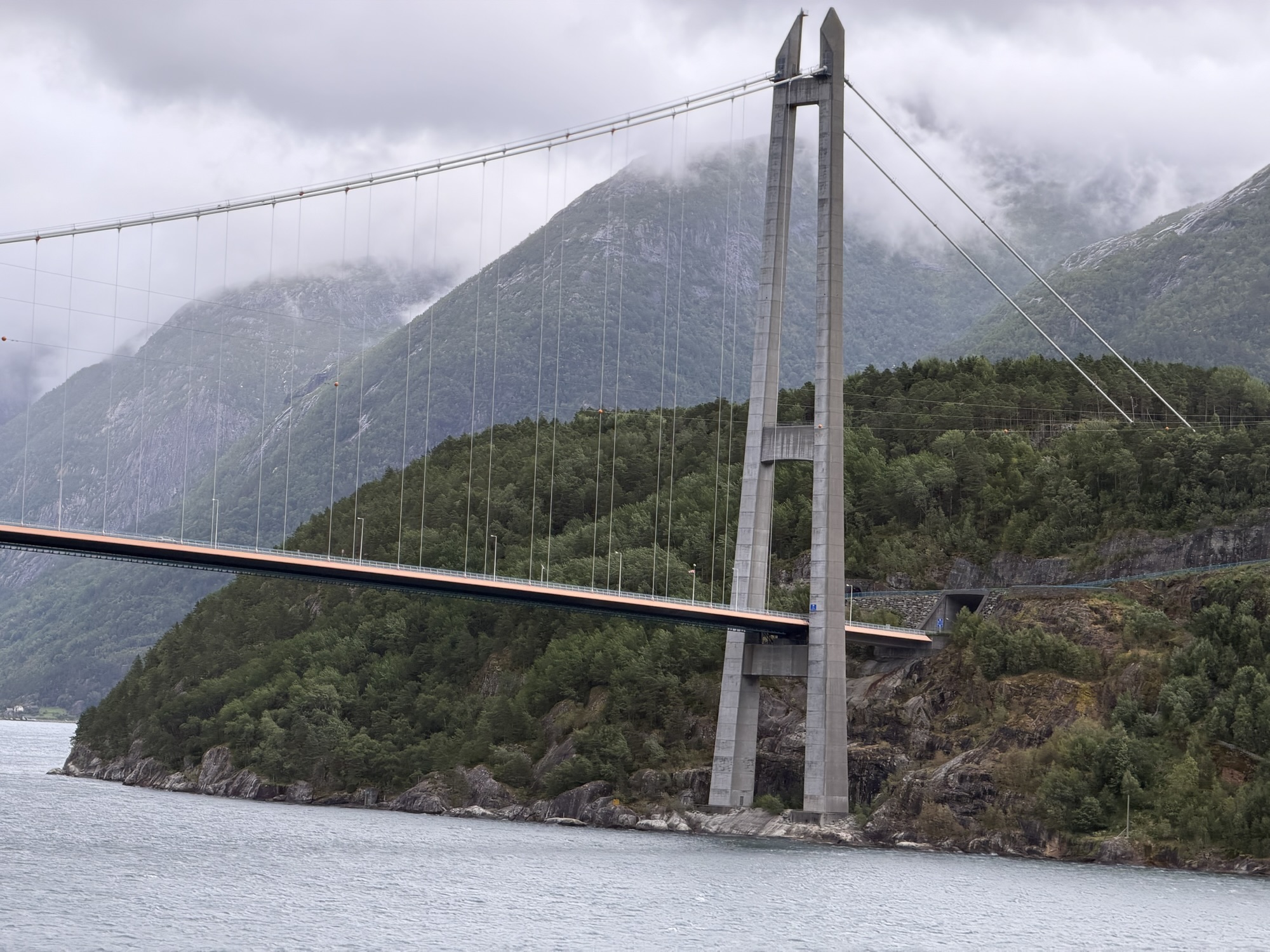
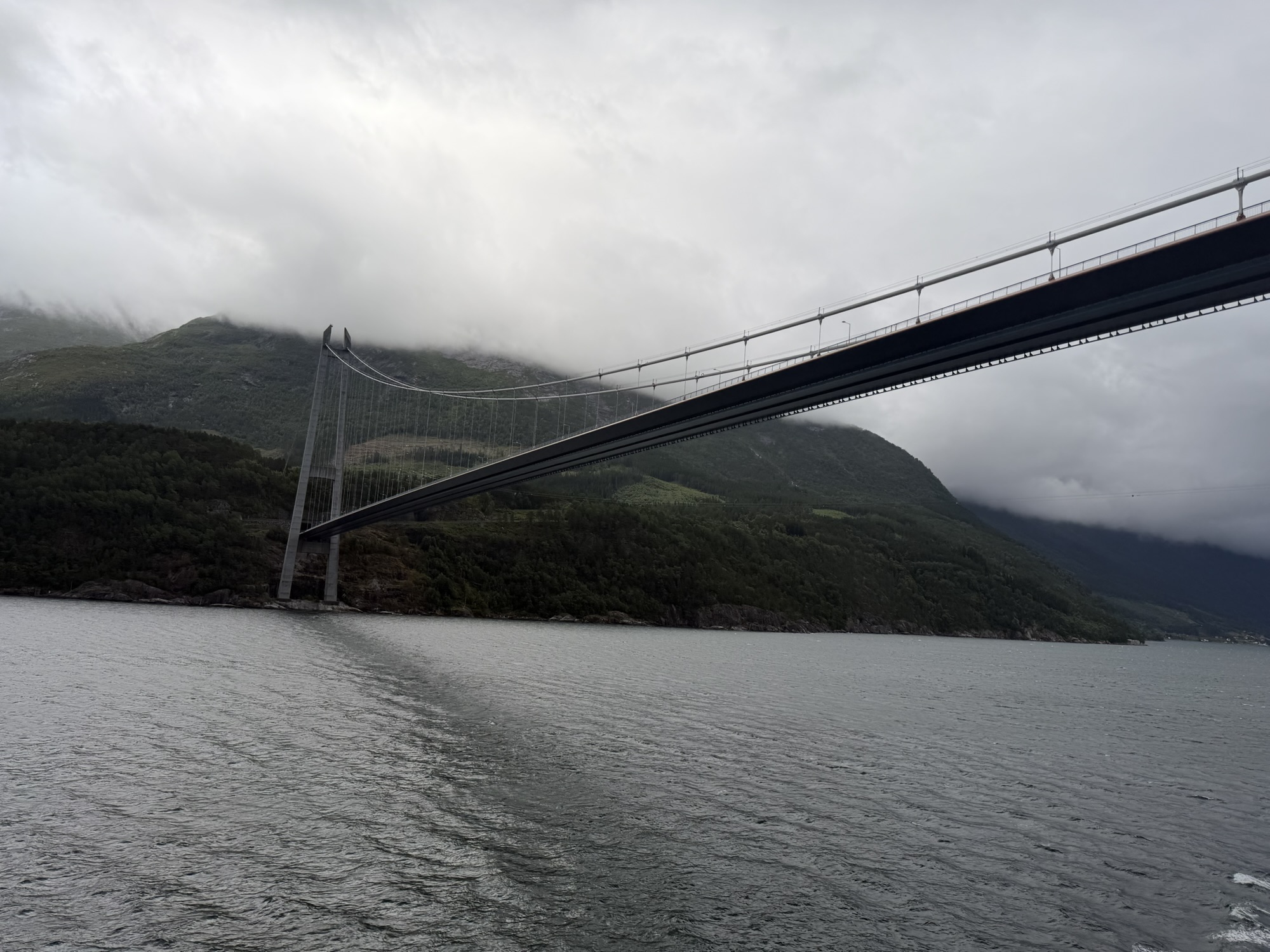
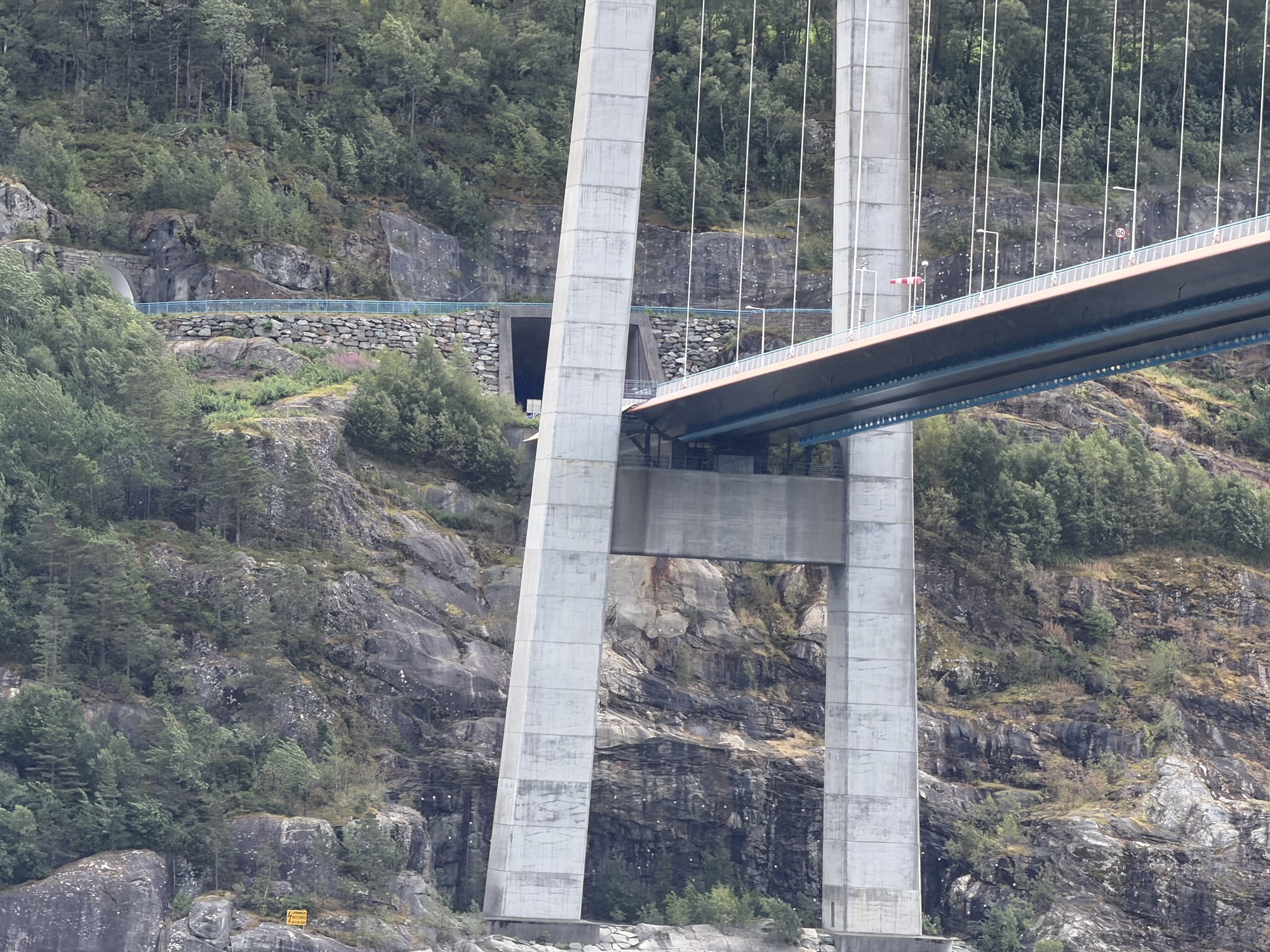
Our approach into port took us under the Hardangerbrua, Norway’s longest suspension bridge, with only about 18 inches to spare at the top of our ship. Watching the ship inch through that narrow gap, with barely any room between the mast and the bridge deck above, had everyone on deck holding their breath. Ships this size are only permitted through if they clear a strict height limit, so the passage is as much a feat of engineering coordination as it is a scenic moment — the kind of precision maneuvering you don’t fully appreciate until you’re standing right there watching it happen in real time.
The Troll Train
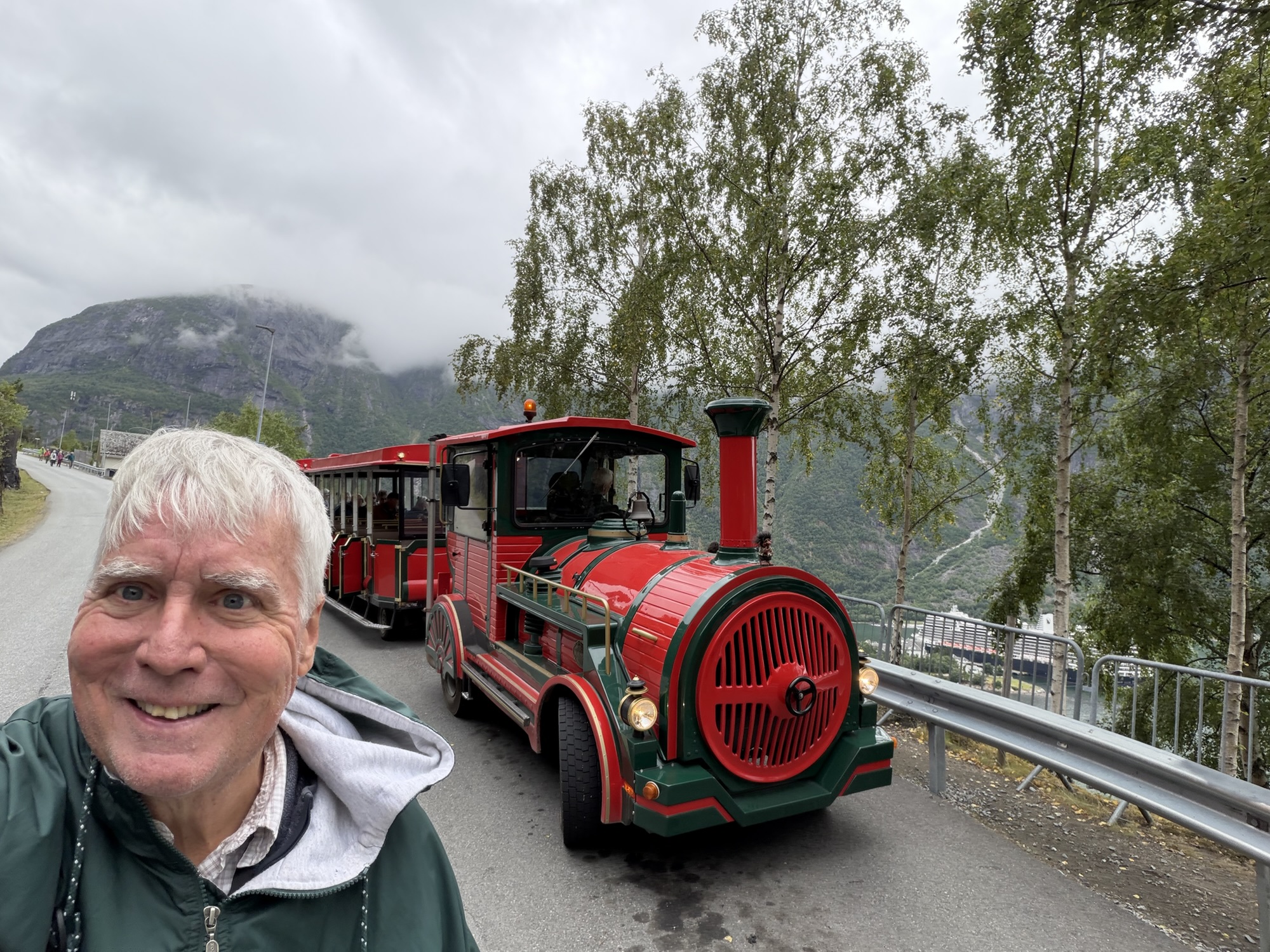
Once ashore, we hopped on the Troll Train for a tour around the village. It was a relaxed, scenic way to see Eidfjord without having to walk the hillier stretches, and the little train wound its way past some of the town’s most memorable sights, including:
• Viking graves scattered across the landscape, a quiet reminder of just how long people have called this fjord home
• The old church, steeped in local history and beautifully framed by the surrounding mountains
• Stories along the way about how Eidfjord grew from a small farming and fishing settlement into the village it is today
The guide’s history of the town gave real context to everything we were seeing — it’s one thing to admire the scenery, but knowing the stories behind it made the visit stick with us.
A Local Keepsake
No trip is complete without bringing home a little piece of the place, and Nana found the perfect souvenir: a handmade knit hat and gloves, made right there in Eidfjord. Knowing they were crafted locally makes them feel like a genuine memento of the trip rather than just another souvenir shop find.
On to Stavanger
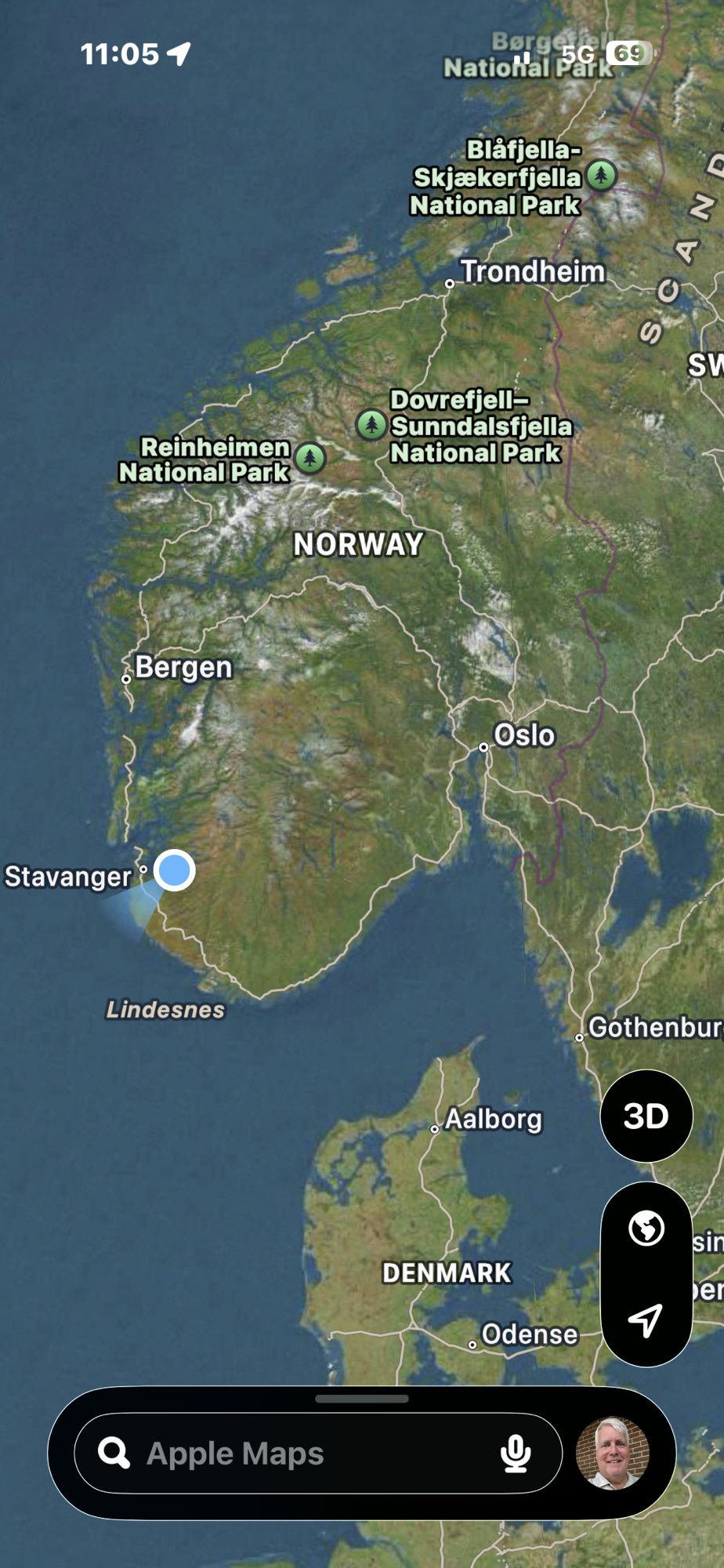
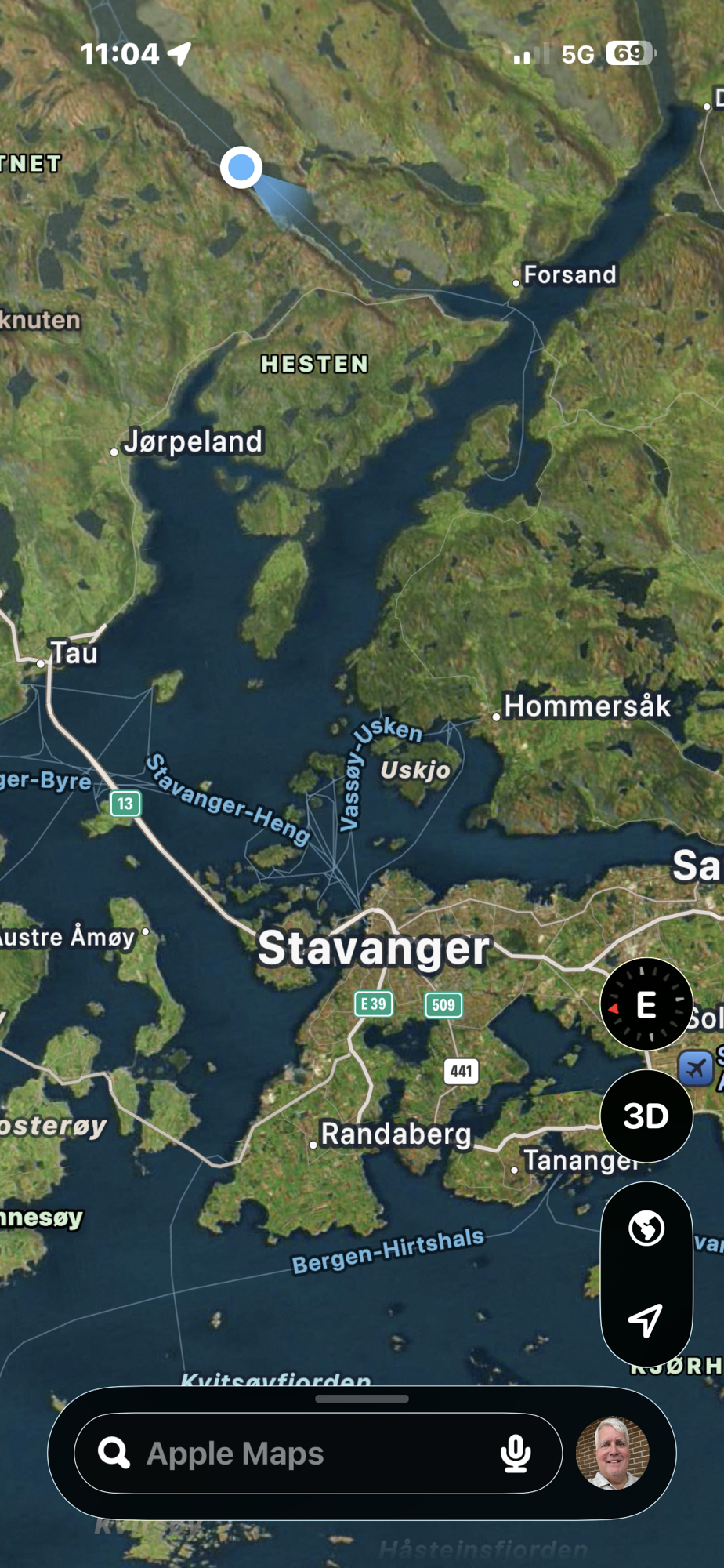
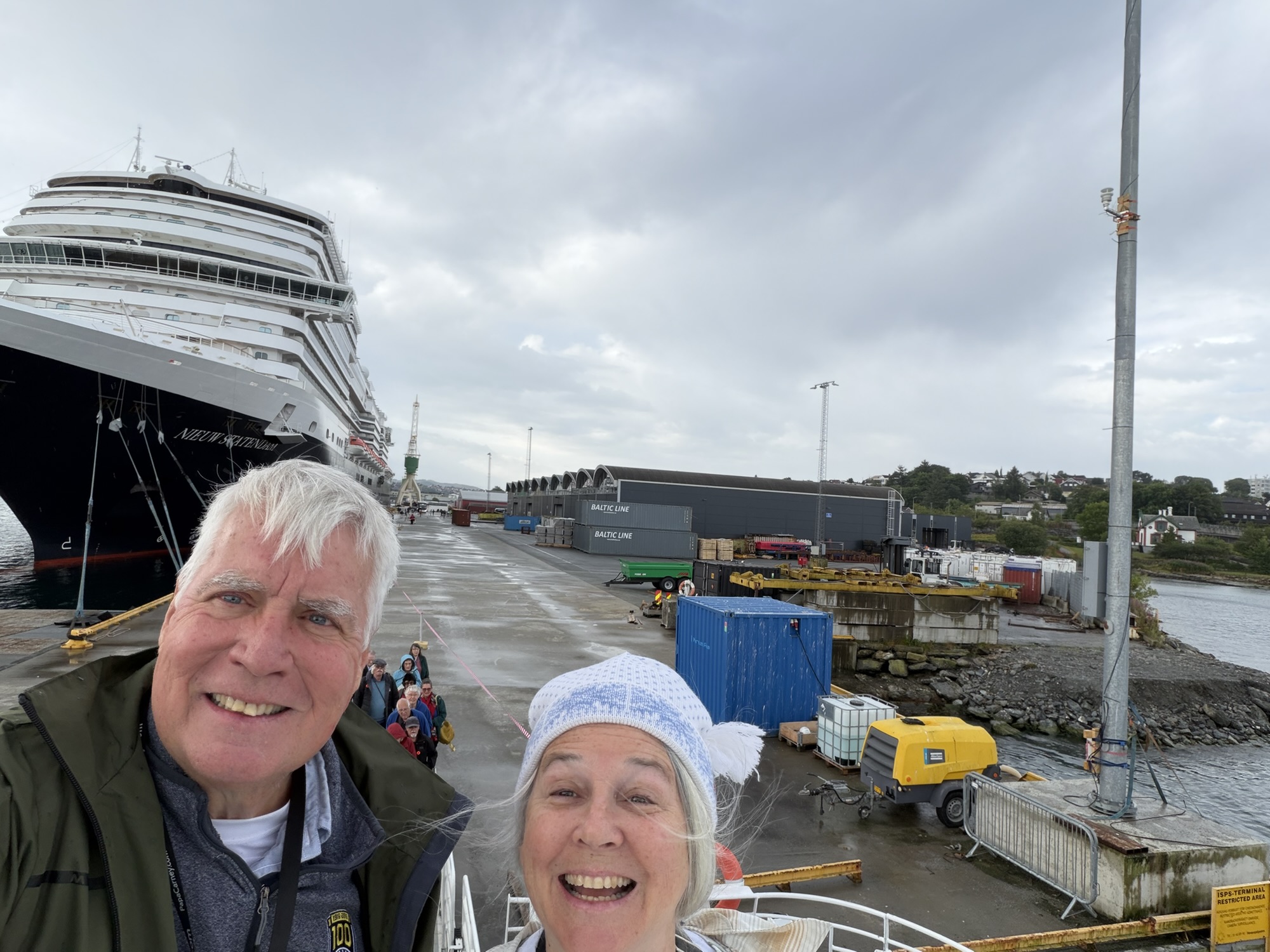
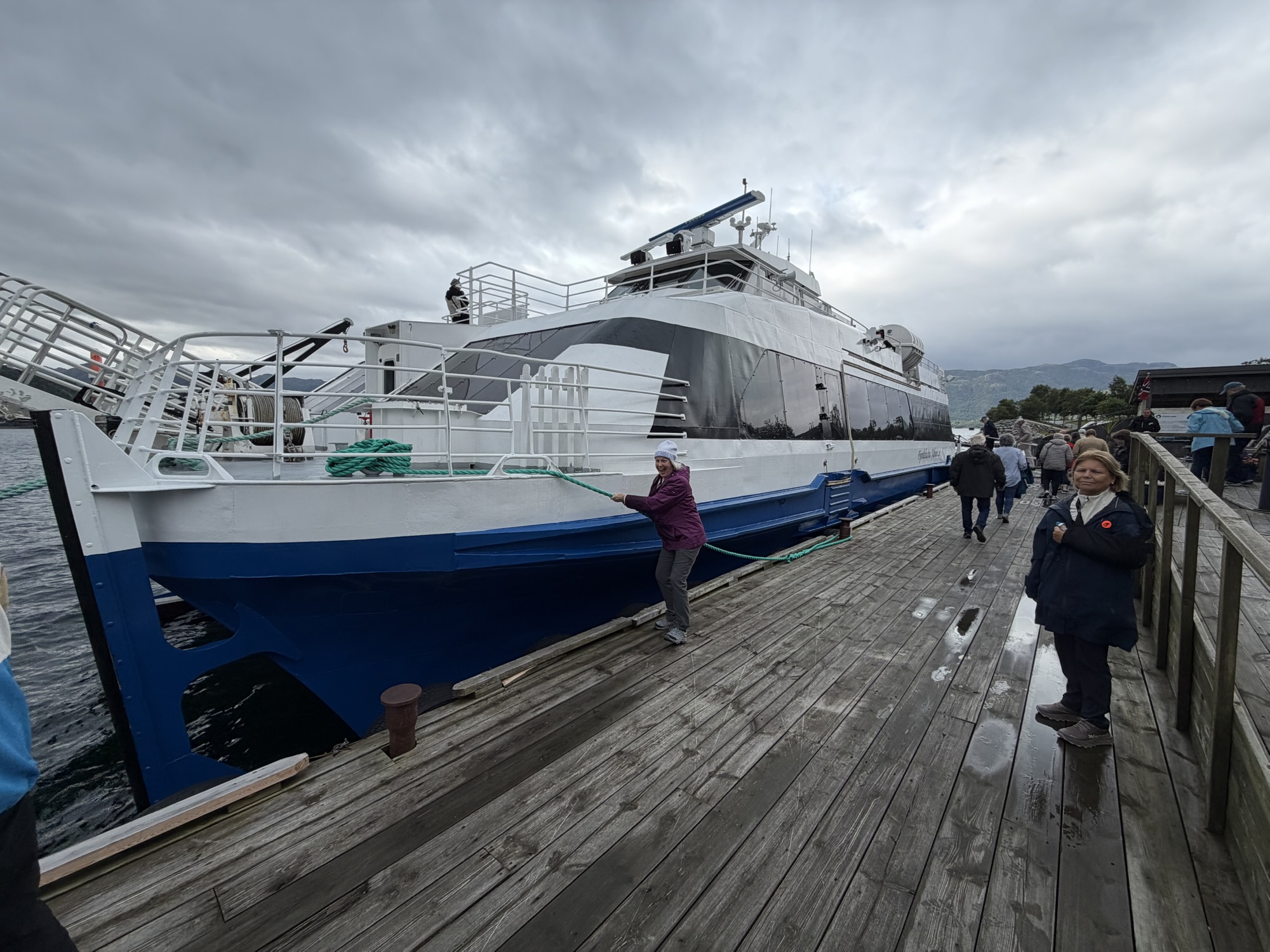
From Eidfjord, our path along the fjords led us south to Sandnest, where the 2nd day’s adventure swapped the Troll Train for something a little sleeker — a catamaran headed for one of Norway’s most iconic natural landmarks.
Through the Archipelago
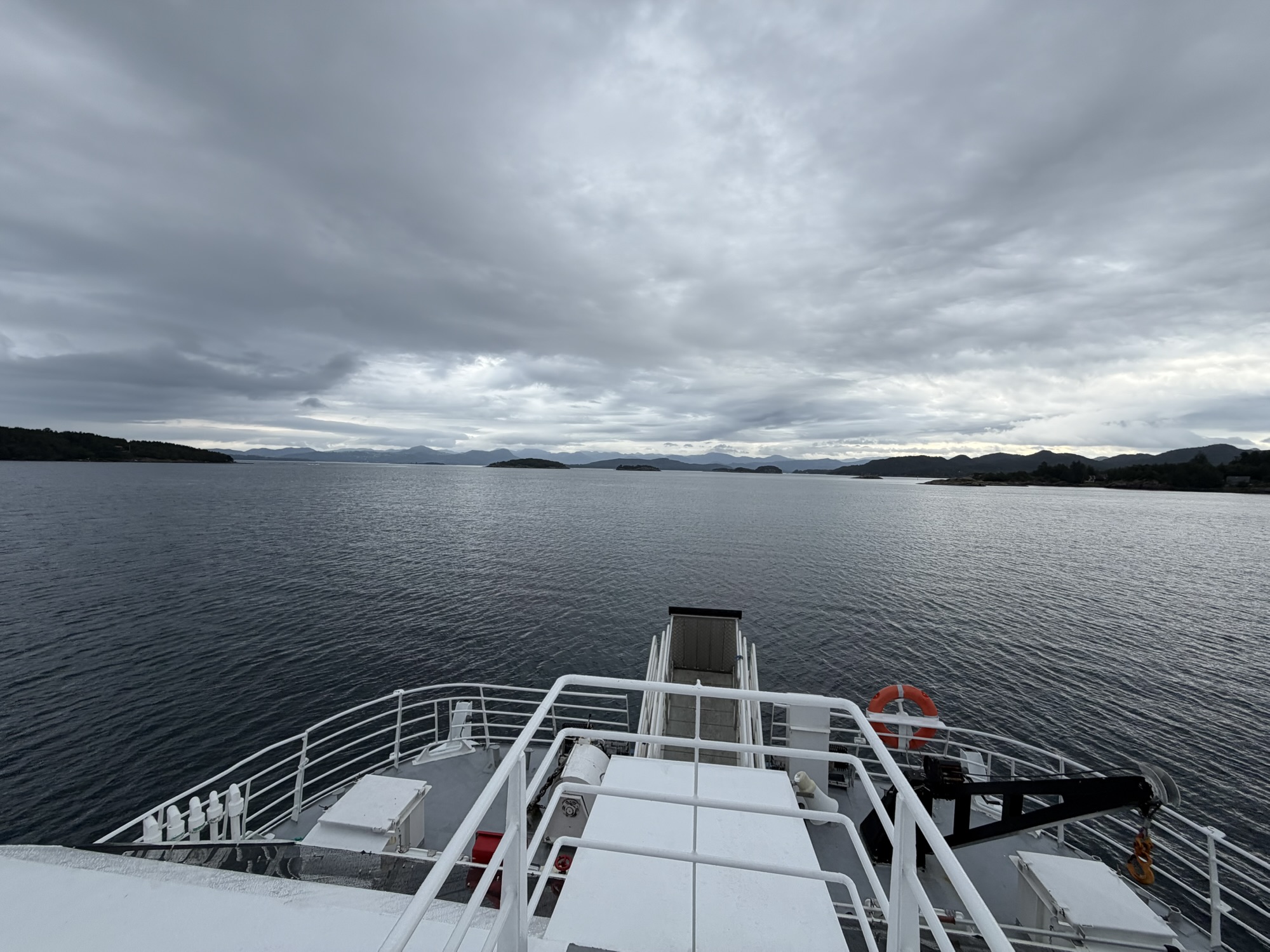
We slipped out past Sandnest’s harbor and into the archipelago, a scatter of small, green islands dotted with tidy little holiday homes. Our guide walked us through how Norwegians spend their summers out here — boats tied up at private docks, kids swimming off the rocks, the kind of unhurried island life that made us wish we’d packed for a longer stay. It was the perfect gentle overture before the fjord walls closed in around us.
The Island of Kings
Along the way, we passed Karmøy, an island guarding the narrow Karmsund Strait — a shipping lane so important to Viking-era trade and travel that it’s said to be where Norway got its name, from Norðvegr, “the way to the north.” At its village of Avaldsnes, kings and chieftains are believed to have gathered for thousands of years, from the Bronze Age through the Viking Age, using the strait’s strategic position to keep watch over passing ships and hold council over matters of trade, territory, and power. Harald Fairhair, the Viking who first united Norway under a single crown, is said to have kept his seat there. Sailing past it, it wasn’t hard to imagine longships gathered in that same strait, waiting on word from the chieftains ashore.
A Norwegian Coffee Break
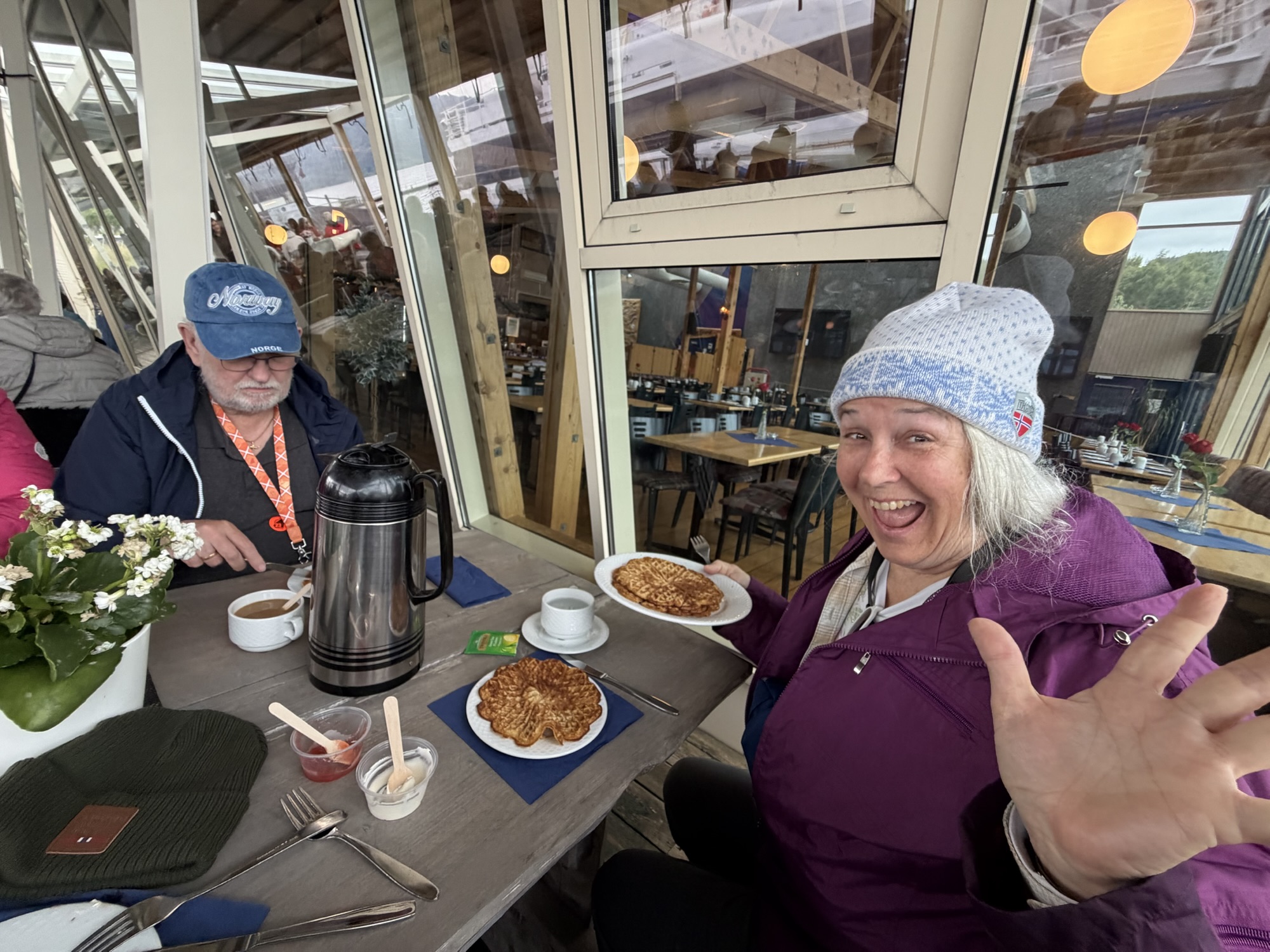
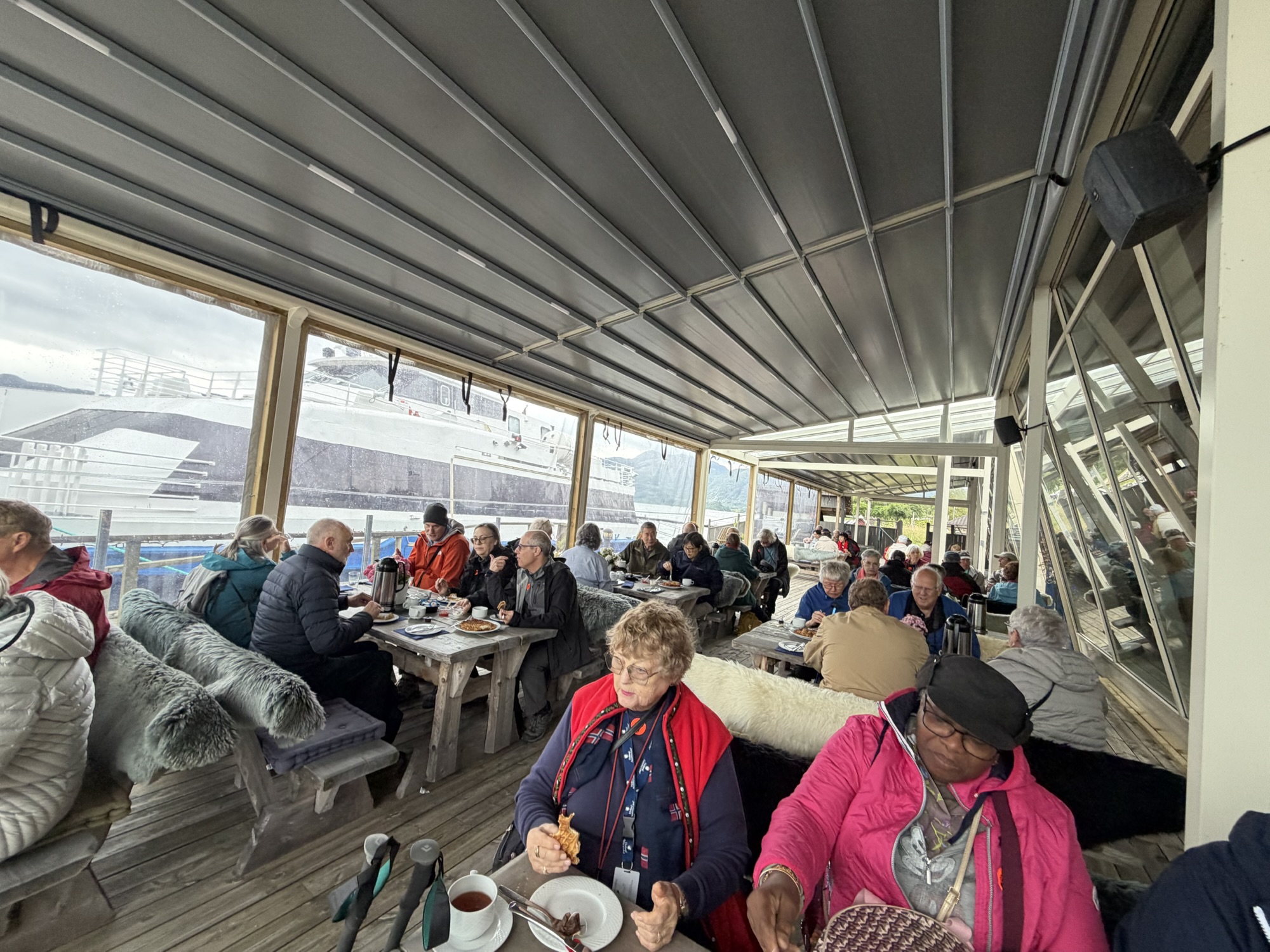
Midway through the cruise, the boat stopped in a quiet, idyllic spot for a traditional Norwegian snack — coffee and freshly made waffles, served the local way with sour cream and jam. It’s a simple, homely touch that fit perfectly with the unhurried pace of the trip. The waffles reminded us of the Sunday Carney waffles both flavor , texture, and taste. Maybe we have Viking in our blood.
Into Lysefjord — and Beneath Pulpit Rock
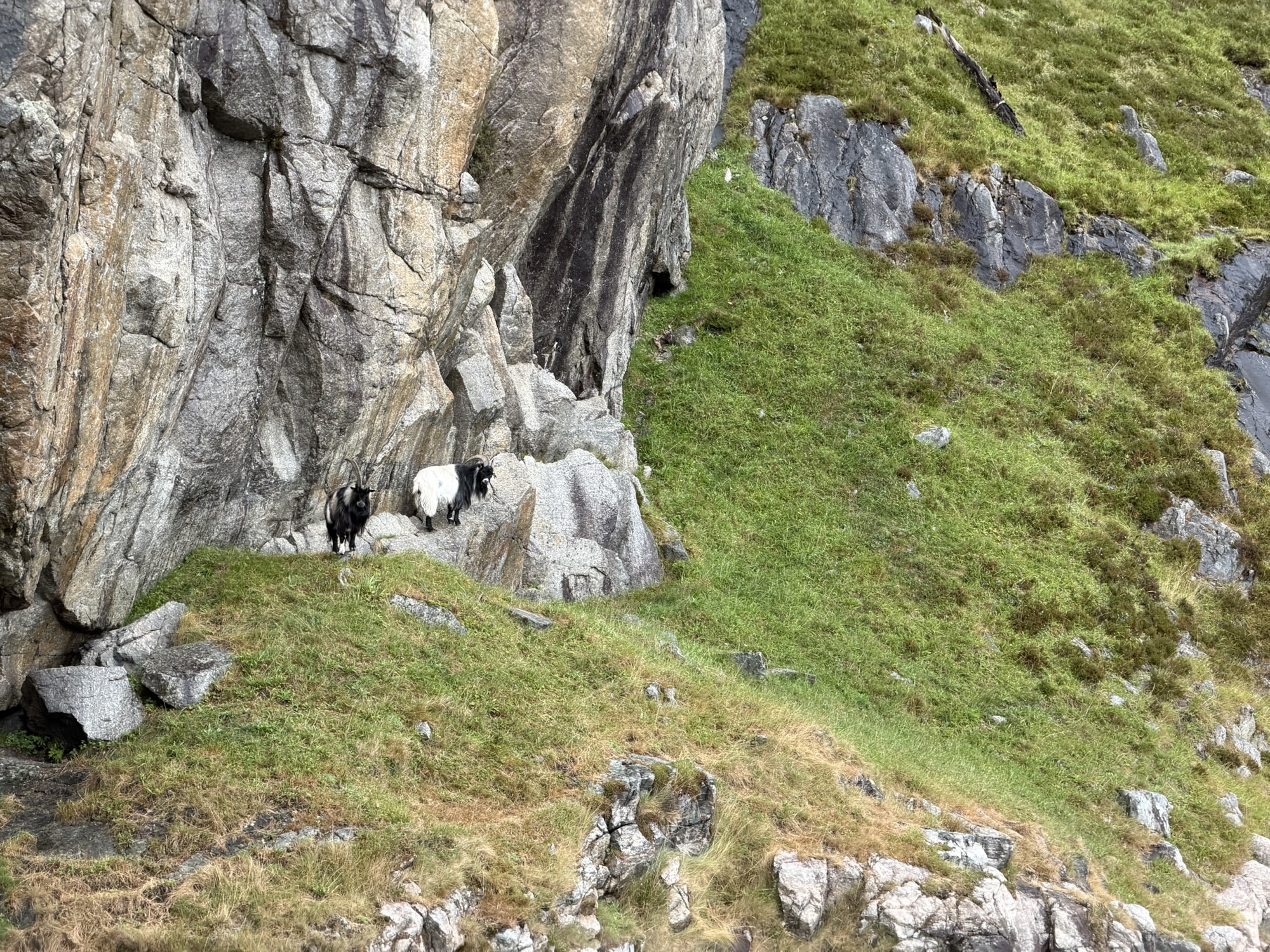
Then came Lysefjord — the “Fjord of Light” — and the scenery shifted from pretty to jaw-dropping. This fjord was carved out over roughly a million years, as ancient glaciers ground a river valley into today’s deep, steep-sided channel. The water beneath us runs some 400 meters deep in places, and the granite walls rise just as dramatically on either side. Old stories talked about the dinosaurs sharpening the claws on the sides of the fjord. We even saw some goats along the way.
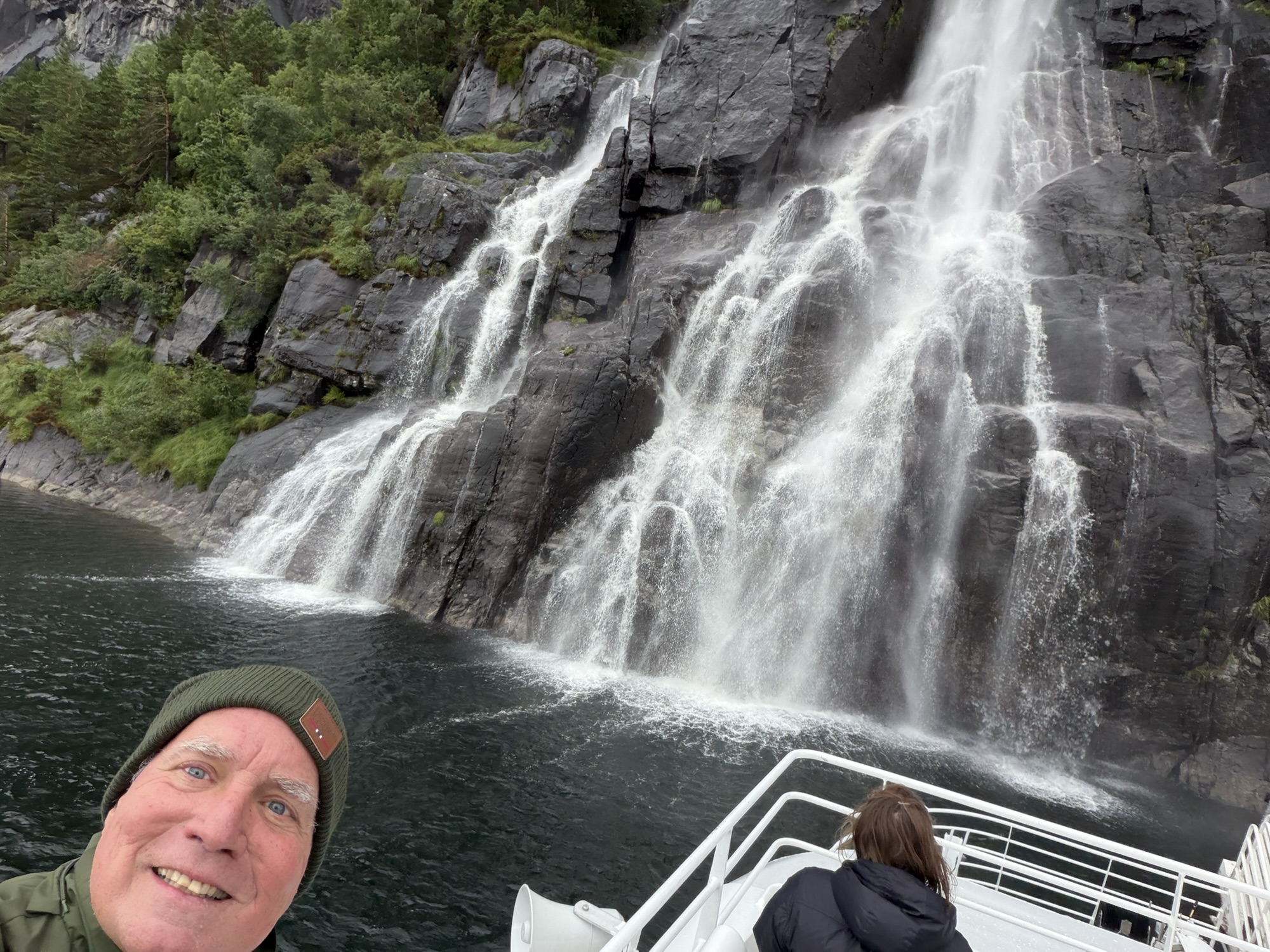
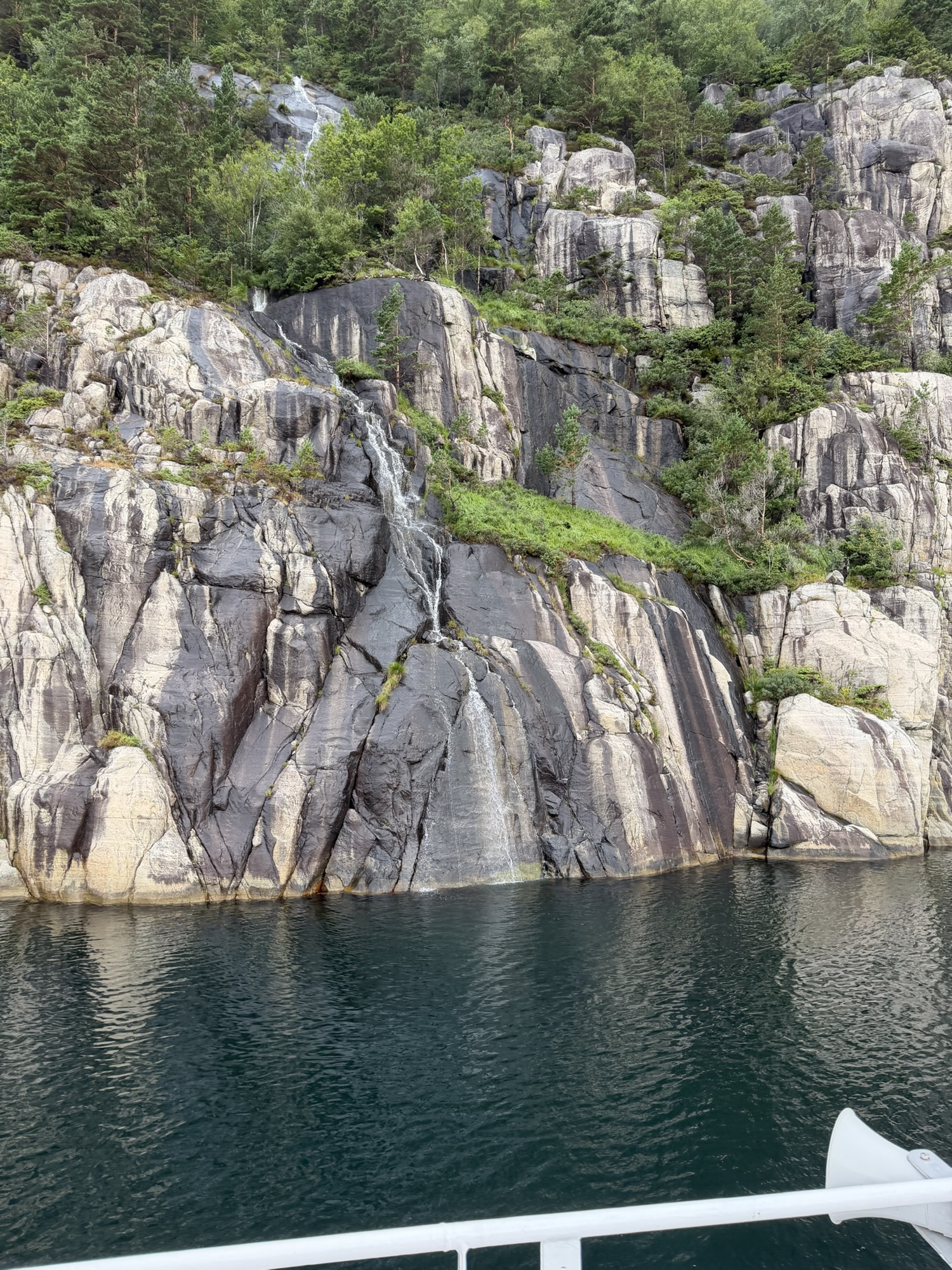
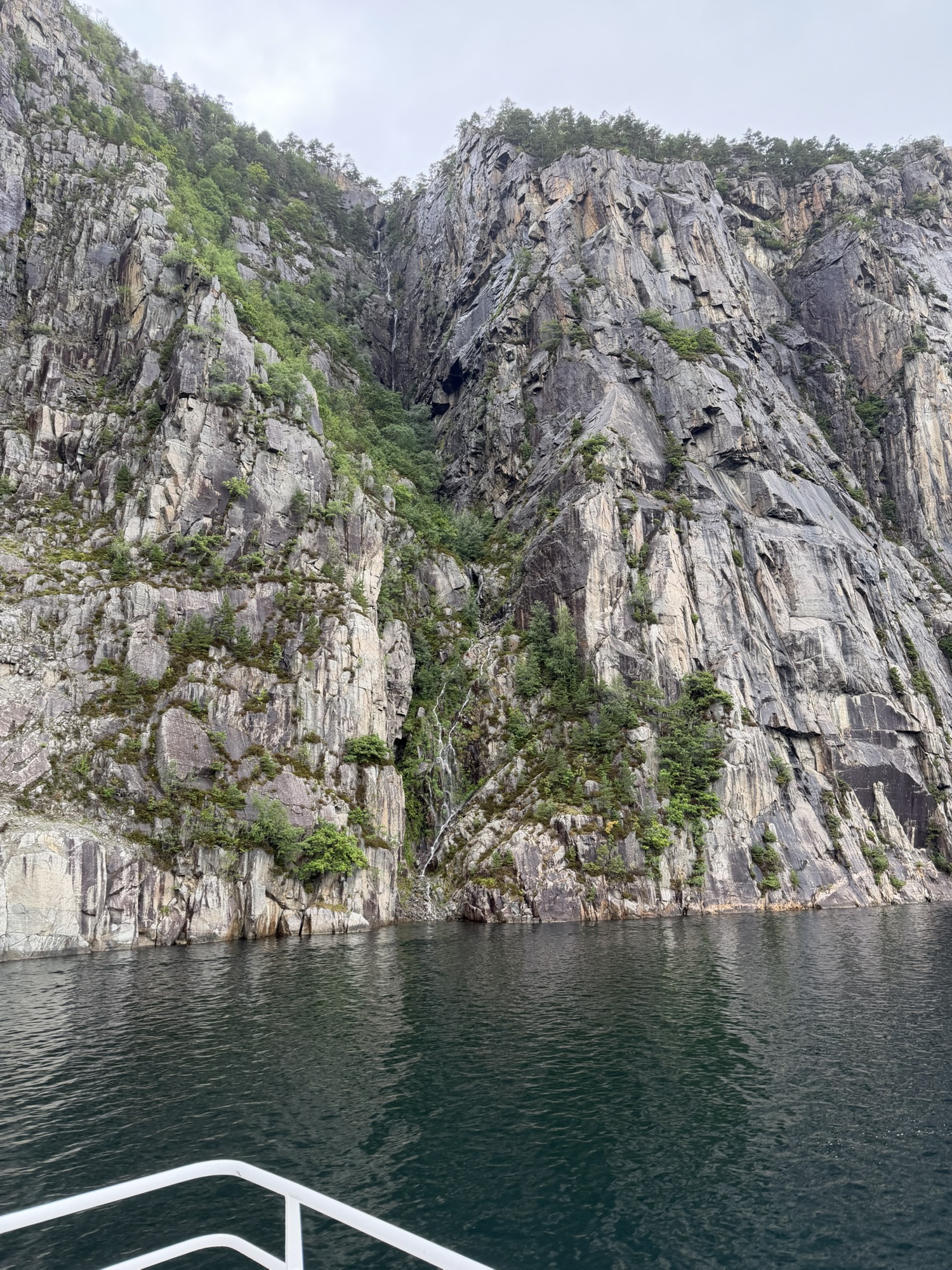
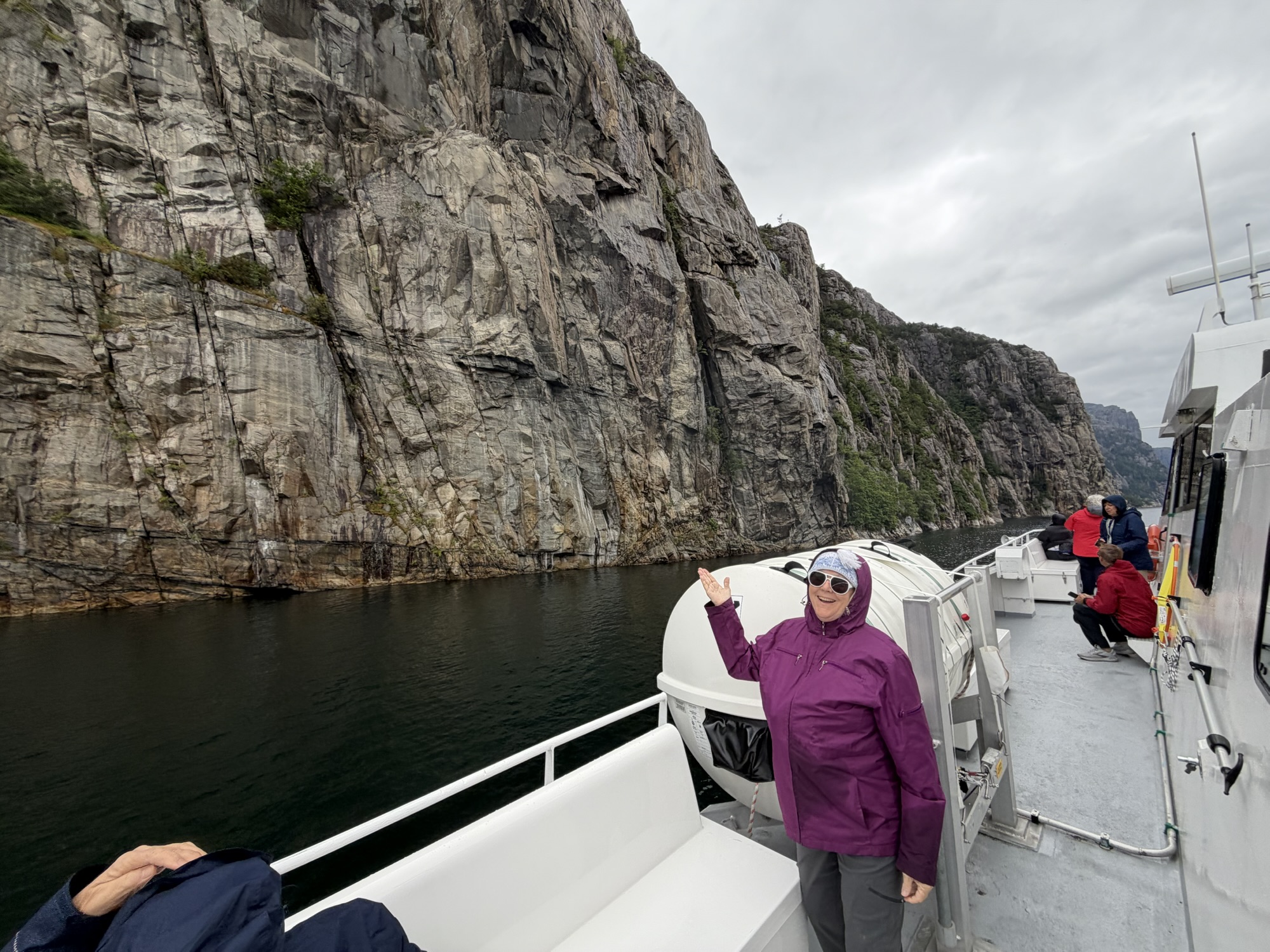
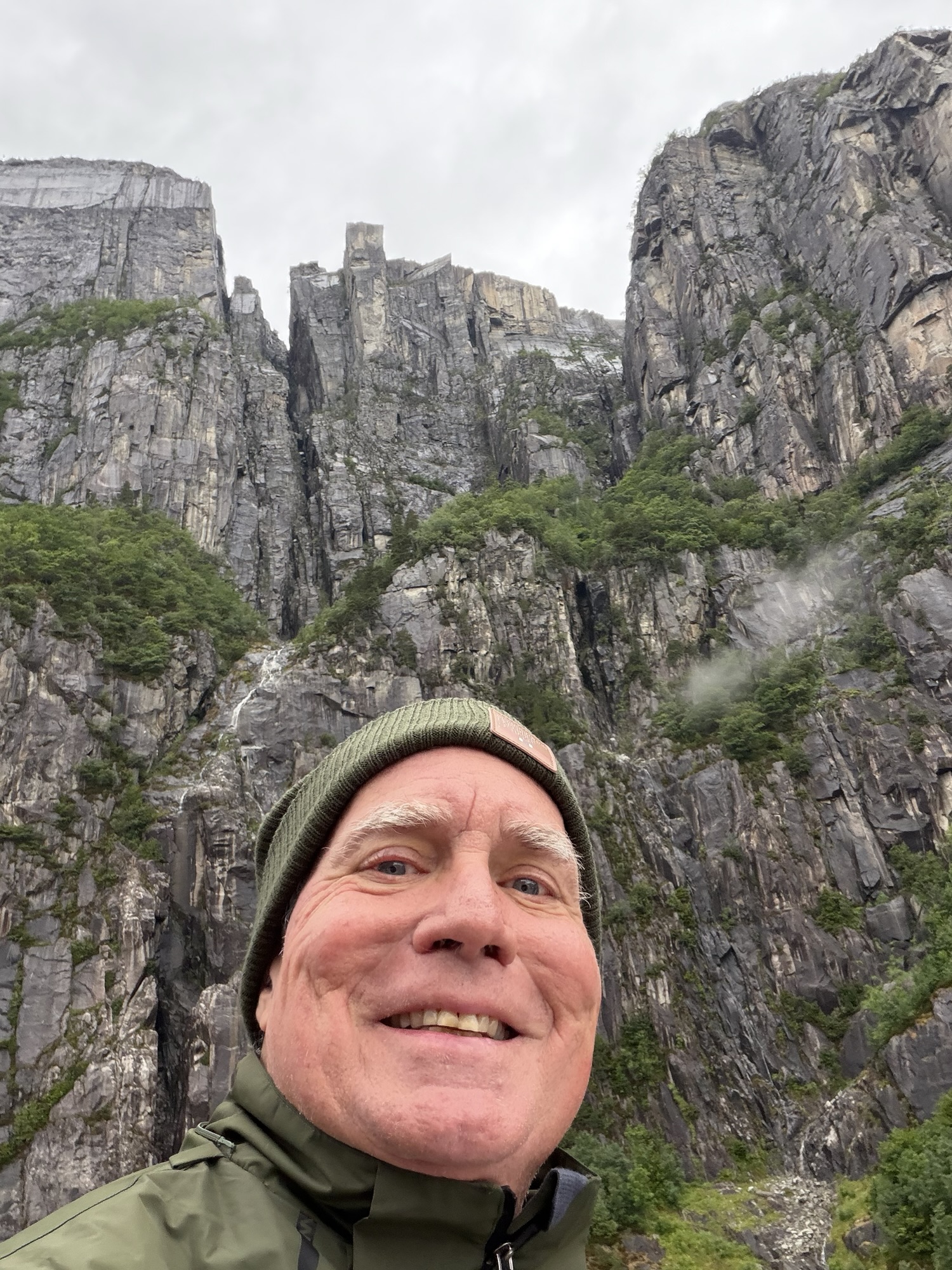
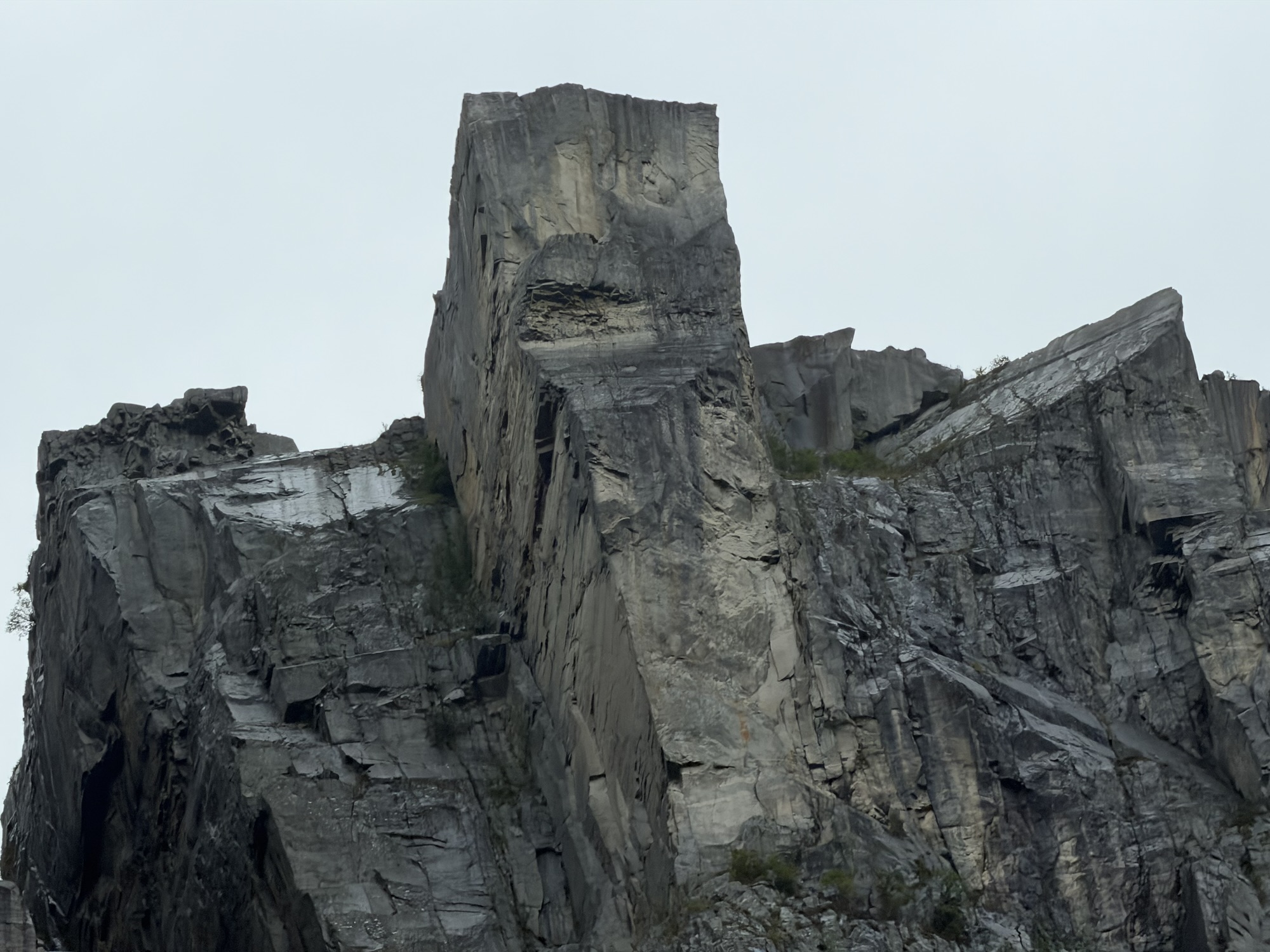
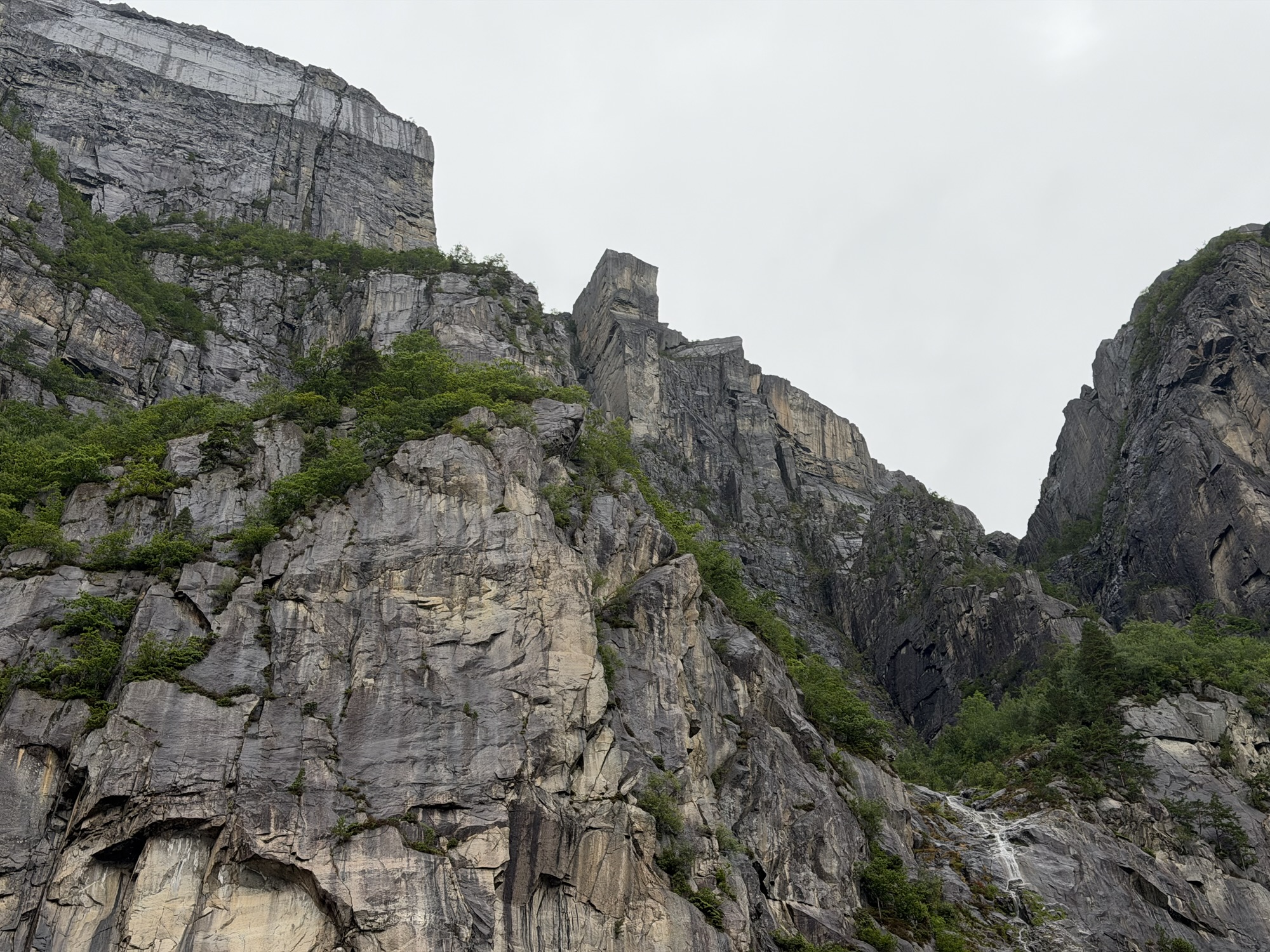
Towering above it all is Pulpit Rock — Preikestolen, as the Norwegians call it — arguably Norway’s most iconic natural landmark. The cliff rises 604 meters above the fjord, its flat plateau just 25 by 25 meters across, sheared off some 10,000 years ago when meltwater froze inside cracks in the granite and split away massive blocks as the glacier retreated. More than 200,000 people hike to the top each summer, but our catamaran offered a rarer perspective: gliding directly beneath the cliff and looking straight up at over 600 meters of sheer granite face, with the fjord’s depths mirroring the mountain’s height above.
Final Thoughts
Two ports, two very different kinds of wonder. Eidfjord packed in dramatic scenery, a nail-biting bridge passage, centuries of Viking and church history, and a handmade treasure to bring home. Stavanger topped it off with towering granite cliffs and one of the most photographed landmarks in Scandinavia, seen from an angle most visitors never get. Norway does have a habit of making you feel small in the best possible way — and this leg of the voyage, in the wake of the Vikings, was proof of it.
Next stop Iceland’s Wild East and West !


