Greenland had been on the horizon of this trip since we first traced the Norse westward route on a map back home, and it did not disappoint — though it did, fittingly for the Arctic, refuse to go entirely according to plan.
Paamiut: Fog, Eagles, and Whalebone Earrings
Paamiut sits at the mouth of the Kuannersooq Fjord on Greenland’s southwest coast, a town the Danes once called Frederikshåb — “Frederick’s Hope” — after founding it as a trading post in 1742. The name Paamiut itself means “those who live at the mouth,” and after a short walk through town it’s easy to see why the location was chosen: sheltered water, dramatic fjord views in every direction, and a warm current that keeps the harbor ice-free even in winter.

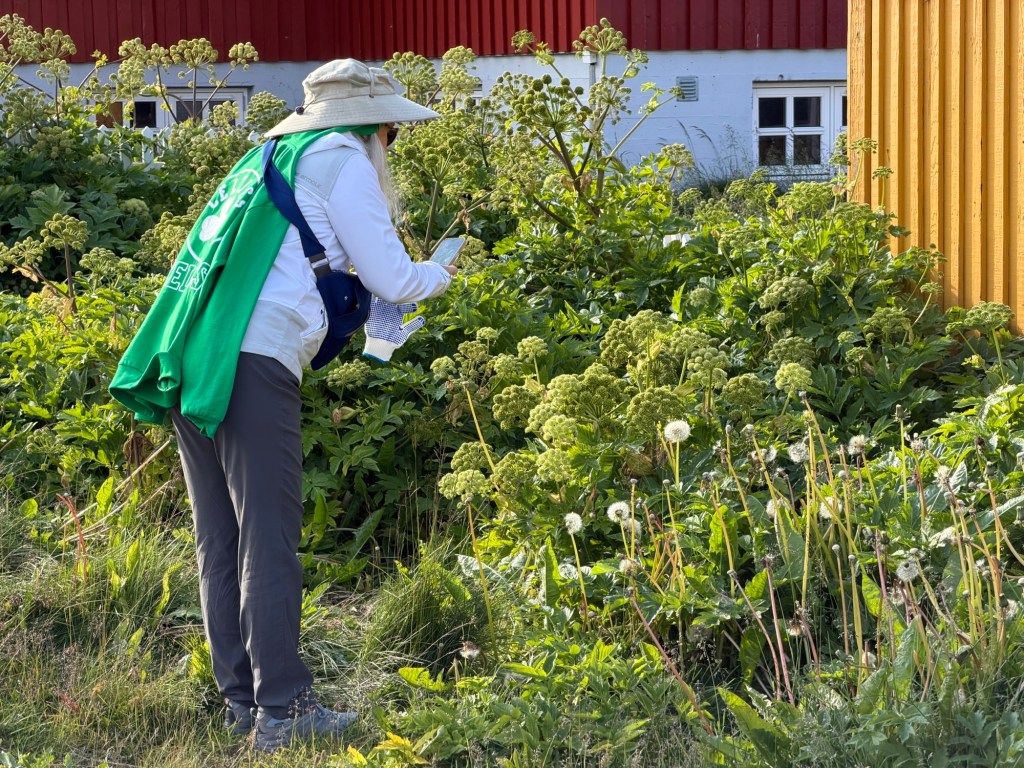
We wandered the town center and waterfront, then made our way to Fredens Kirke — the Church of Peace — a red-and-yellow wooden church built in 1909 in the Norwegian stave style, with a steep roof and quiet, beautifully worked interior. It’s one of the finest churches in Greenland and clearly the pride of the town. Along the way, Nana kept finding wildflowers — an obsession that started back in Iceland and shows no sign of slowing down.


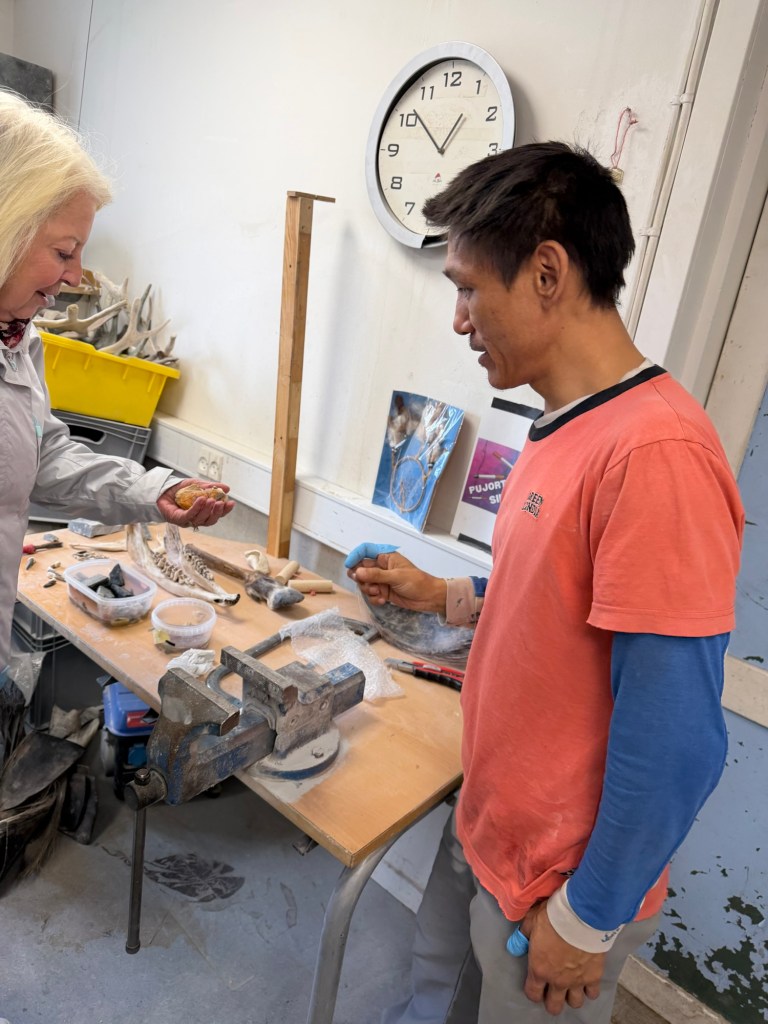
Paamiut is also known as one of the best places in Greenland to spot white-tailed eagles, and we kept an eye on the cliffs as we walked, though the real find of the day came from a local artist’s shop: Nana bought a pair of earrings carved from whale bone, a small souvenir with a lot of story behind it.

Nuuk: Greenland’s Oldest House and a Hilltop View
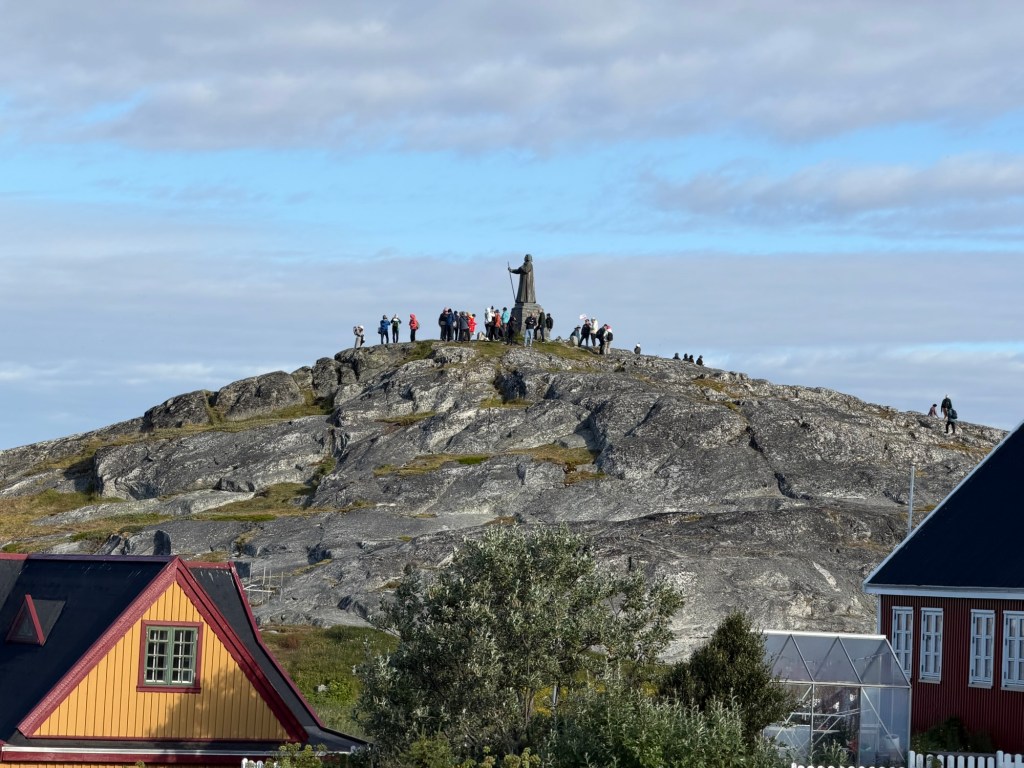
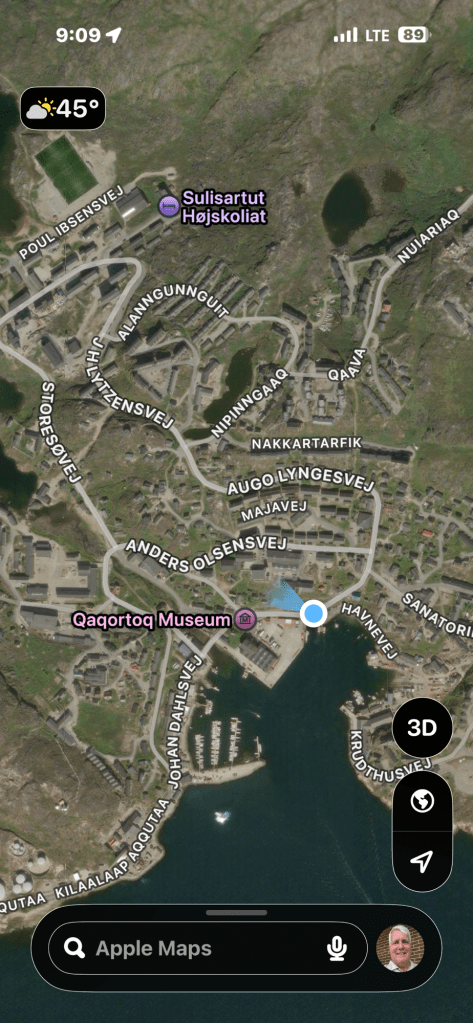
A short shuttle brought us into Nuuk, Greenland’s capital and, at more than 4,000 years of continuous habitation dating back to the Saqqaq culture, one of the oldest inhabited places on the island in a human sense — even though the town itself as we see it today is much younger. Nuuk was founded in 1728 when the Danish-Norwegian missionary Hans Egede moved his colony here and built his home, which still stands today in the Colonial Harbour and is recognized as the oldest building in Greenland.

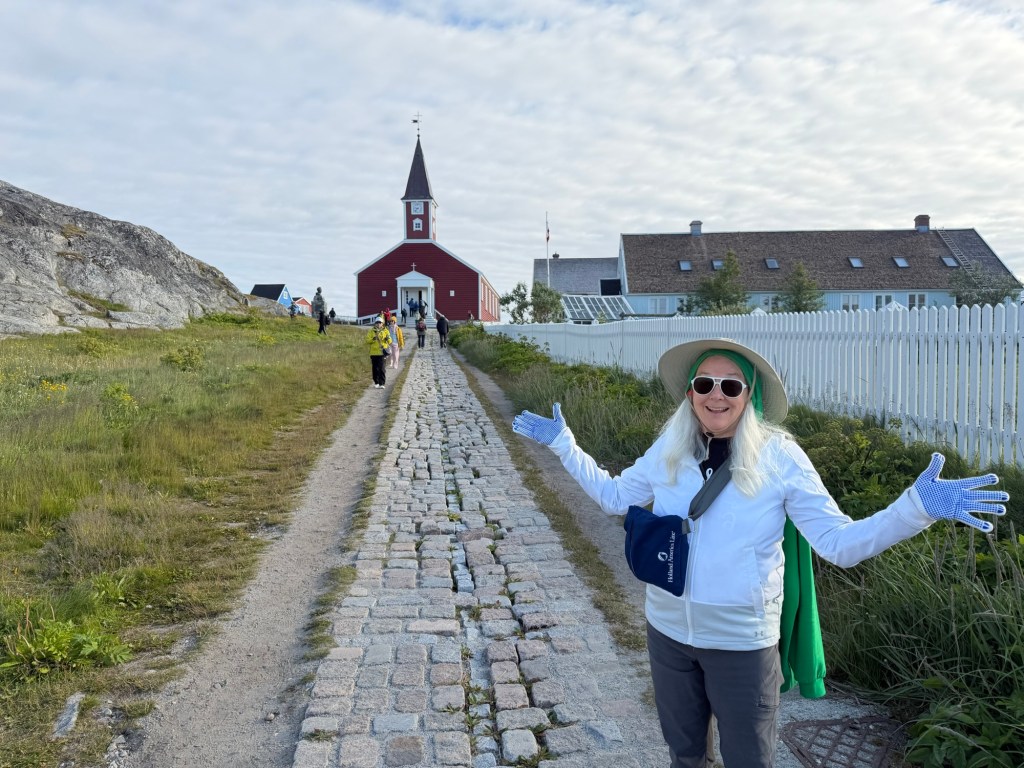
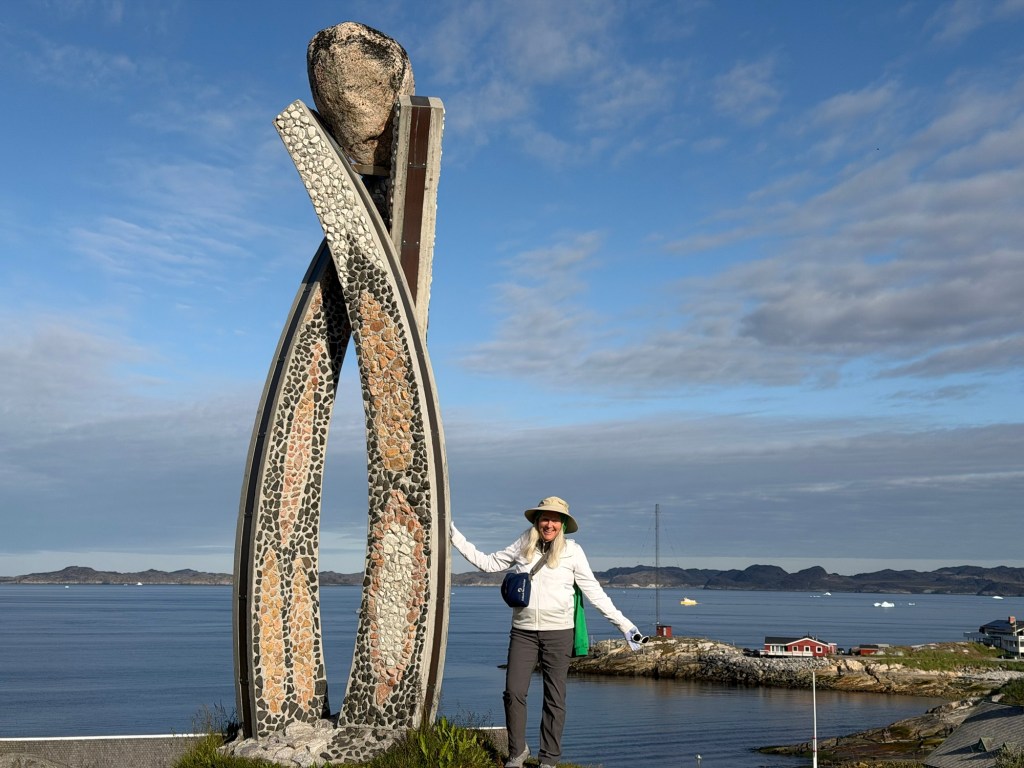
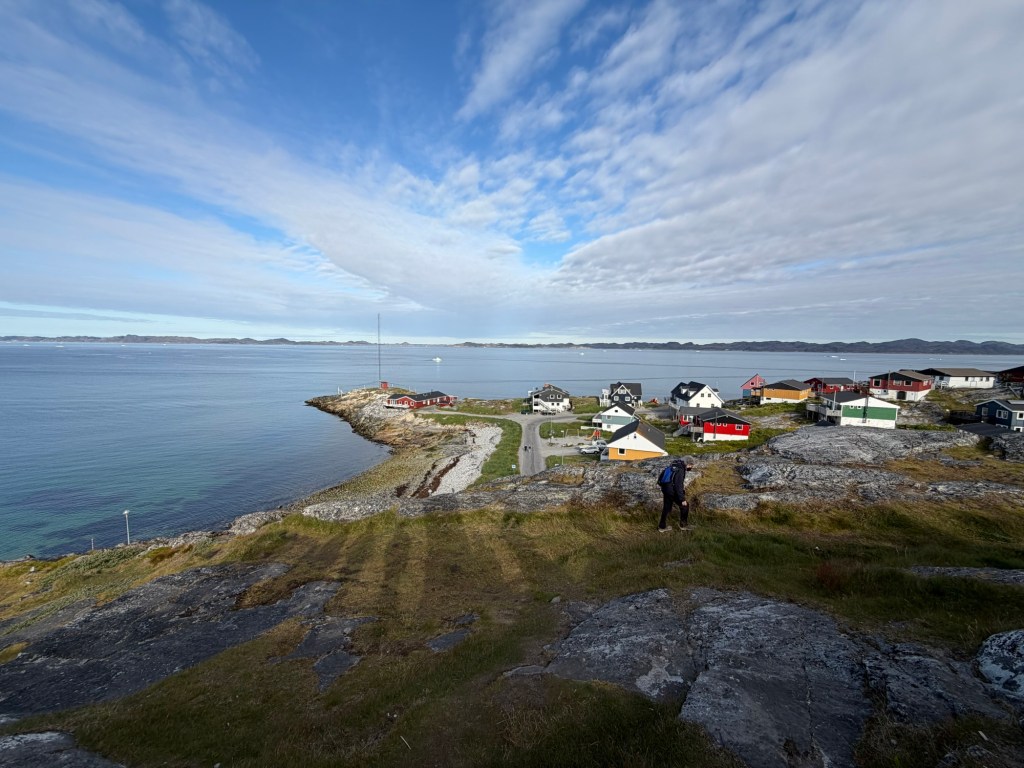
We walked among the original colonial-era houses, saw the old church — Nuuk Cathedral, its red walls and steeple dating to 1849 — and then hiked up the hill above town for sweeping views over the fjord. Nuuk sits at the mouth of Nuup Kangerlua, the second-largest fjord system in the world, and from the top the scale of it is hard to take in all at once.



Nana found a local shop selling posters of Greenland’s birds, flowers, and sea life, and came away with a small stack of them. She has a gift for noticing the things the rest of us walk right past — the unusual, the overlooked, the small wonders that make a place feel entirely new.
Qaqortoq: Sculptures in the Rock and a Cemetery Visit
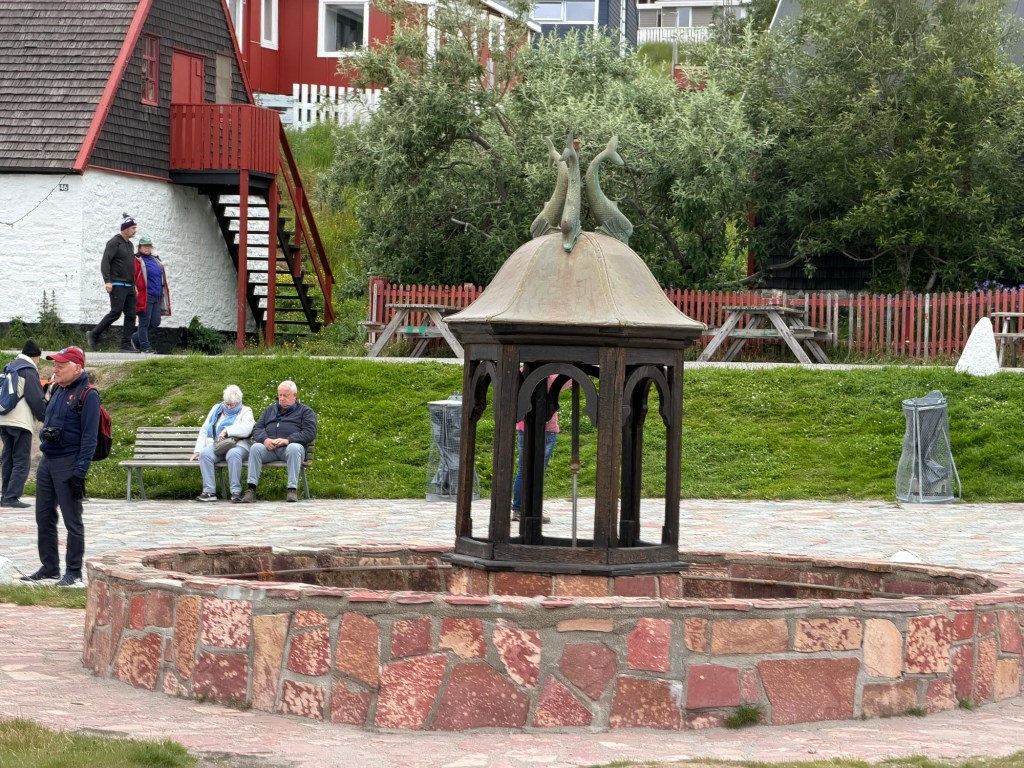
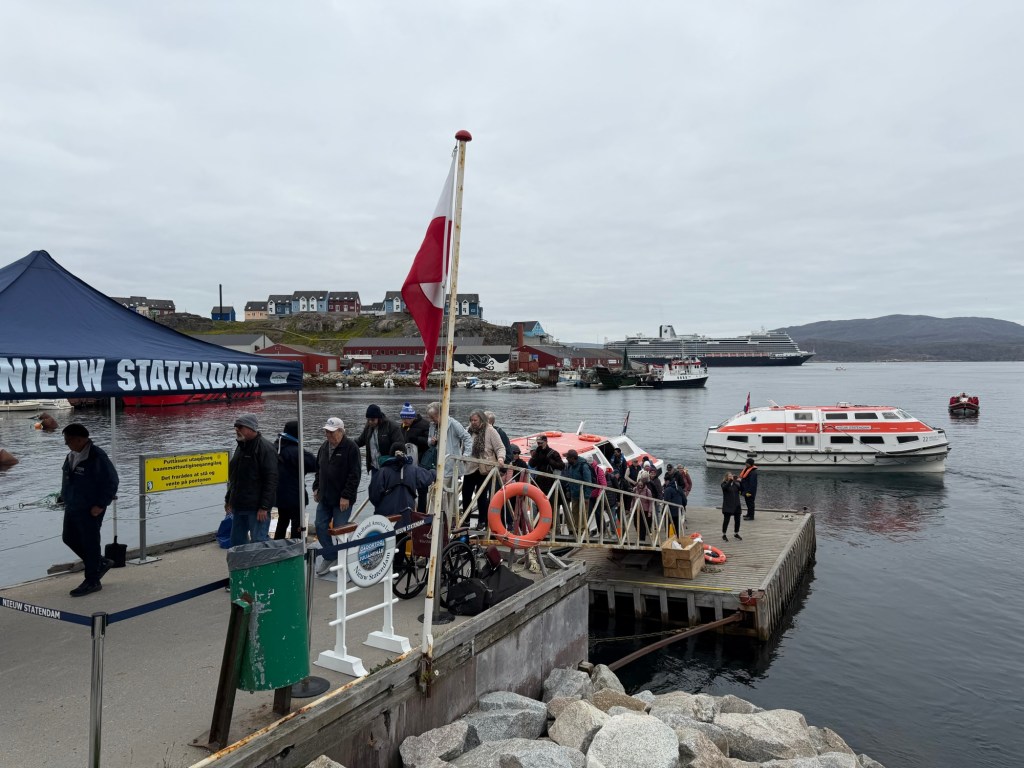
We tendered into Qaqortoq, South Greenland’s largest town and, by most accounts, one of its most charming — a jumble of pastel houses climbing the hillsides above a compact, walkable center. The colonial heart of town dates to the 1770s, and at its center sits Mindebrønden, a stone-and-bronze fountain completed in 1932 — the oldest public fountain in Greenland, decorated with bronze whales spouting water.
Scattered around town, carved directly into boulders and cliff faces, are the works of “Stone & Man,” a project launched in the 1990s by Greenlandic artist Aka Høegh with sculptors from across the Nordic countries. What began as two dozen carvings has grown to more than forty, turning the entire town into a kind of open-air scavenger hunt — you’ll walk past a rock two or three times before you notice the face or the fish carved into it.

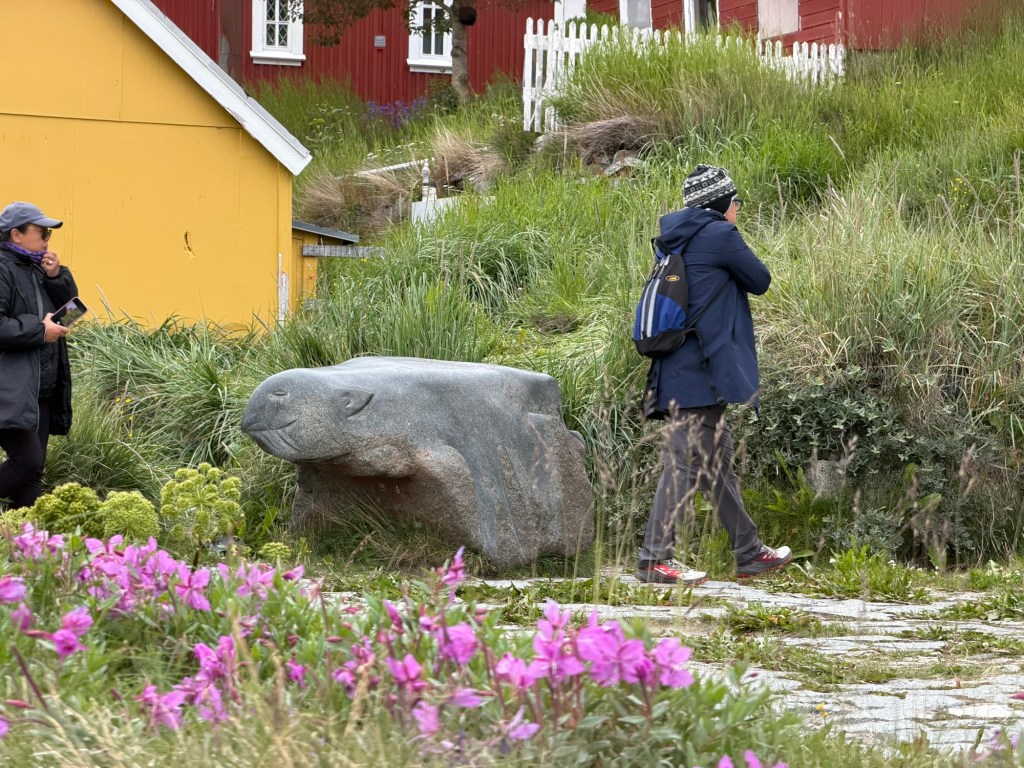
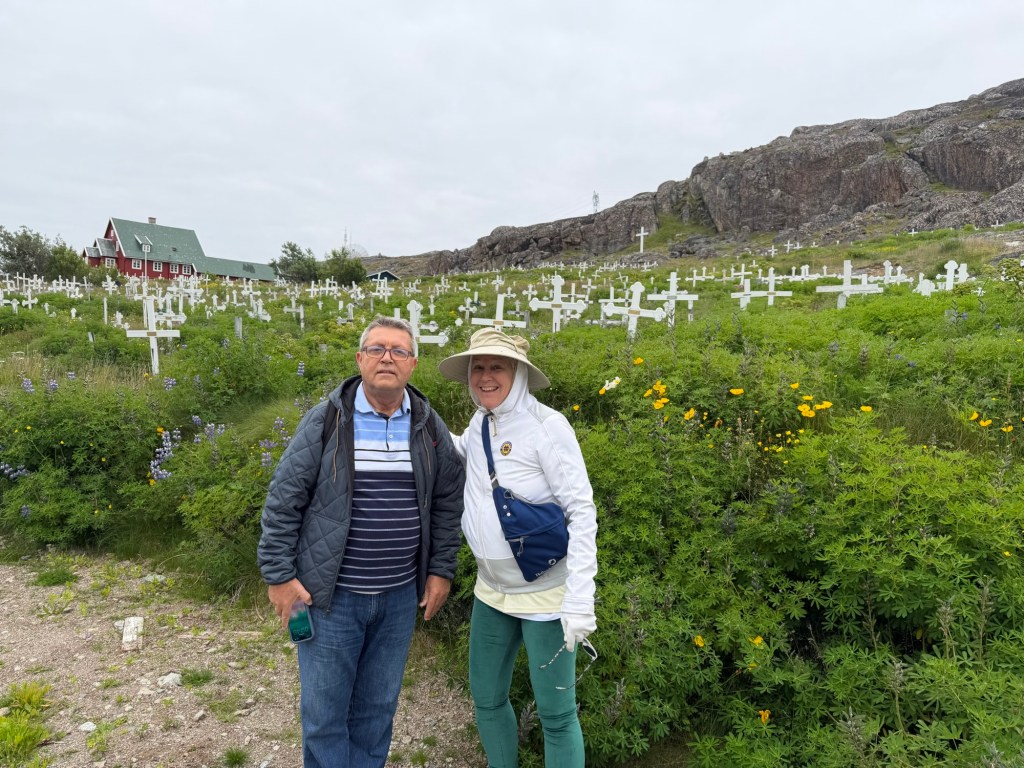
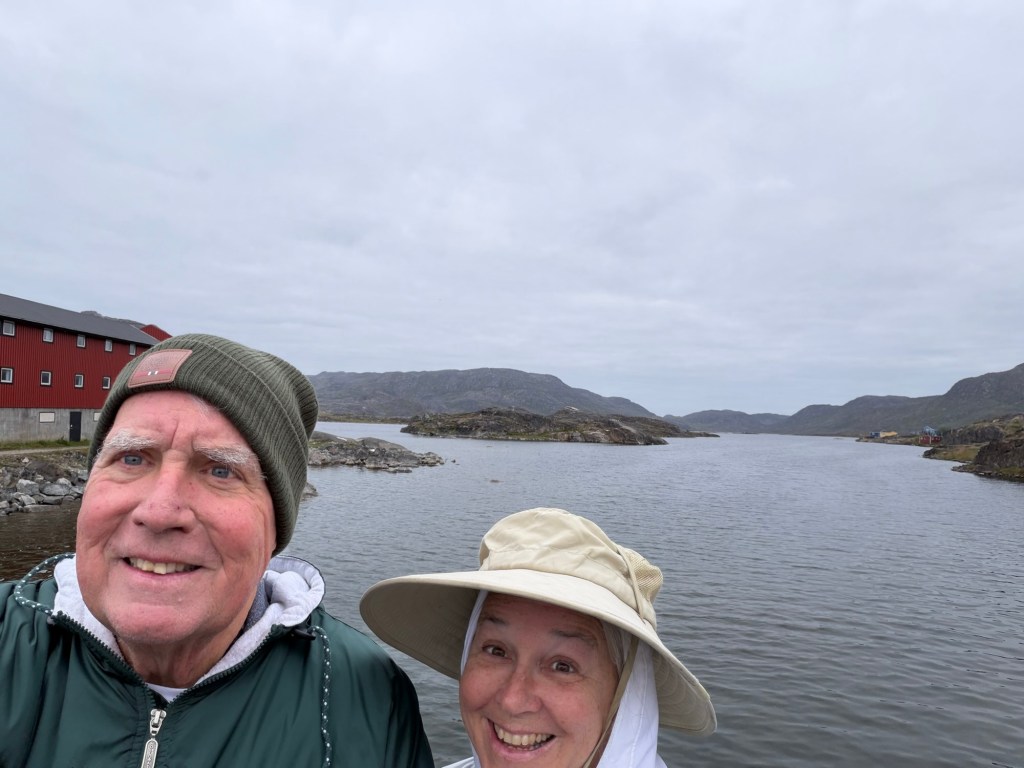
We explored the small town, found a lake, an old church, and a cemetery — and it was there, among the graves, that we ran into our ship’s priest, Father Blaj, who along with Nana shares a fondness for wandering cemeteries. Our first two Greenland stops had been mercifully free of bugs, but Qaqortoq made up for it: small biting gnats swarmed thick enough that some passengers wore face netting to keep them off.
The Port That Wasn’t: Nanortalik
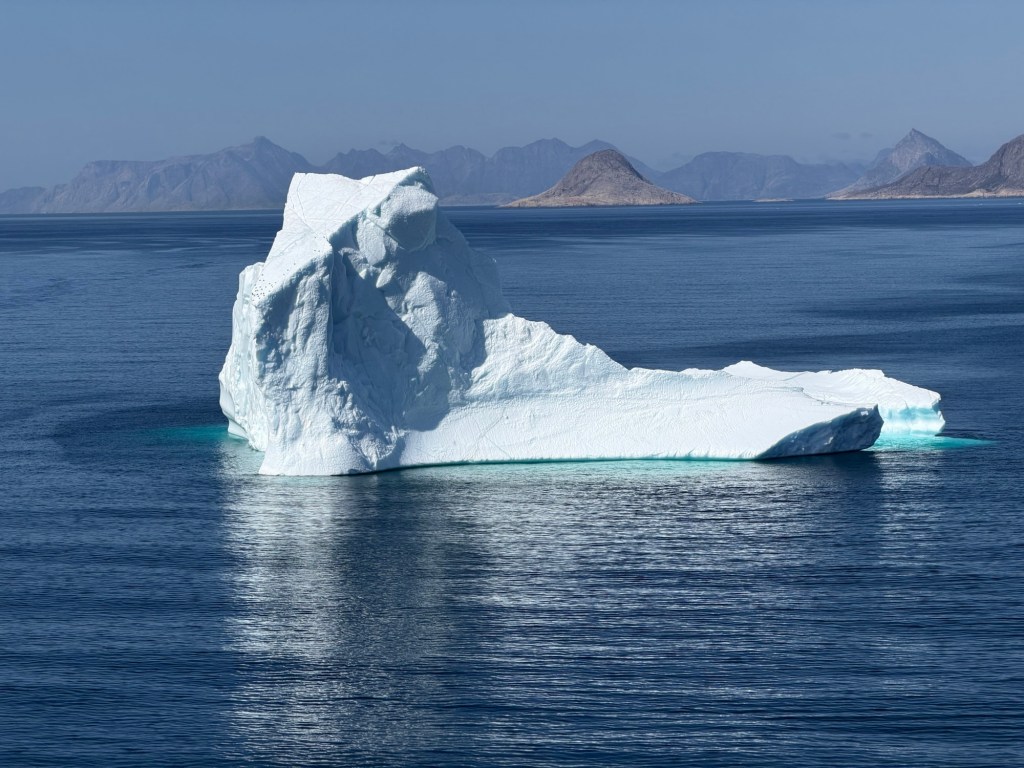
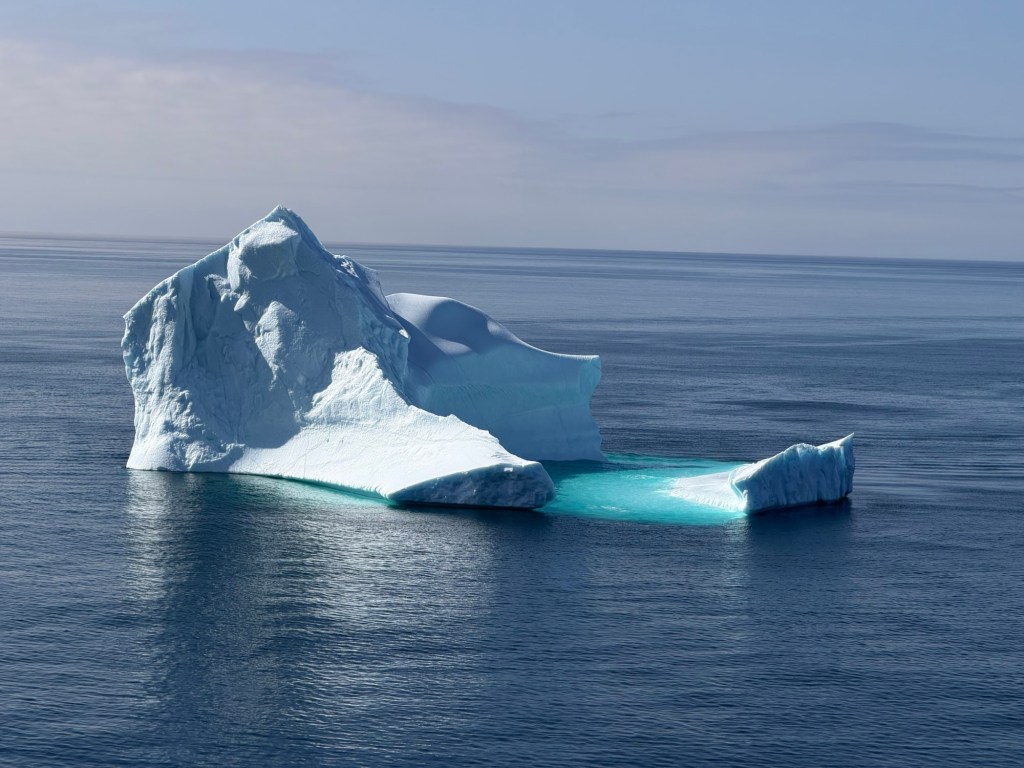
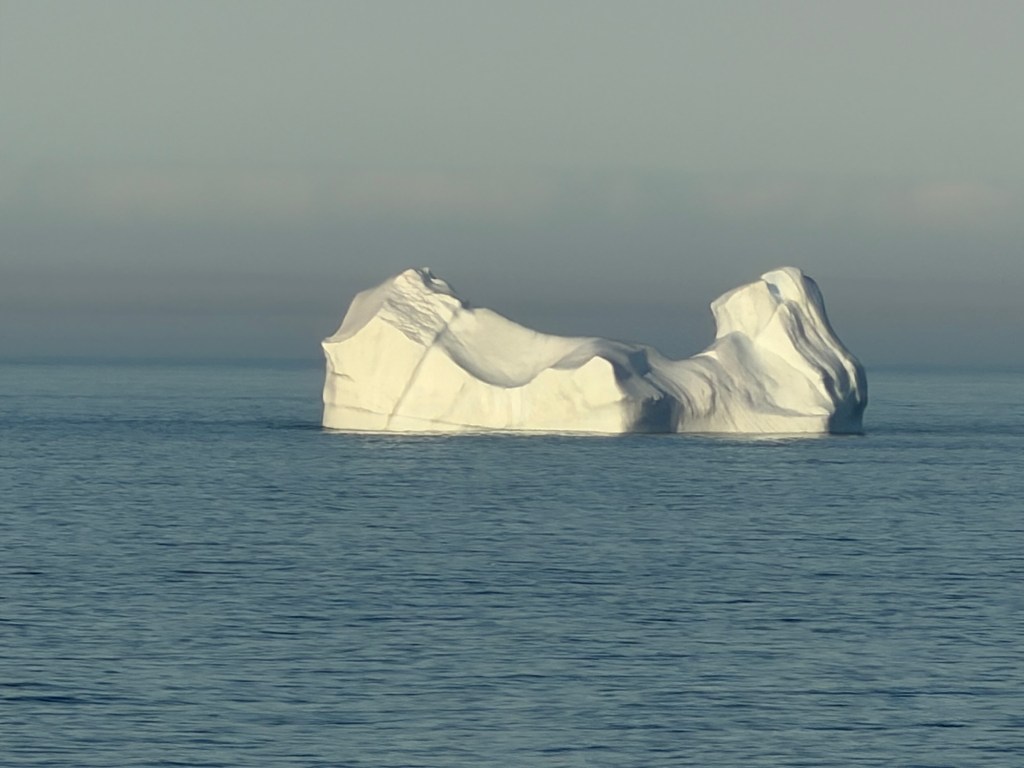
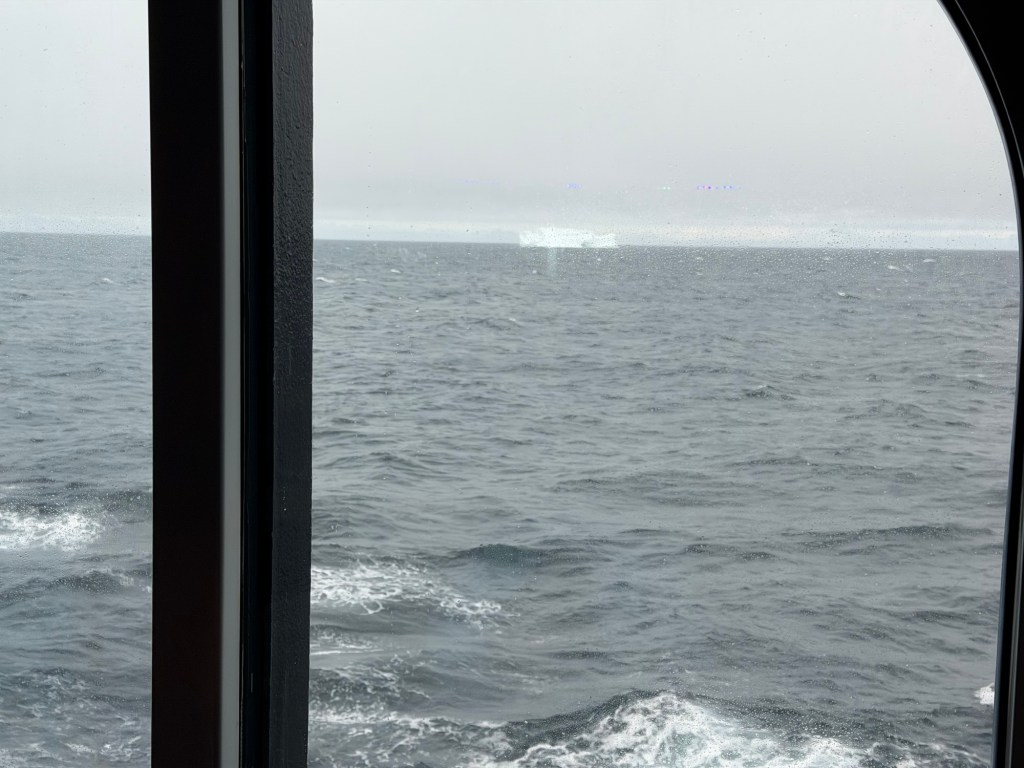
As so often happens on a trip like this, the unexpected stepped in. Our planned call at Nanortalik — Greenland’s southernmost town — was cancelled. Heavy fog and scattered icebergs along parts of the coast forced the ship to slow down, and with the lost time, we simply couldn’t make all four Greenland ports on the schedule. Nanortalik was the one that had to go.
In its place, we gained an extra sea day and an unplanned sail down a long, dramatic fjord, past ice and history in equal measure — a reminder that in Greenland, the itinerary is always a suggestion, and the detours can be just as memorable as the plan.