We had 4 short sea days before arriving to Easter Island. Busy time on the ship. Papa is working on his card playing skills for bridge. They have a tournament every sea day at 1:30-4:00. Nana is very good at bridge and Papa is trying to move up to her level. I am taking group lessons every morning on the sea days for an hour. A lot of learning and improving needed.
We had a formal night on one of the sea days. Everybody loved Paps’s kilt. We had a Casino Royale night where you played games and won prizes. This was also the weekend for the NFL playoff games but the TV feed cut off part way through the evening games. We are far out in the Pacific ocean and there must not be a lot of coverage out here.

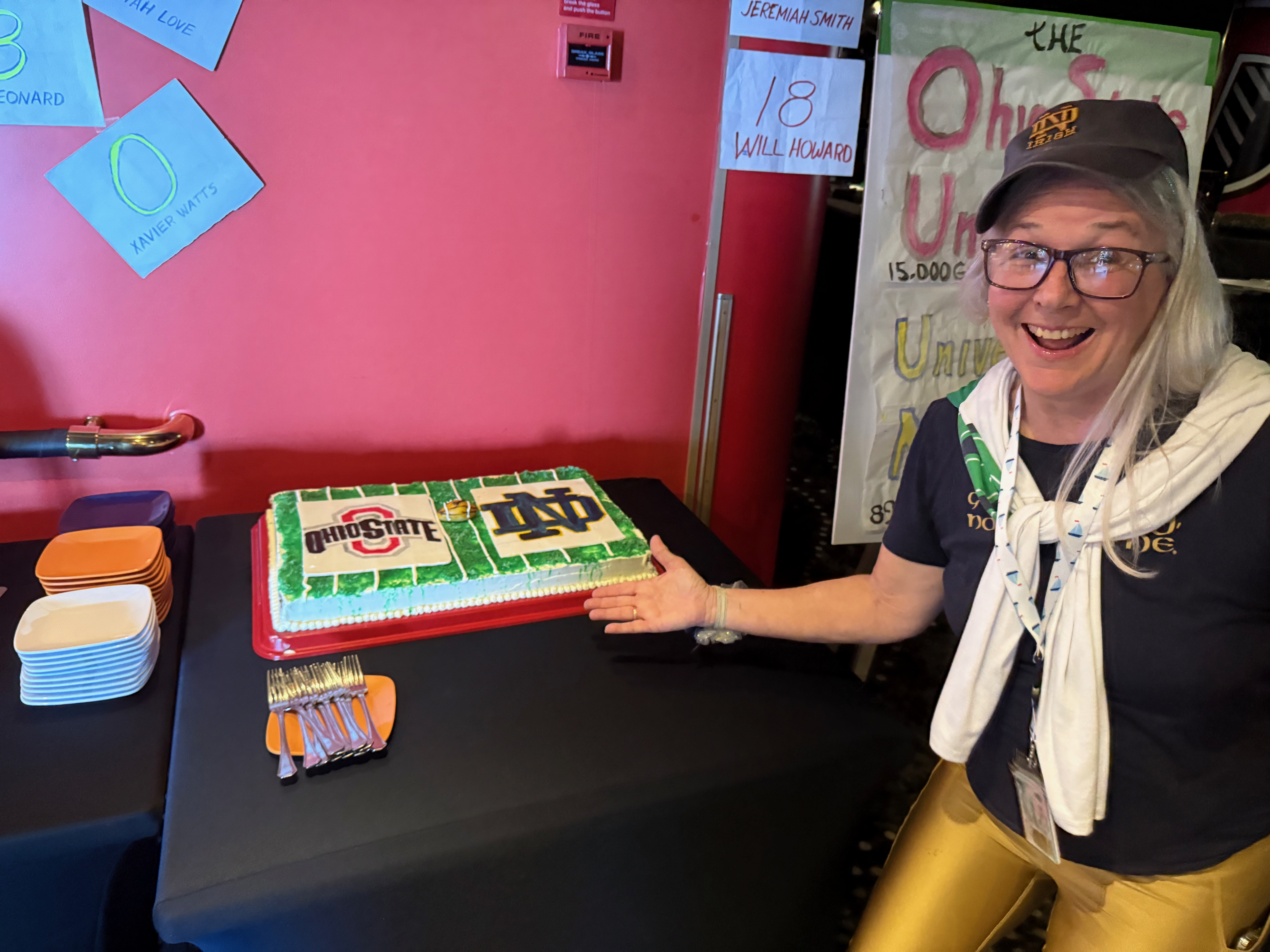
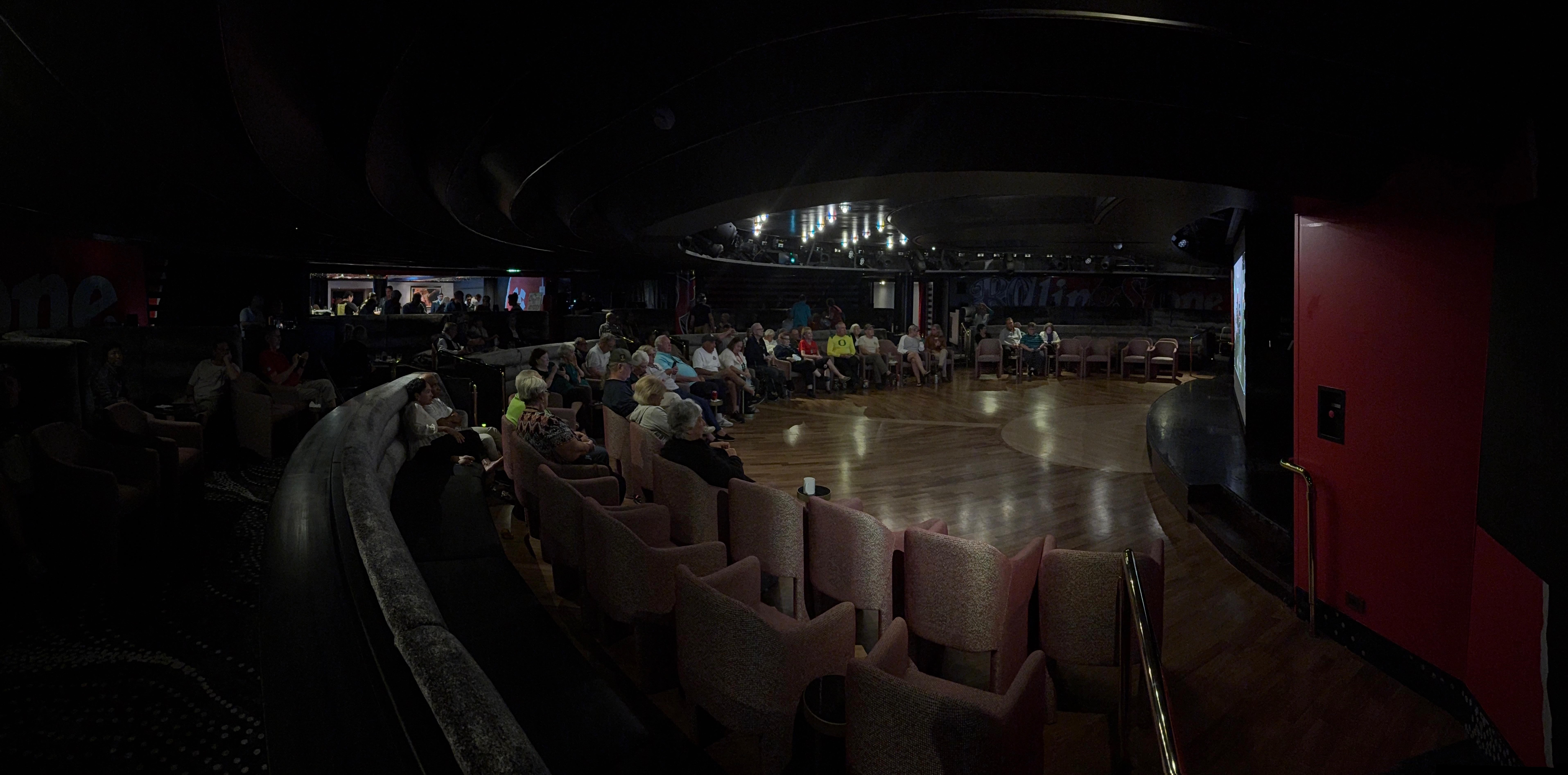
The night before we arrived into Easter Island was the College Football playoff games with Notre Dame vs Ohio State. Nana and myself are wearing ND all around the ship and getting a lot of comments. Nana has been working with the staff here to get a big room so a lot of people can get together to watch the game. It was a great gathering and Holland America paid for a special channel to make sure we could get the game. I was impressed on the party that Holland America put on for the National Championship., A disappointing loss for Notre Dame though.

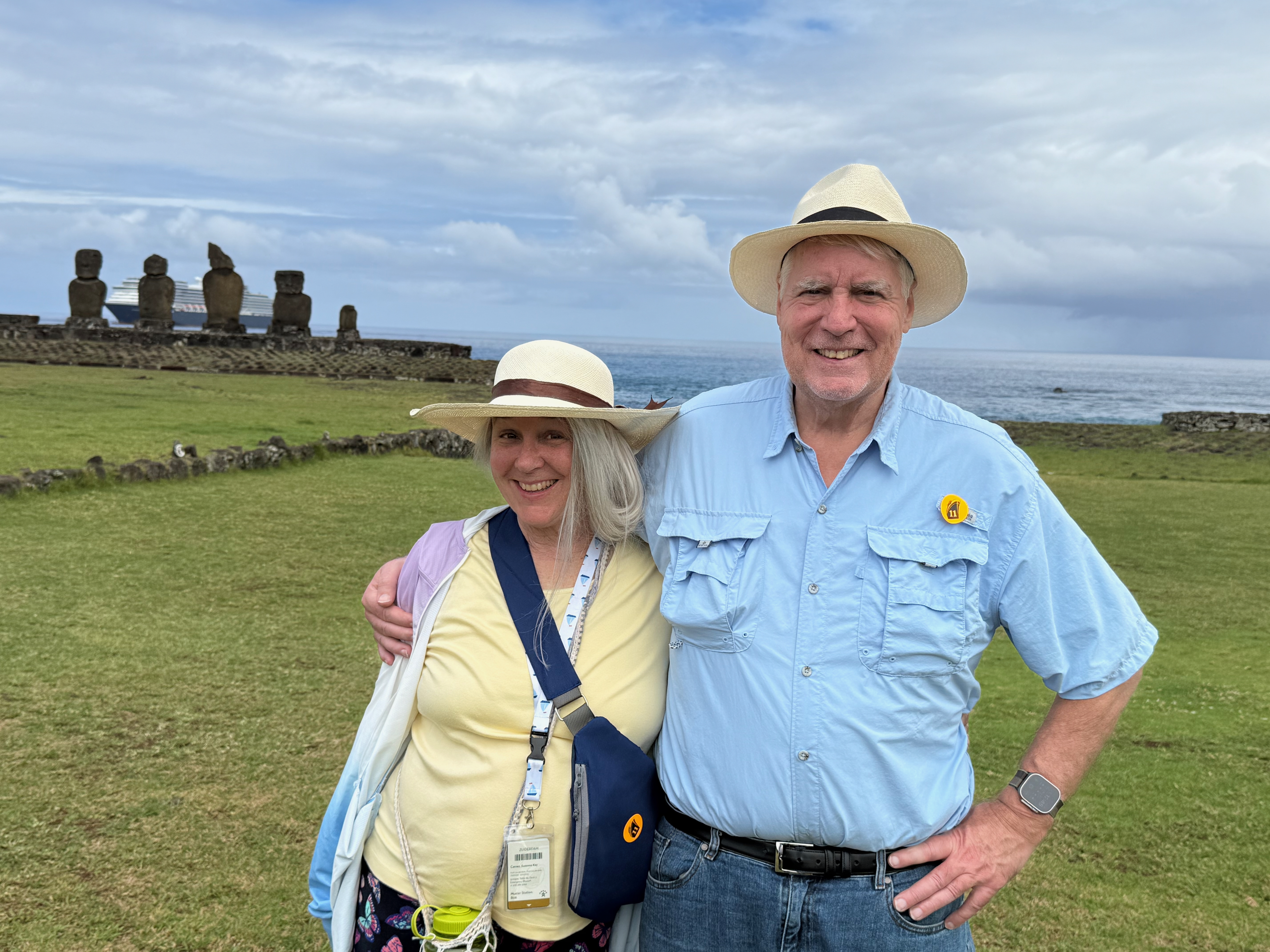
Today we embarked onto Easter Island. The ship was able to anchor successfully and tender operations ran all day. Nana and I took an excursion “Deep Dive into the history of Easter Island” The captain has been so worried that we would not be able to anchor off Easter Island or if we did anchor, the tender operation would be too rough. It was a lovely calmer day, swells we about 3-4 feet and everything worked for the ship. It was a little rougher than I thought it would be for getting onto the tender and then getting off on shore was a challenge because the dock did not match our tender and we had to step down and then step up. The crew were very helpful and assisted everyone. It was interesting that they made many announcements about what to expect, no walkers or wheel chairs allowed but people still with some serious mobility issues boarded the tender anyway and had problems.
Easter Island is best known for its mysterious statues that have puzzled archaeologists and historians from all over the world. The “other half” of Easter Island’s fascination is its friendly inhabitants of Polynesian origin, who are eager to show visitors some of their culture. The Rapa Nui people are most willing to tell you about their ancient traditions and, at the same time, allow you to participate in their ceremony of body painting.

From the port of Hanga Piko, we headed to the Tahai area, located on the west coast of the island. The altars and monolithic Moai statues found here are the embodiment of Rapa Nui culture.


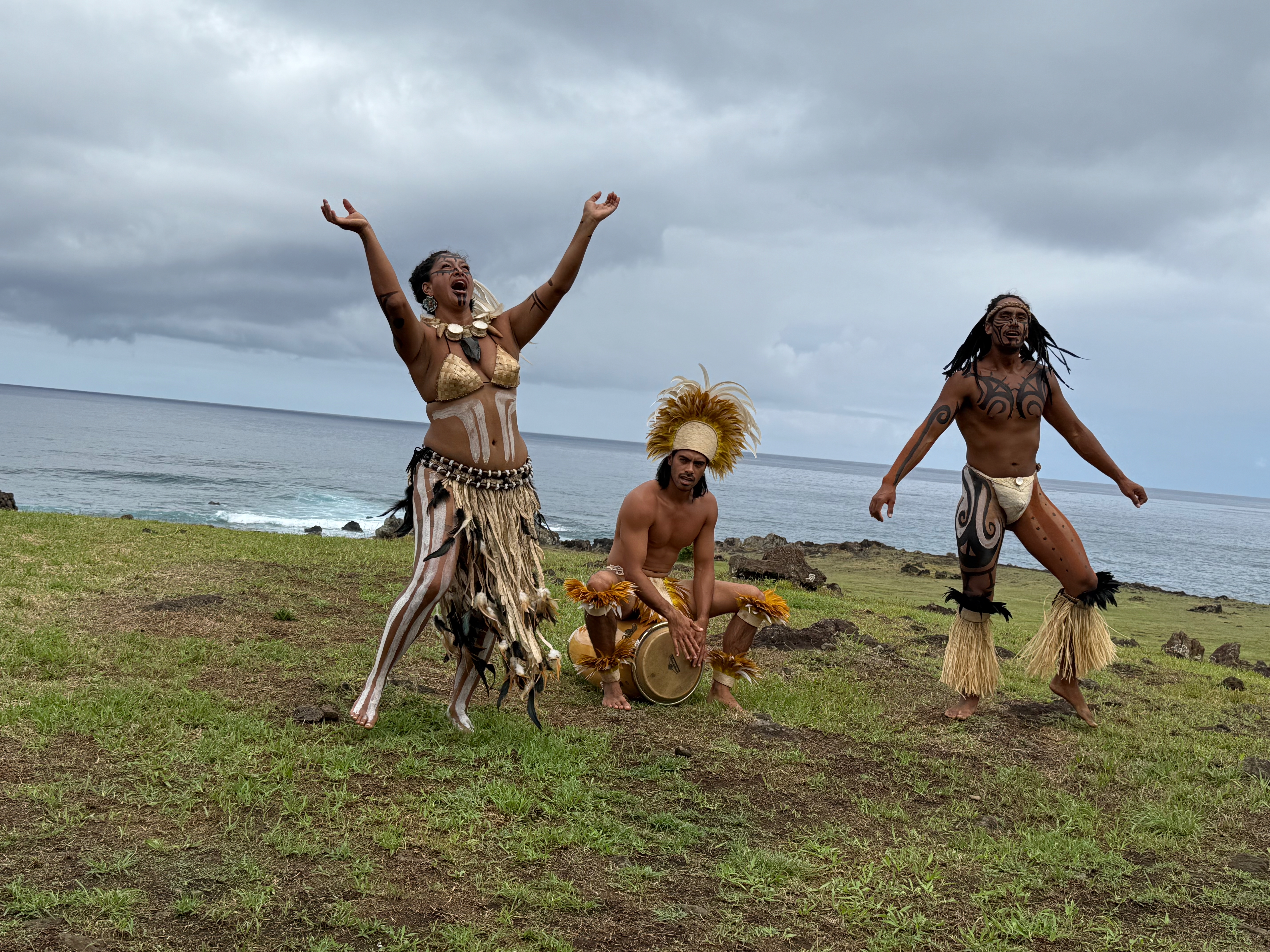
Afterward, we took a short walk to meet our Rapa Nui hosts. During our time with these gentle people, they will taught us about their tribal dances. They showed of the use of kie’a. The latter is a form of natural paint that was used in ancient times for body painting (takona). Nana just had to get her body painted and became a warrior for a day.


After visiting with the Rapa Nui people, we visited a Catholic church. This church was an interested blend between the older cultures and the Catholic faith. Our guide called it a compromise. Interestingly, our gude said her Great Grandfather donated the land on which the church was built.
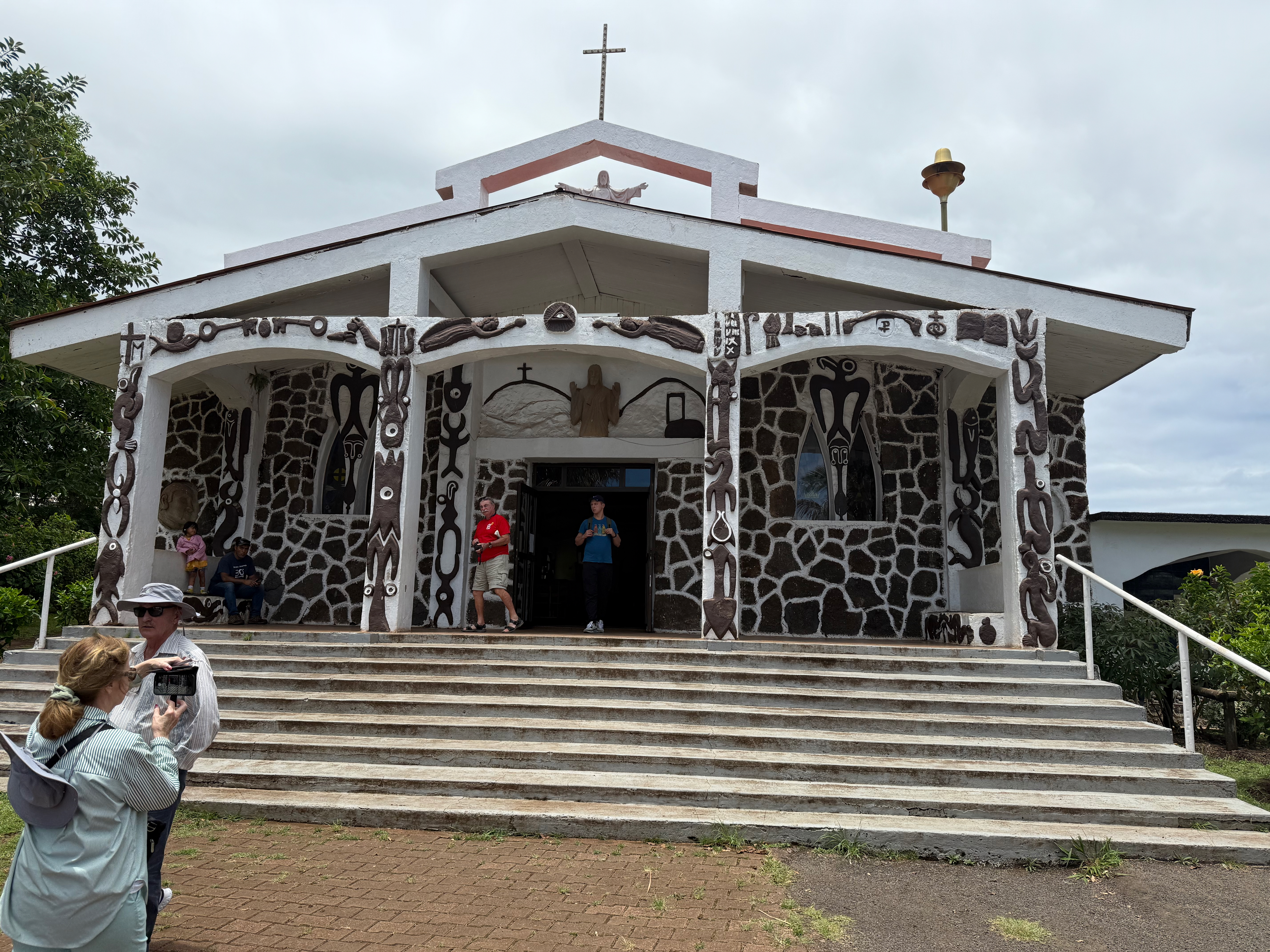
You can tell that Easter Island does not get many visitors. The excursions were not as well organized as other bigger ports and the guides were not as prepared as some of our guides but a very interesting stop for Nana and I.
Here is a little history on Easter Island and lesson on how fragile our eco systems are but how cultures respond to change and improve. The island was first settled around 900–1200 AD by Polynesians who navigated vast ocean distances using the stars, currents, and other natural signs. The settlers brought plants, animals, and a distinct Polynesian culture, which evolved in isolation on the island. Rapa Nui society thrived for centuries, developing a unique culture characterized by the construction of moai statues, which likely represented ancestors or important figures. The statues, carved from volcanic tuff at the Rano Raraku quarry, were transported across the island and erected on stone platforms called ahu.

Over time, the island’s environment degraded, possibly due to deforestation, overpopulation, and the introduction of the Polynesian rat, which may have contributed to the destruction of the palm forests. The loss of resources led to societal tensions, competition between clans, and possibly the abandonment of moai construction. Dutch explorer Jacob Roggeveen was the first European to arrive on Easter Sunday in 1722, giving the island its name. Subsequent visits by Europeans brought diseases, slavery, and cultural disruption, significantly reducing the Indigenous population. Im the 1860s, Peruvian slave raids decimated the population, taking many Rapa Nui people to South America. Those who returned brought smallpox, further devastating the population.
Chile annexed Easter Island in 1888, and it remains a special territory of Chile today. Efforts to preserve Rapa Nui culture and language have increased in recent years, alongside tourism focused on the island’s archaeological heritage.
Some interesting facts on the stone statues that makes Easter Island so unique and makes people want to come to visit. There are approximately 900 moai (statues) on the island. Their size and placement often reflect the social and spiritual importance of their locations. Many moai were toppled during internal conflicts or later European colonization, though some have been restored to their original positions. Today, these statues are central to the island’s identity and attract visitors from around the world. Most moai were erected on ahu, ceremonial stone platforms, often located along the coastline with their backs to the sea. This arrangement likely symbolized protection of the island’s interior and its people.
After finishing up our excursion we head back to the tender dock, received our tender ticket and then waited for our turn. Nana did some shopping and bought a couple of Easter Eggs with birds on them. It was even rougher leaving the tender onto the ship as the seas and winds had picked up. Nana and I had dinner then rested and went to bed early, Between the game and Easter Island we were tired.
Today the captain announced that we would be doing tender operations again but we would leave earlier than expected as the weather will be deteriorating later today. Nana and I decided to relax today and stay on the ship. Of course Papa had to finish up this blog so you can read about our adventures.
After today we have 5 sea days. We will be cruising around the Pitcairn Island on the 3rd day but no docking for the ship. Papa is looking forward to playing some bridge, enjoying the string quartet, programming his trains and get a little work done for Behnke trucking. Next port of call is Papeete, French Polynesia which is when you will hear back from me again unless something really exciting is happening.

 papa carney