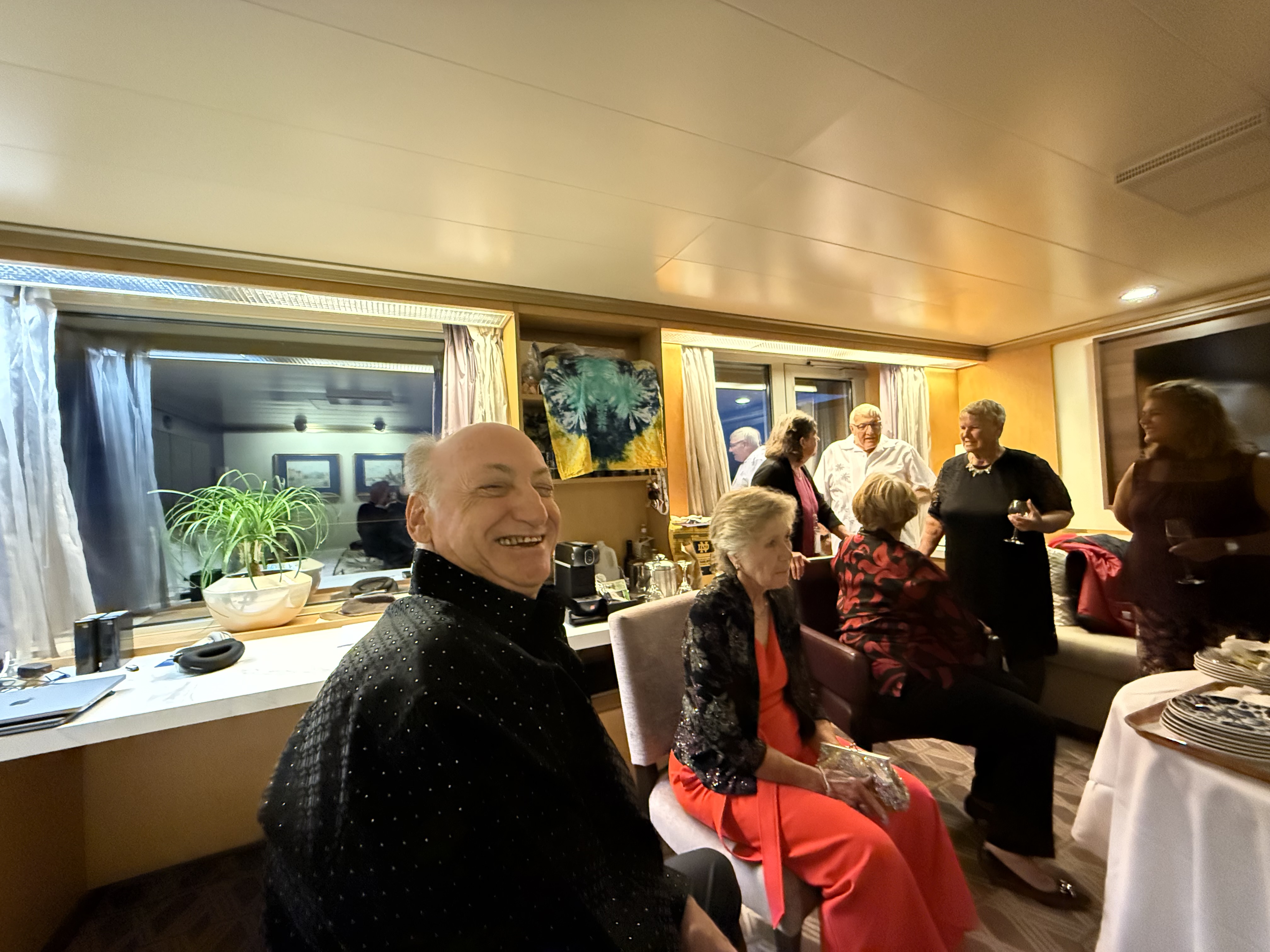
The Notre Dame Fencing team won their 14th National Championship the day before we arrived into Cape Town. Nana was so excited and decided to have a party in our room to celebrate. She had a special cake made up and invited friends and neighbors over for a celebration.

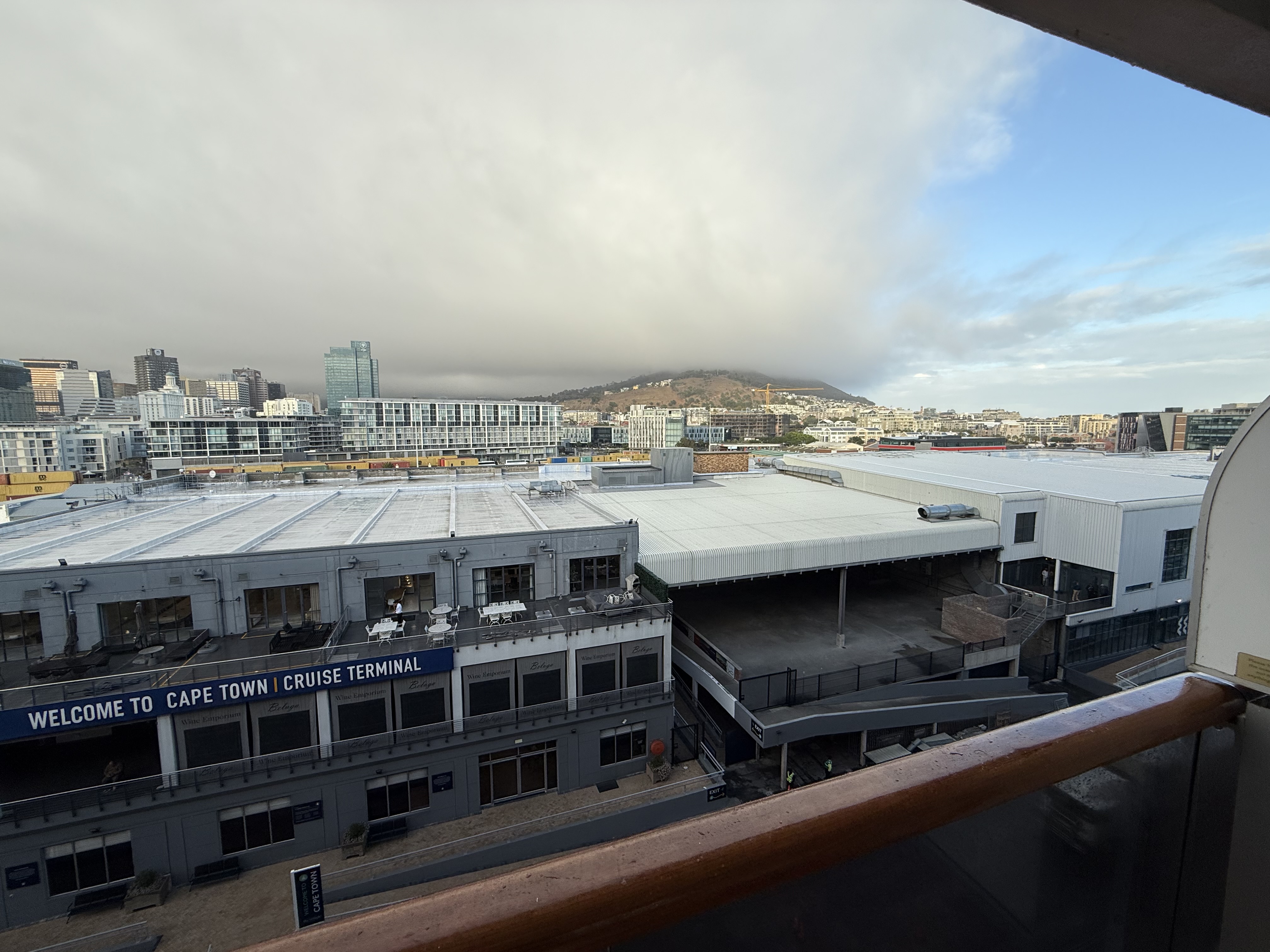
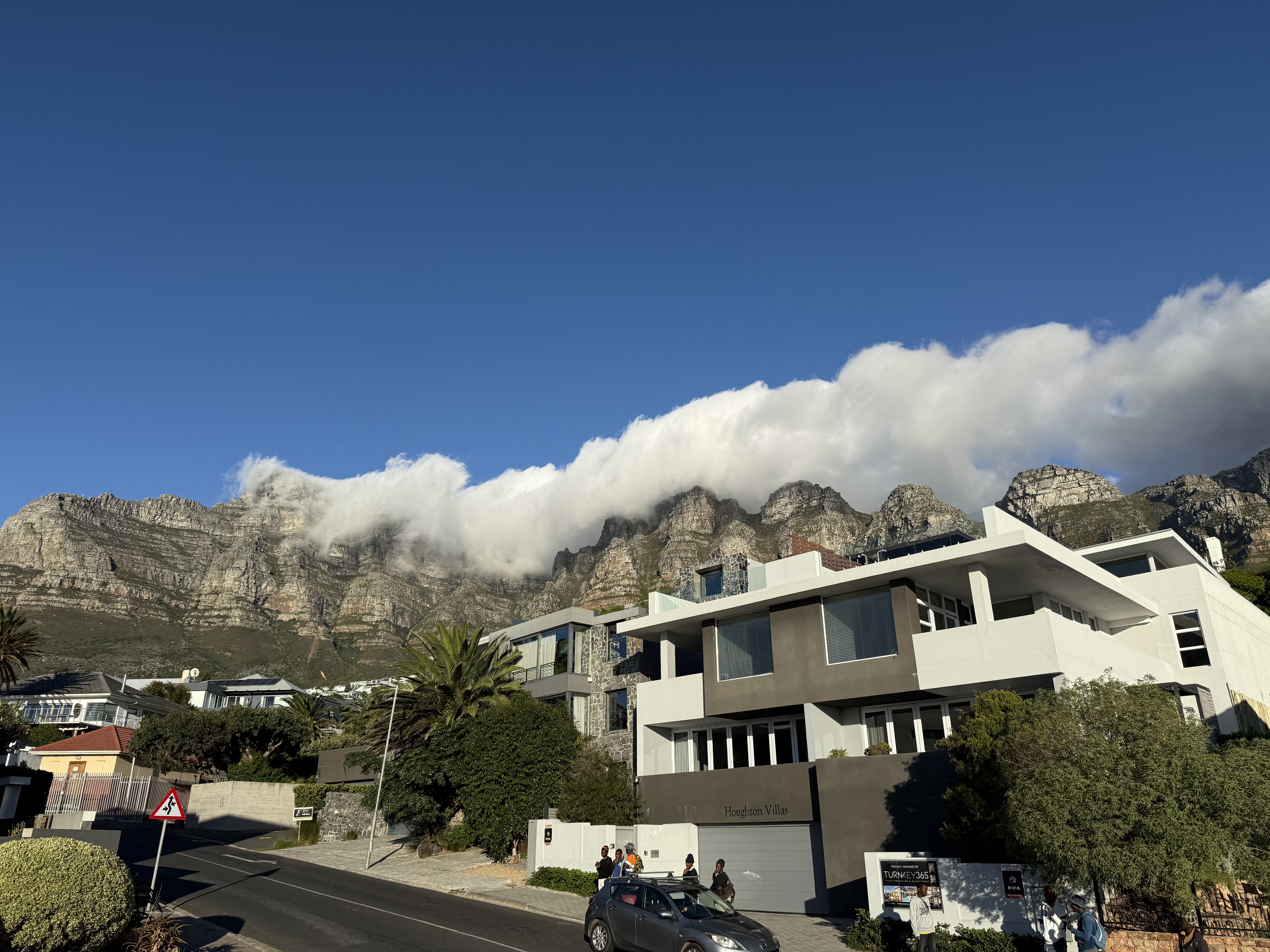
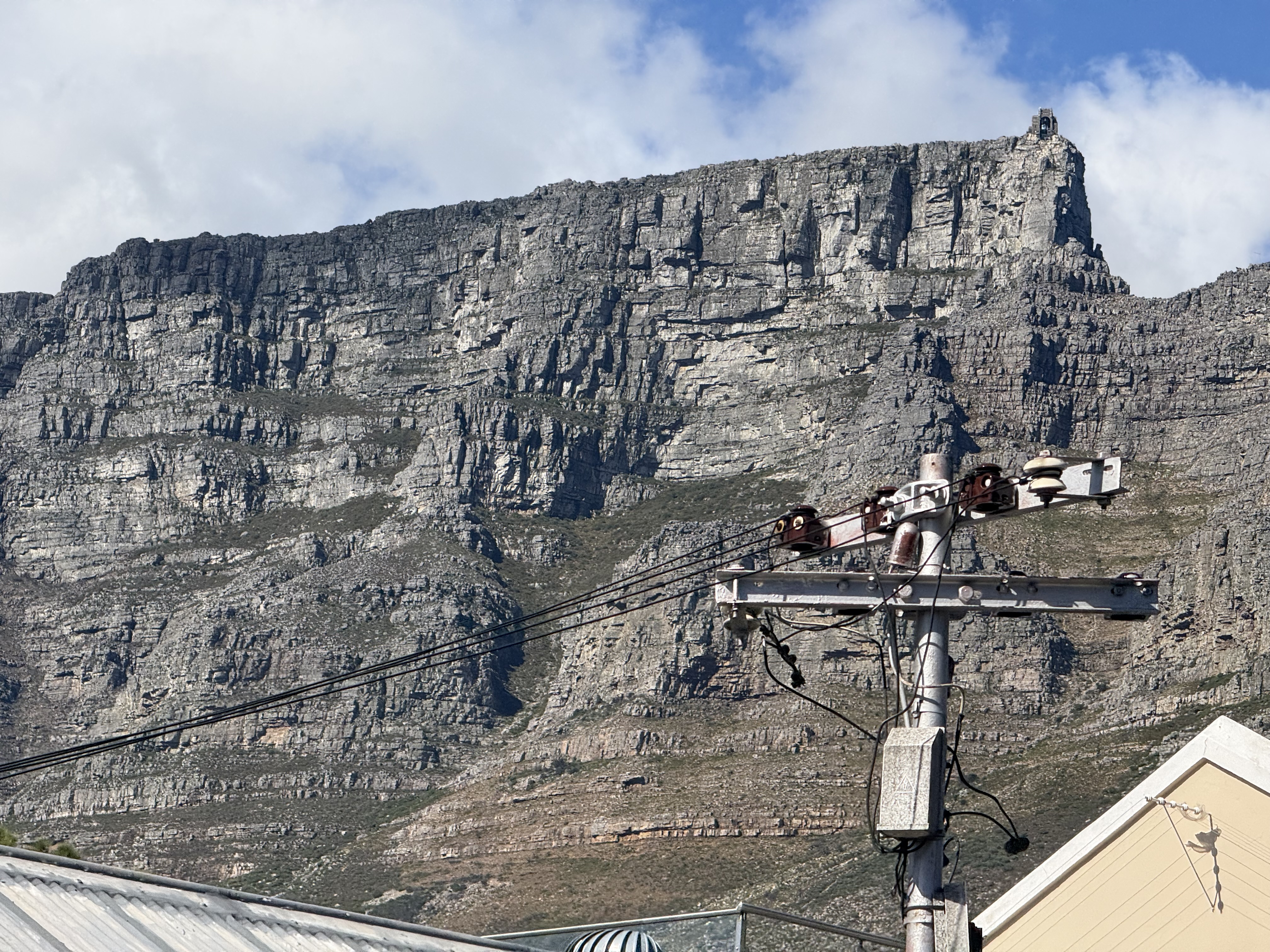
Yesterday we arrived into Cape Town. A City Where Oceans and Mountains Collide. There’s a moment that hits you when you first see Table Mountain rising over Cape Town—it’s the kind of sight that makes you stop mid-sentence, mouth open, and quietly think, Wow. Nestled between the iconic mountain and the Atlantic Ocean, Cape Town isn’t just a destination; it’s a sensory experience. We didn’t actually get this experience until the 2nd day. Table Mountain is more than a backdrop—it’s a personality in the city’s story. Every morning it greets the sun differently: sometimes wrapped in a misty “tablecloth,” other times completely bare, showing off every crag and cliff face.


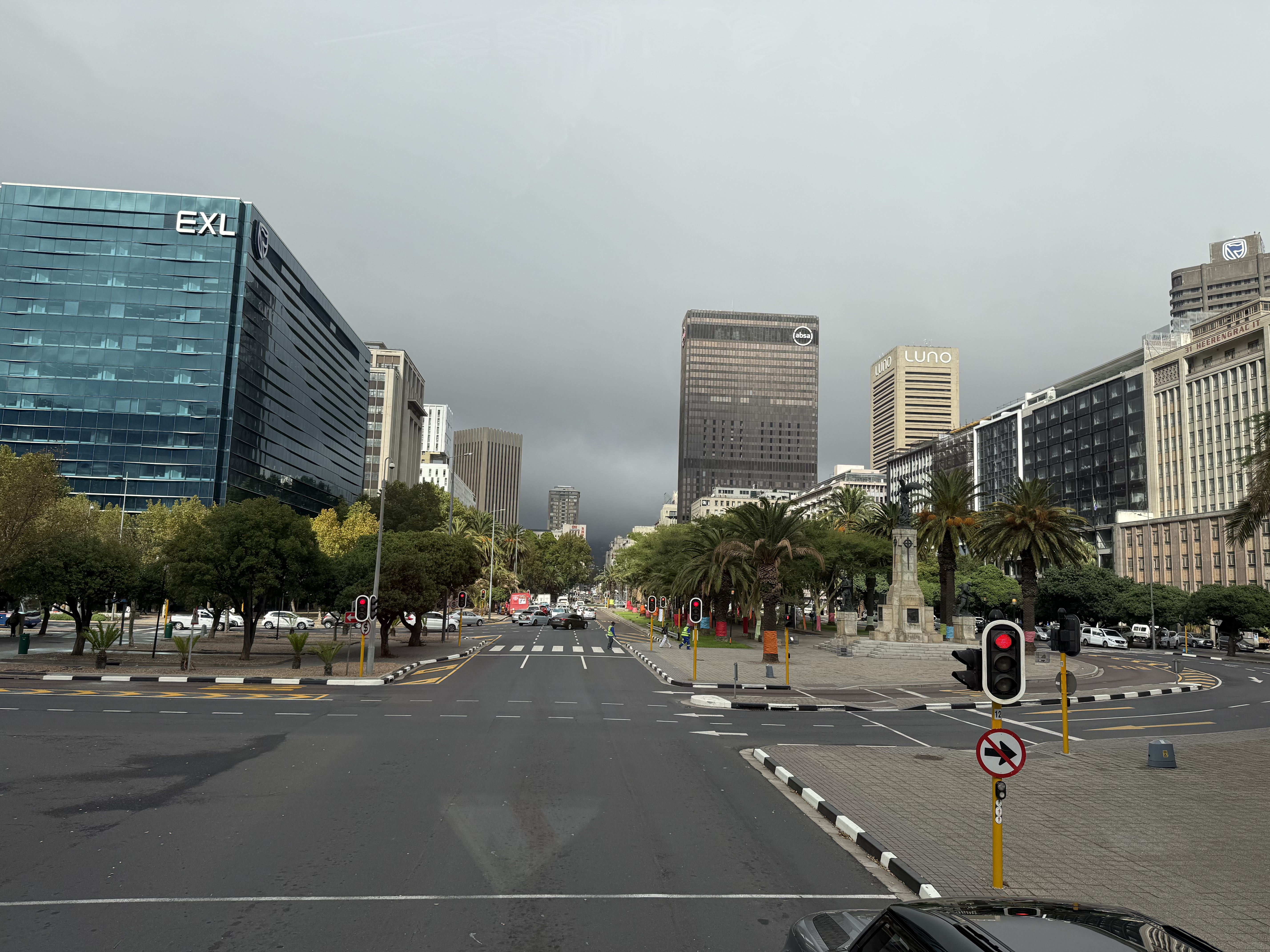
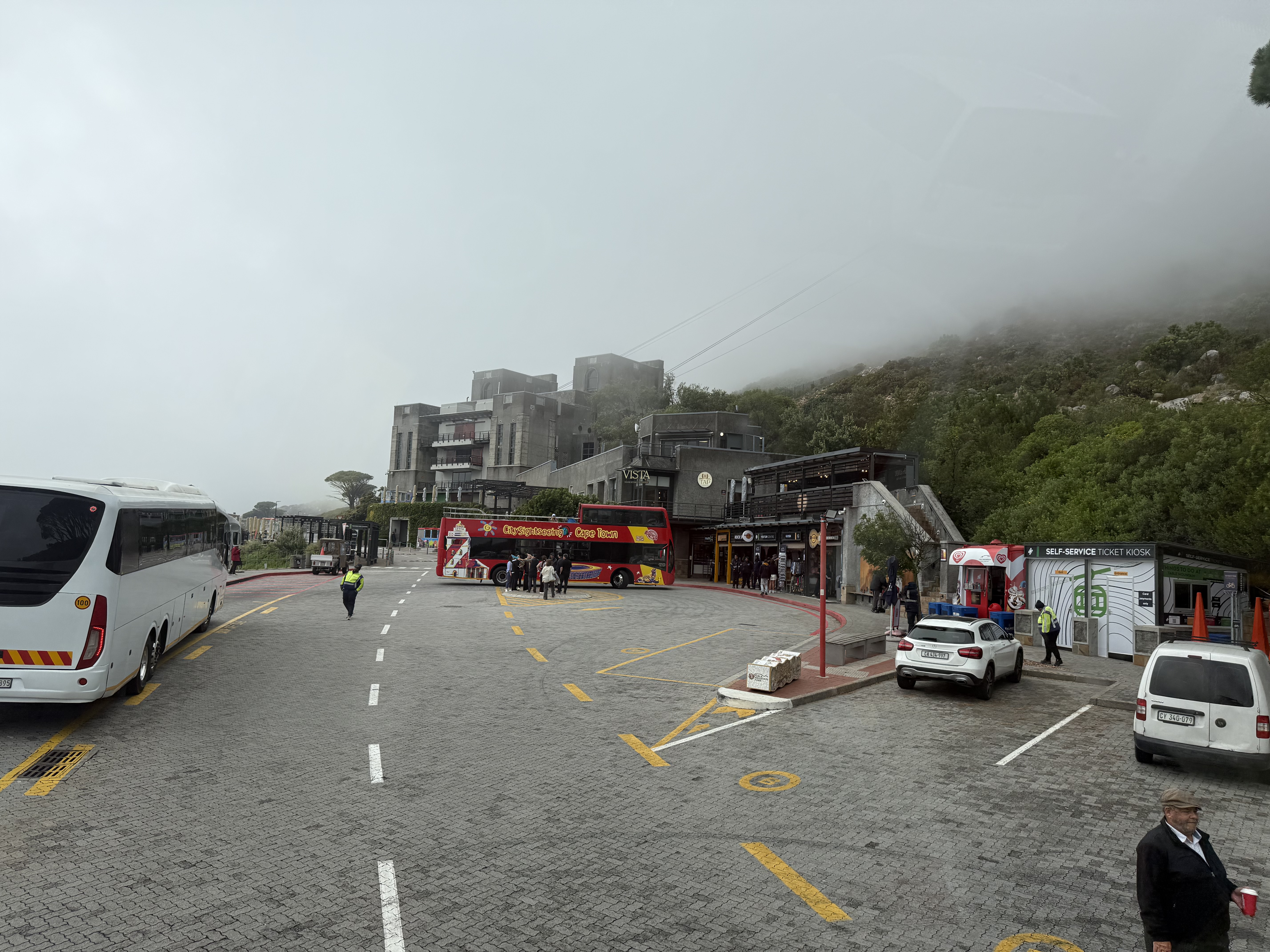

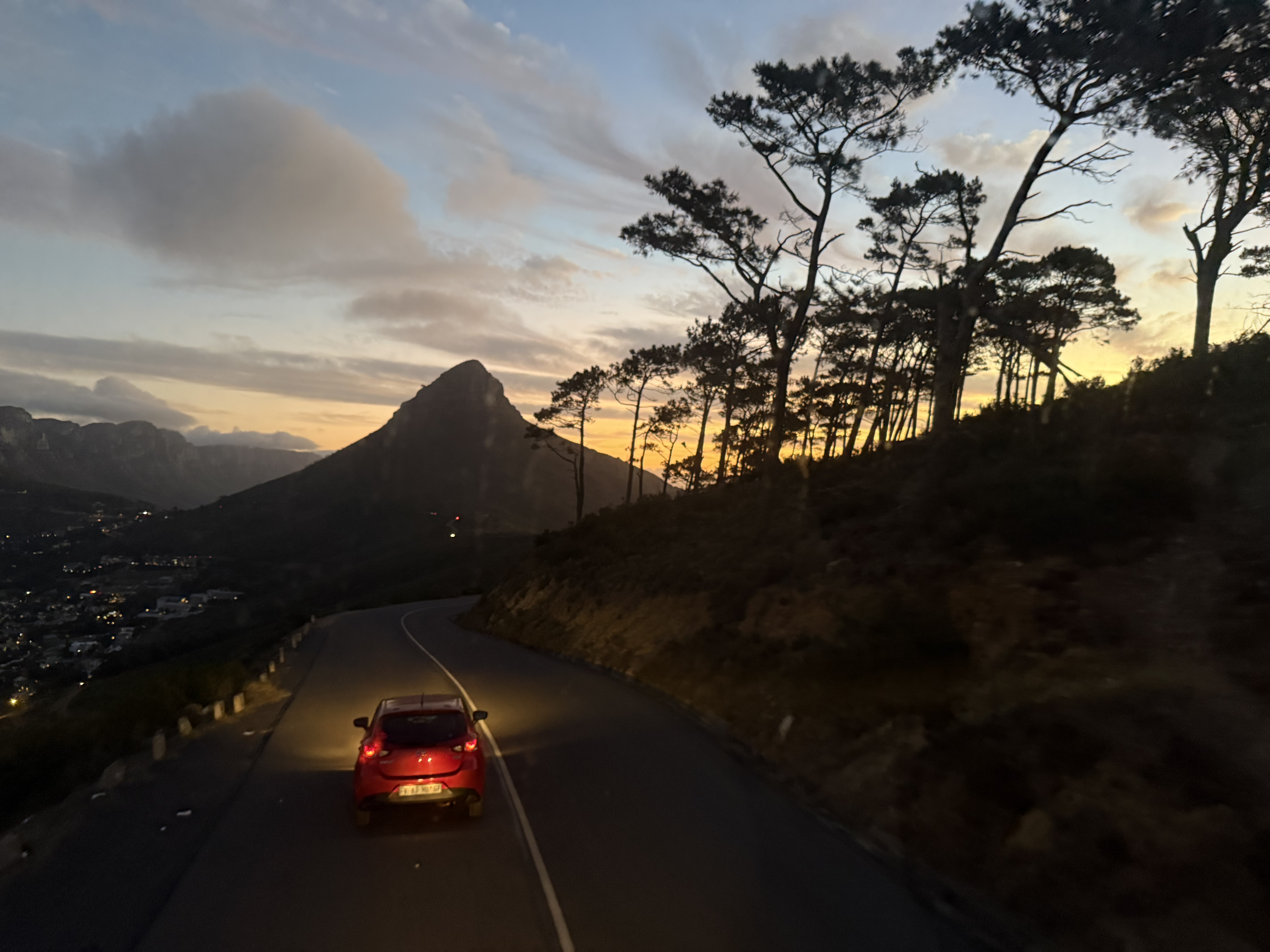
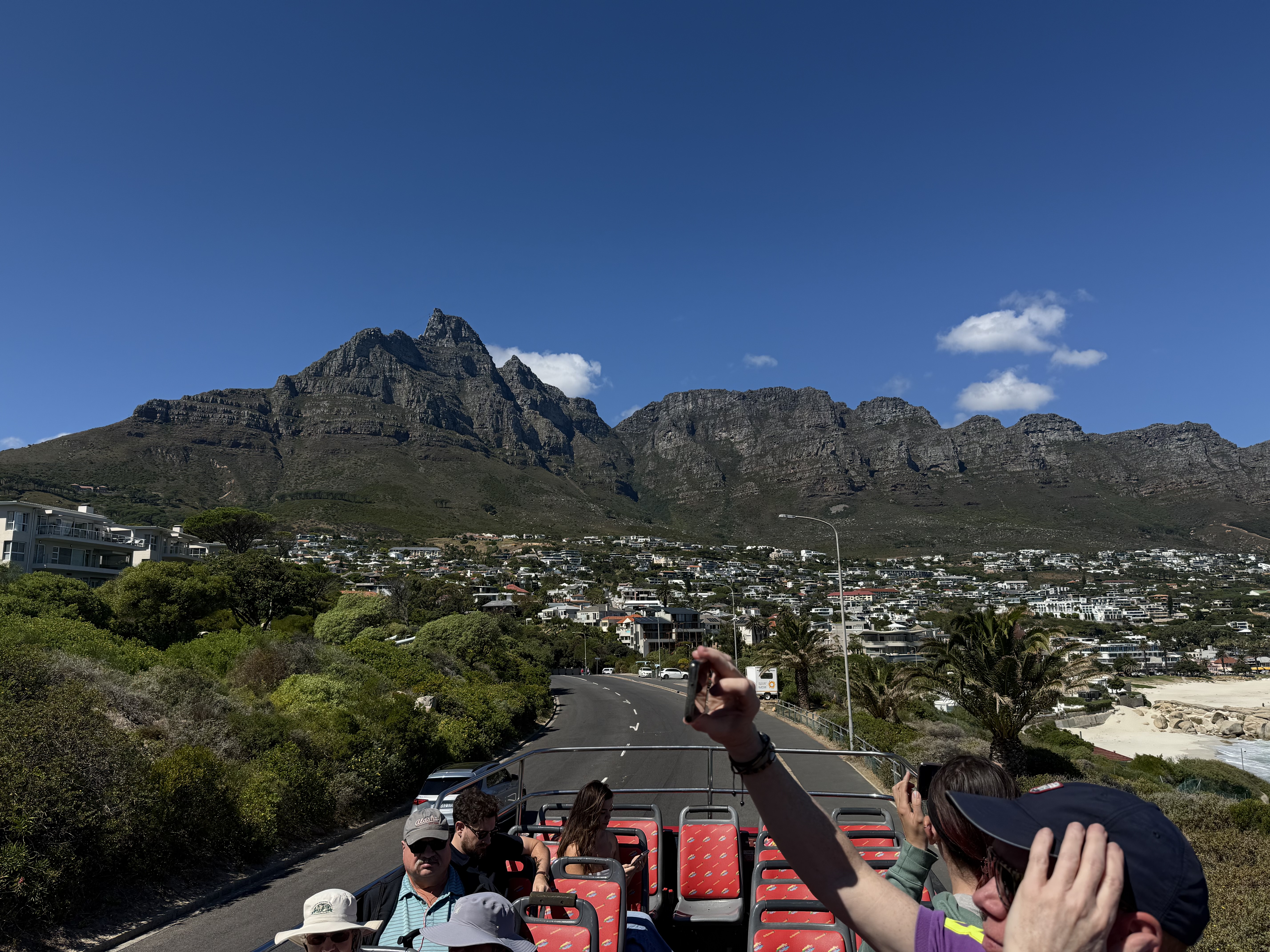
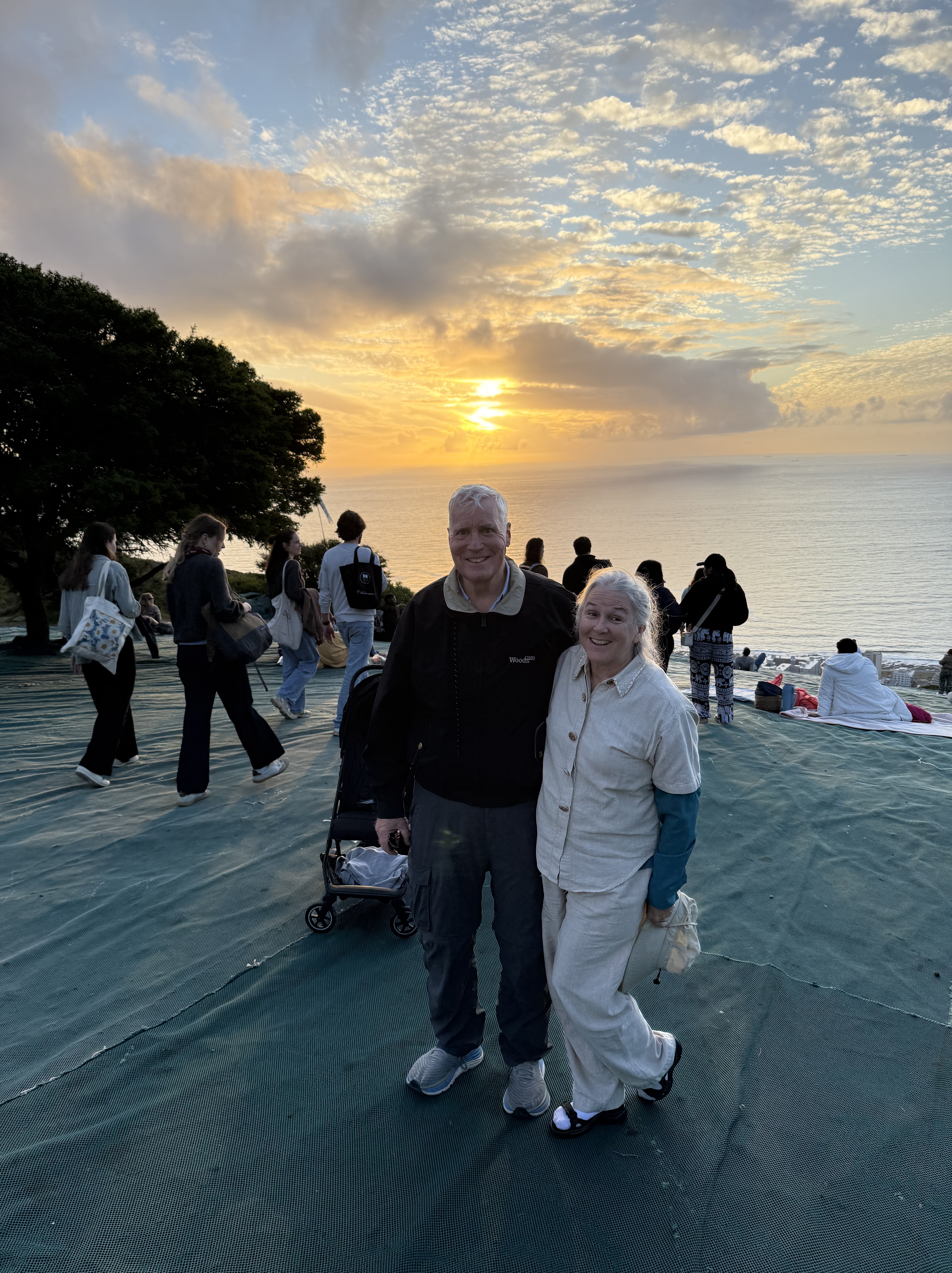
We started our day on the hop on hop off bus. We wanted to take the cable car up Table Mountain but high winds and clouds closed the lift. The bus ride around the city and beaches were very interesting. We went back to the ship for lunch and then took another route in the afternoon. There is so much to see here in Cape Town. We finished our day watching the sunset on Signal Mountain.
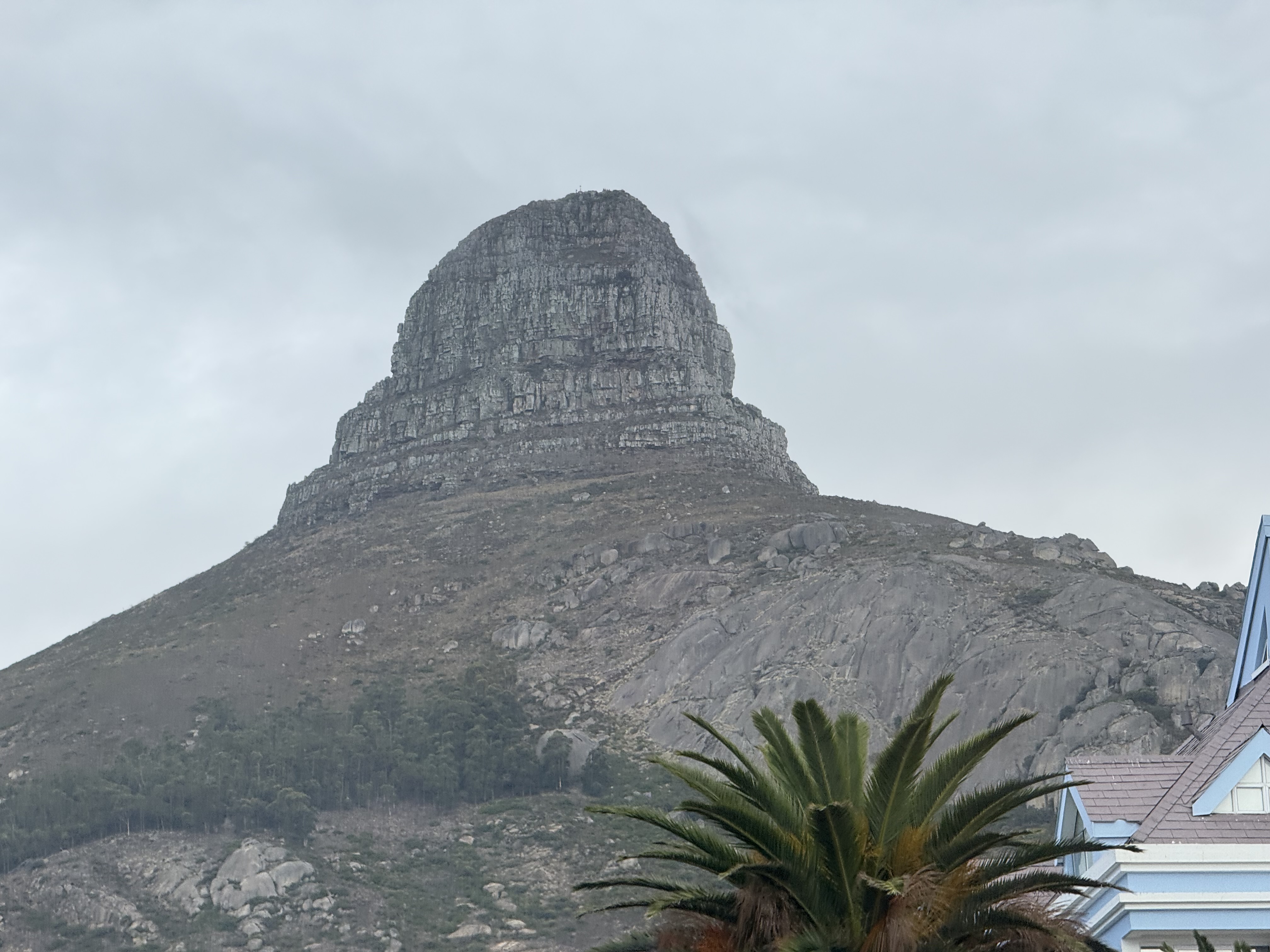
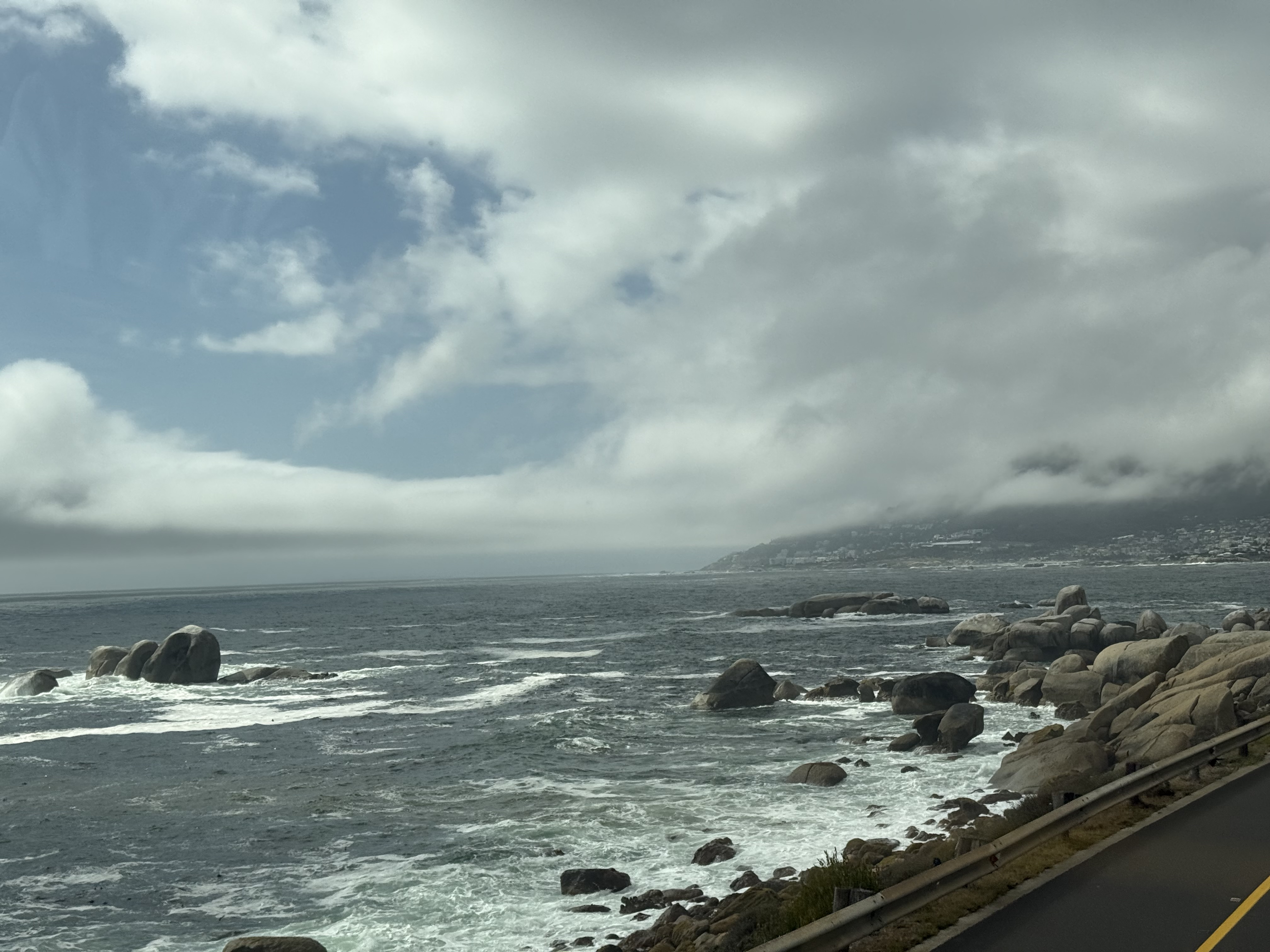


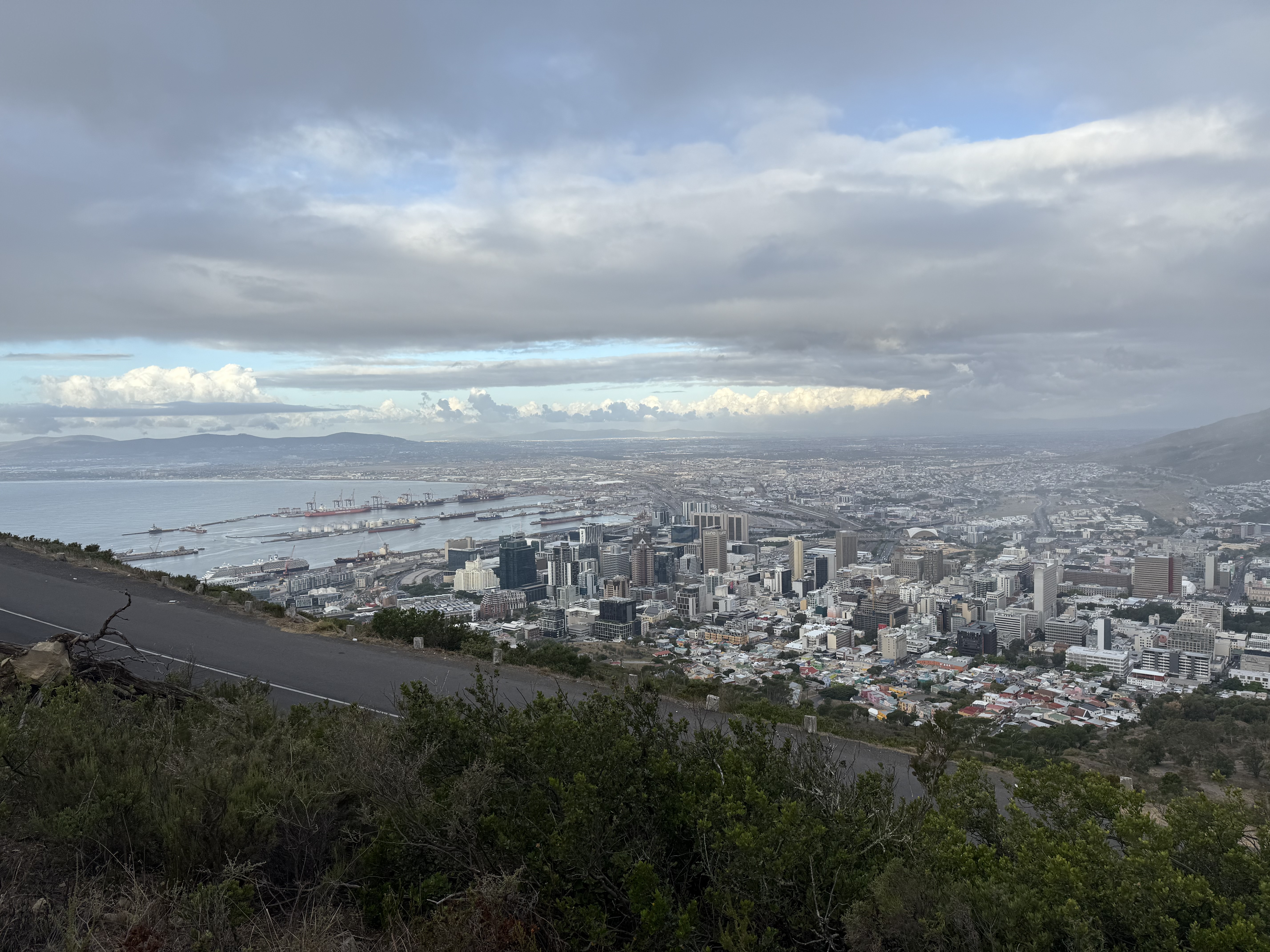



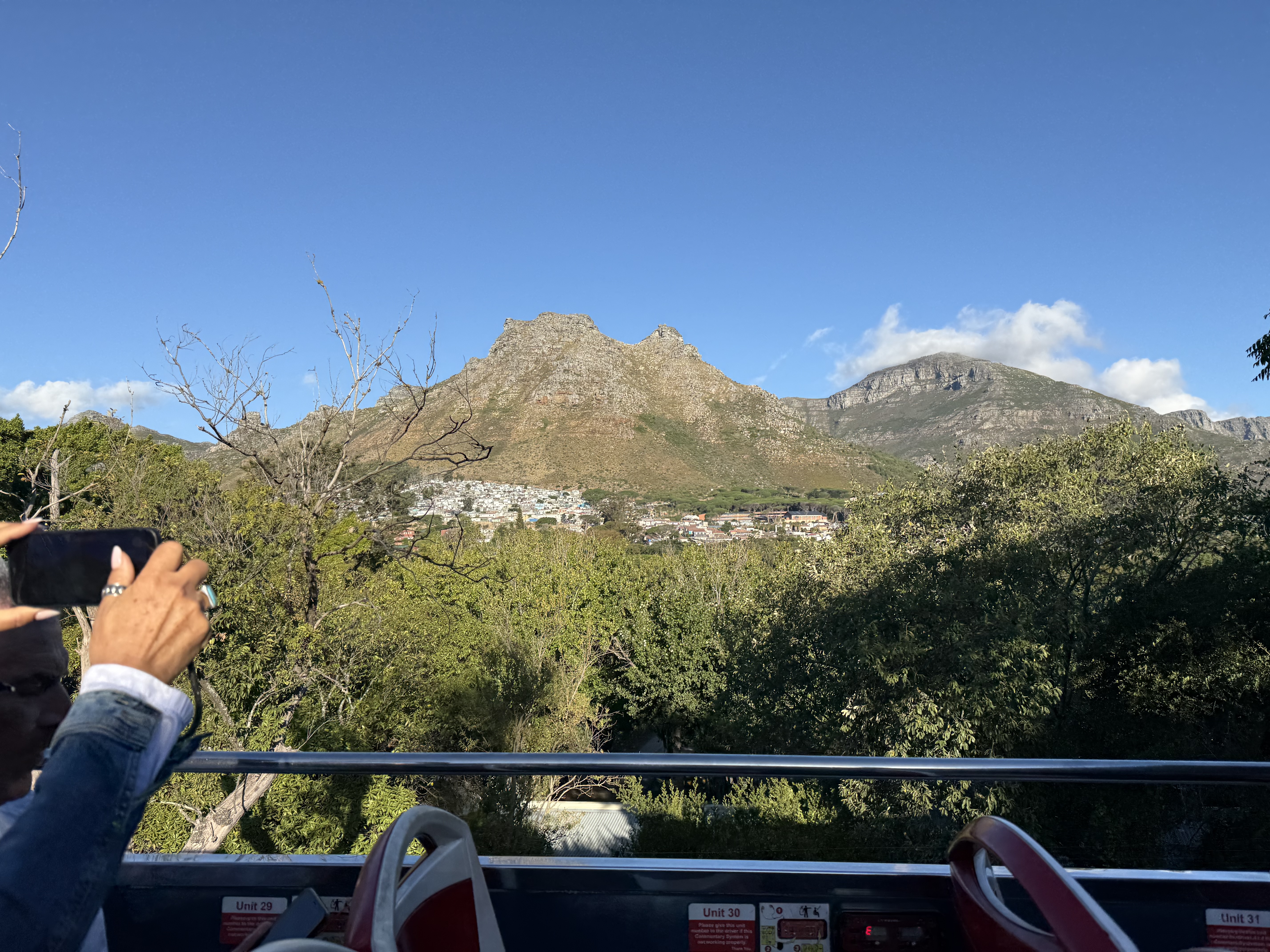
Cape Town’s history is layered and complex. Nelson Mandela was imprisoned here for 18 years on Robben island. We also drove by where forced removals under apartheid happened. Some of the illegal settlements founded during Apartheid were still around today. This city doesn’t hide its past—it invites you to learn from it. We went past district area 6 where people were forced to leave their homes and the houses and businesses were destroyed. We drove by what they call were informal settlements, where displayed poor people flocked to for shelter but lived in a shanty town without running water and basic necessities. In some areas this is still the way it is. There is a big gap between the rich and poor here in South Africa and after 30 years it has improved a lot but this country still has a long way to go. The soccer fields surrounding the informal settlements were packed in the afternoon and way for school children to learn and sometimes break out of where they live.



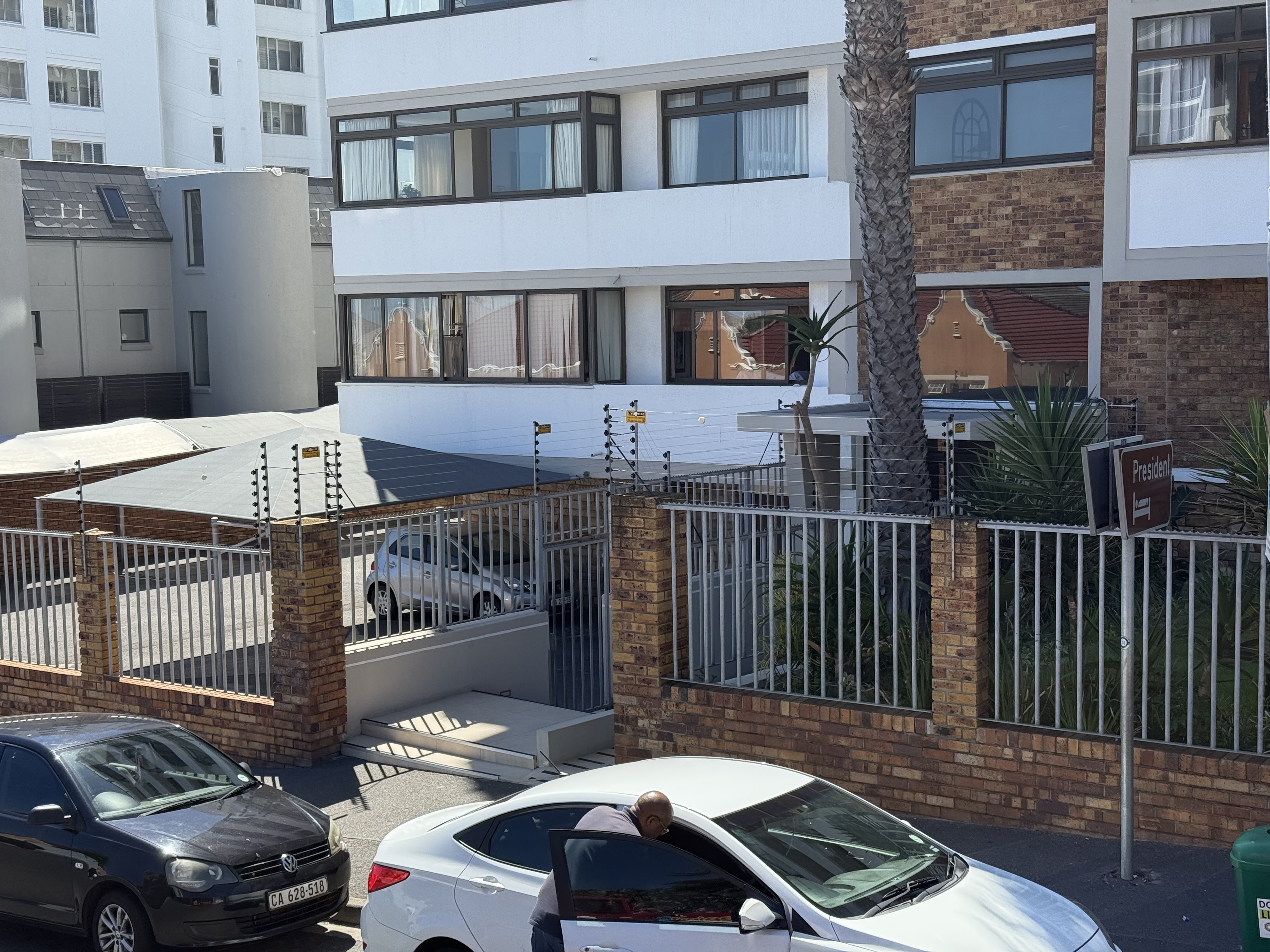
Security is a big concern in Cape Town for several reasons, mostly tied to high crime rates and socioeconomic inequality. Here are some of the main factors. Cape Town has one of the highest crime rates in South Africa, especially violent crimes like robbery, carjacking, and gang-related violence. This naturally leads to increased security measures. There’s a stark contrast between rich and poor in Cape Town. Affluent neighborhoods invest heavily in private security, cameras, and gated communities to protect themselves, which can make the city feel very “on guard.” Since Cape Town is a major tourist destination, authorities and businesses are extra cautious about safety to protect visitors and maintain the city’s image. South Africa has one of the largest private security industries in the world. It’s common for people and businesses to rely on private firms for protection, often making the presence of guards, electric fencing, and alarms feel overwhelming. The fences with electric wires above them were everywhere as well as many many security people. Nana and I did feel safe walking around the city.


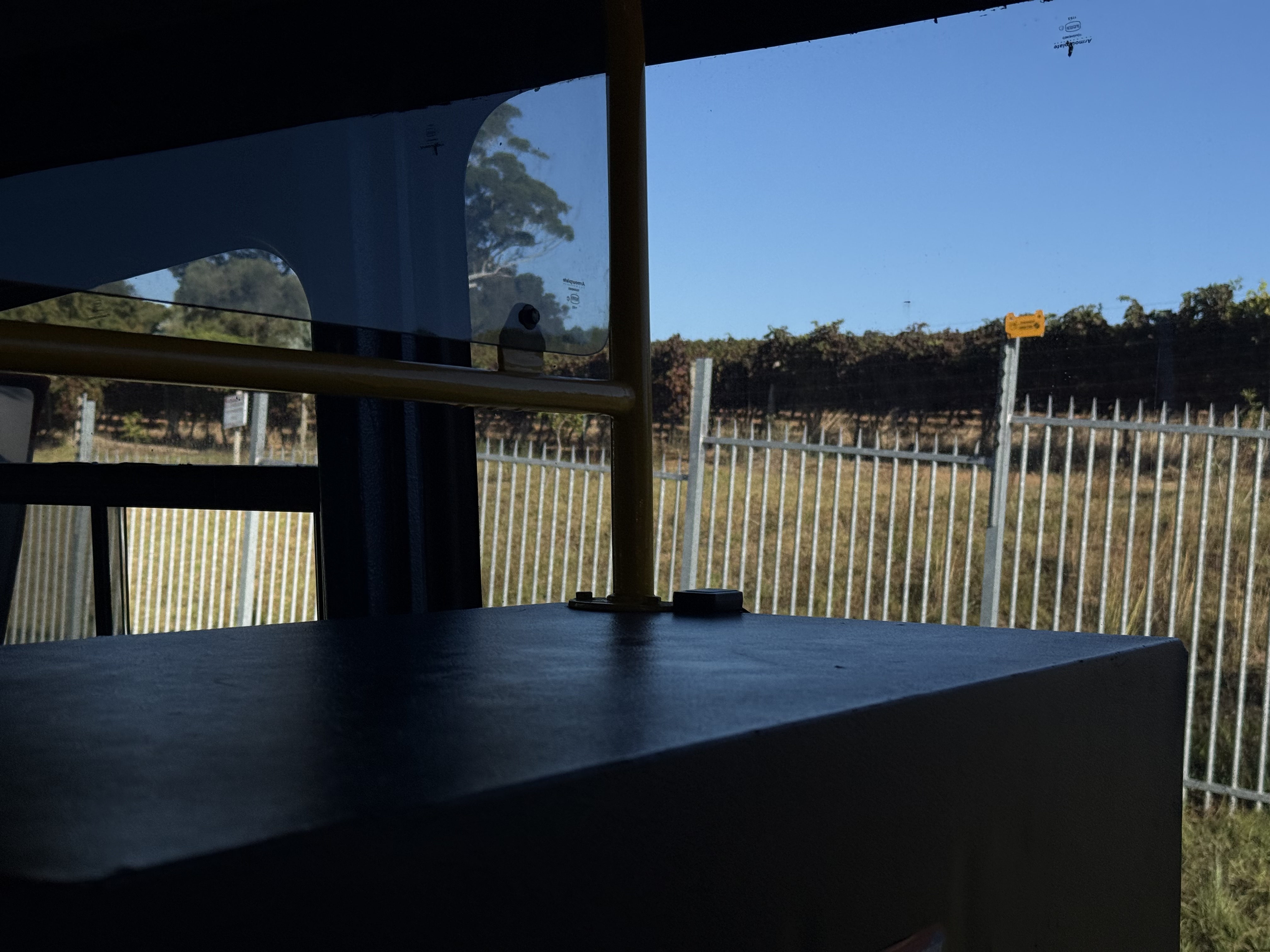
As we drive around the beaches and waterfront properties we got a taste of how different cities in South Africa are. Durban and Cape Town, for example, offer very different beach experiences—each with its own vibe, scenery, and appeal. The Durban Beach Experience is Tropical, relaxed, and vibrant with warm water from the Indian Ocean which is great for swimming, surfing, and bodyboarding. The Cape Town Beach Experience is Scenic, stylish, and dramatic where the water is cold with not much swimming but warm beaches for sunbathing and playing games.
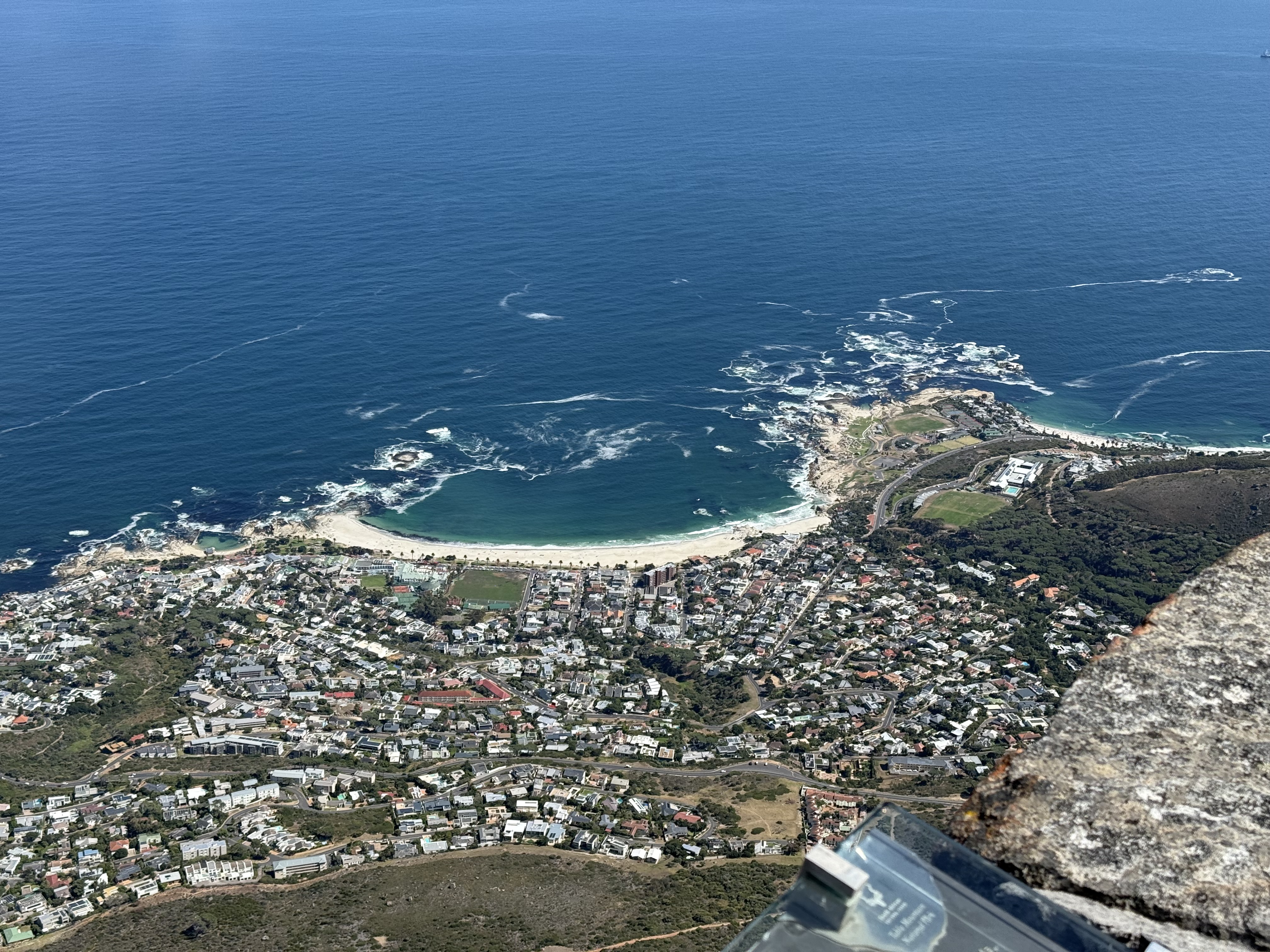
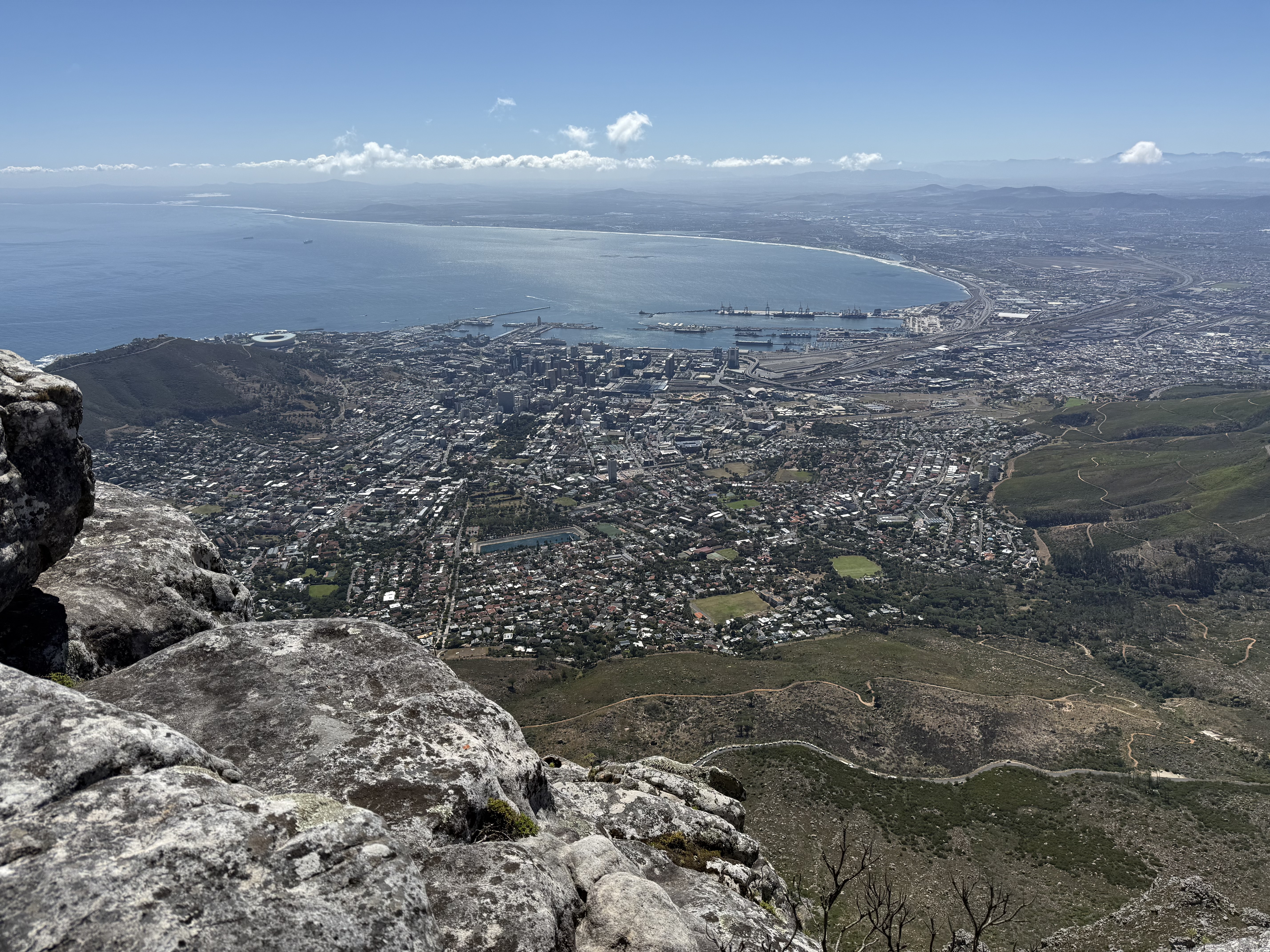
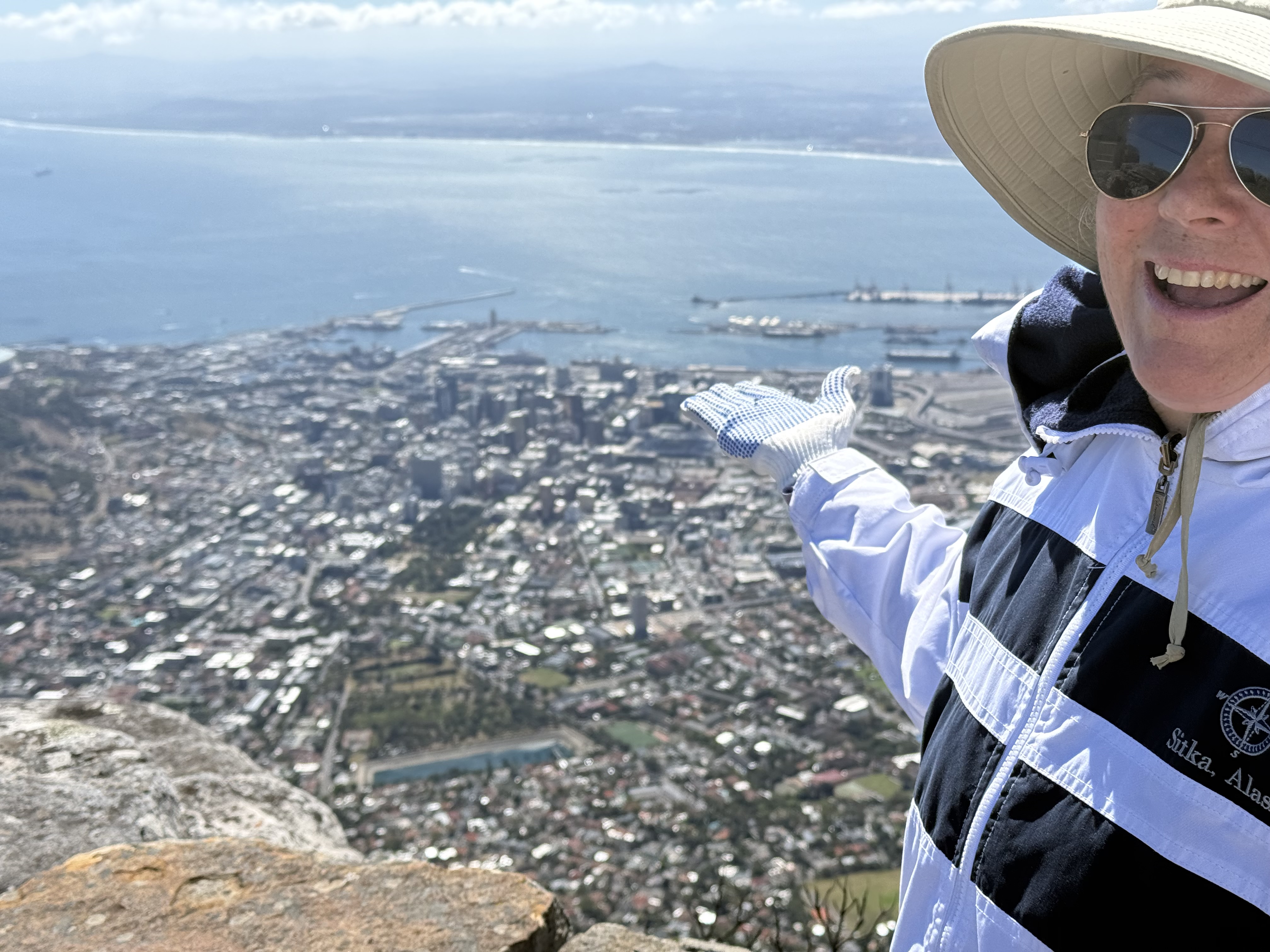


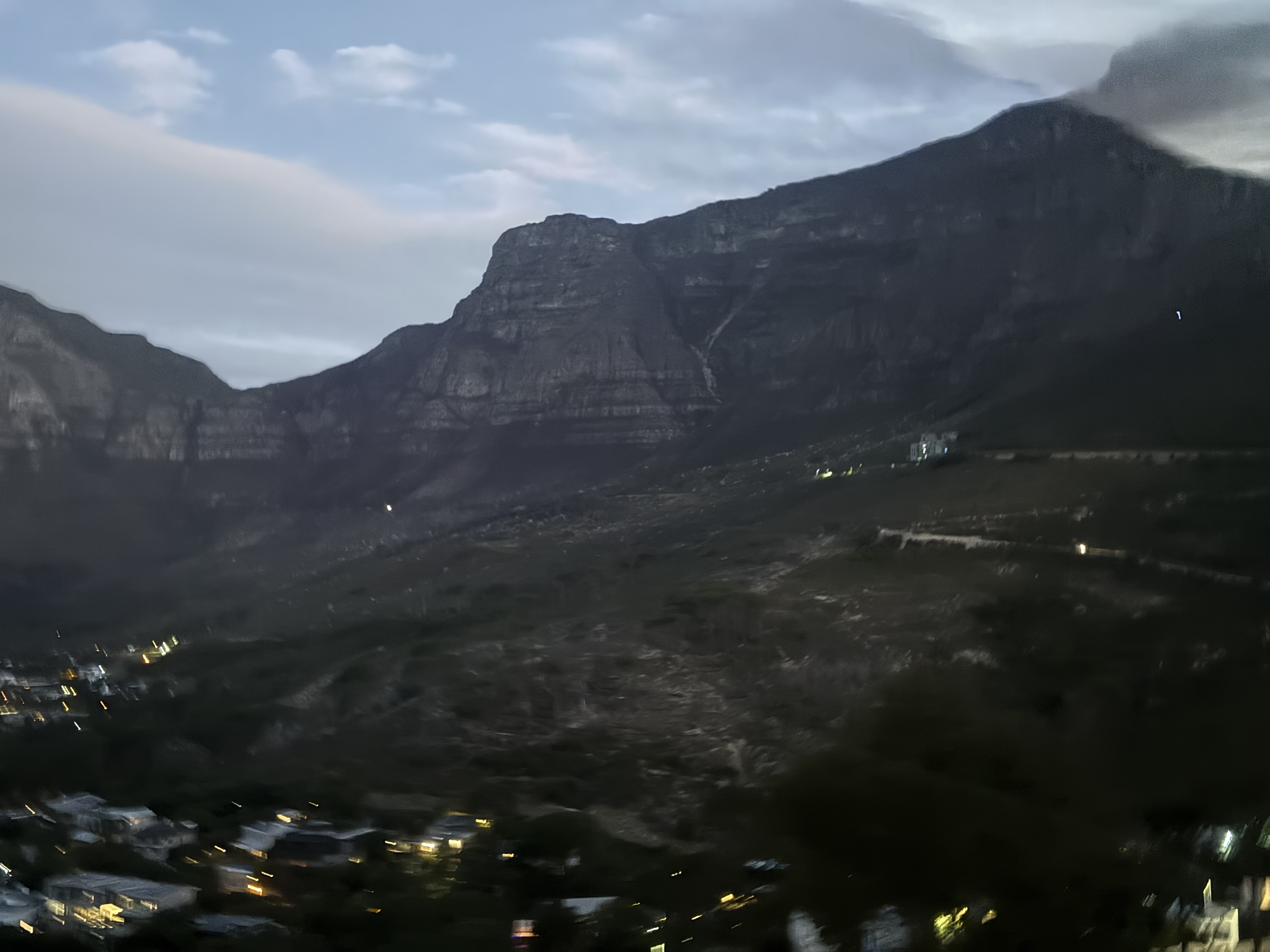
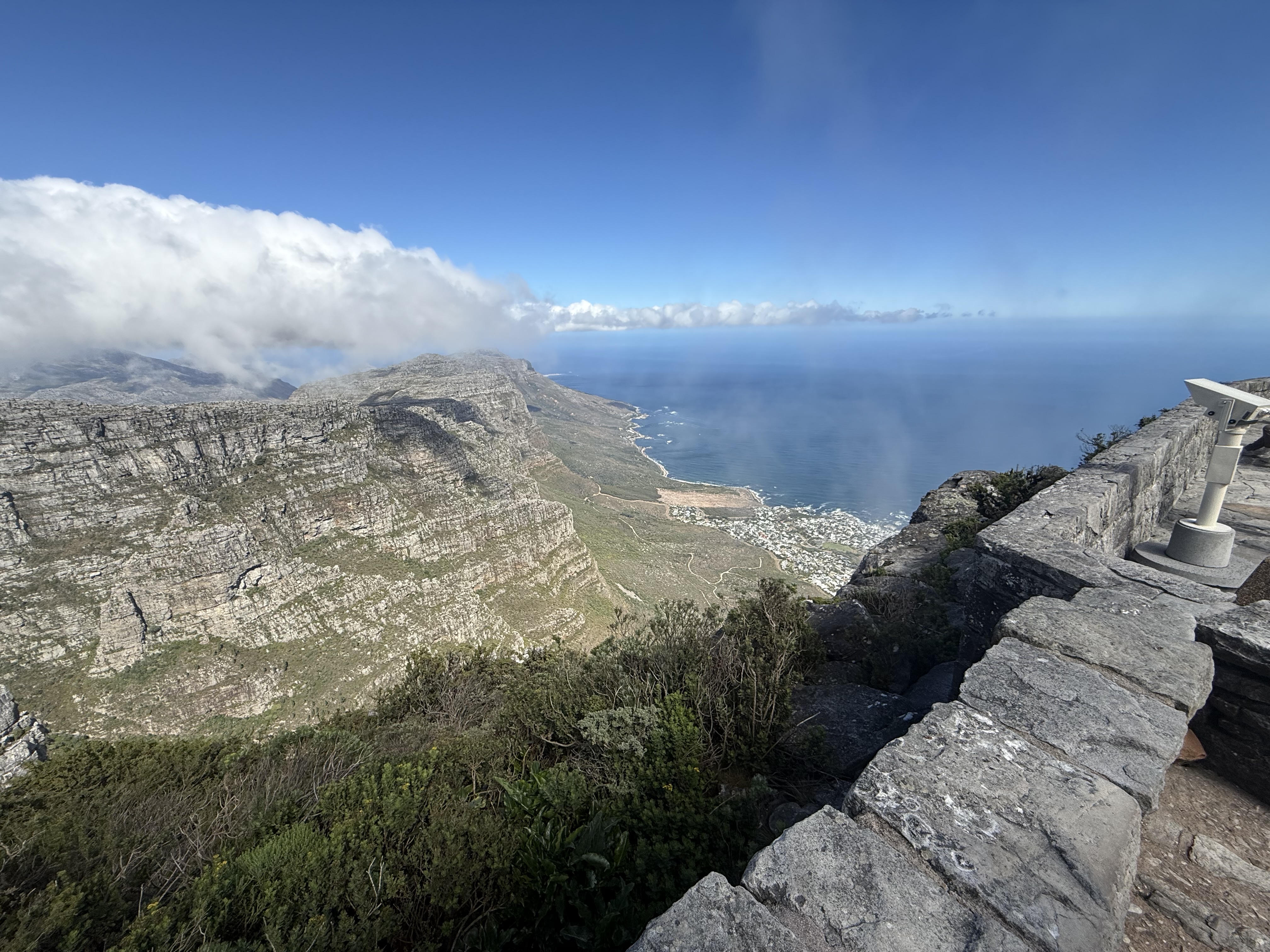
Everywhere you go you see the backdrop of Table Mountain, Devil’s Peak or Signal Hill. The views are dramatic. On our first day we saw them buried in clouds but the second the clouds cleared and we had some great views.


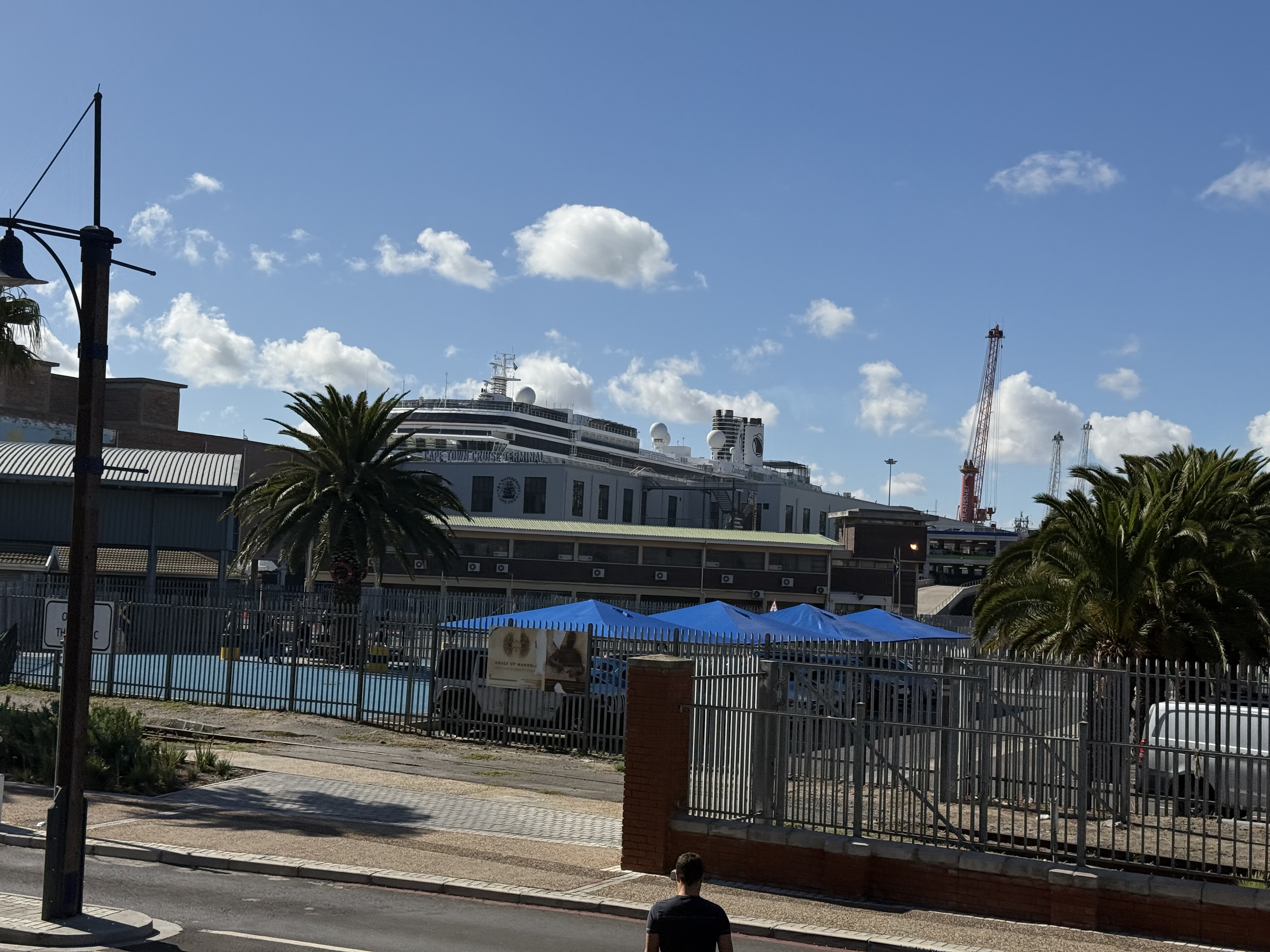
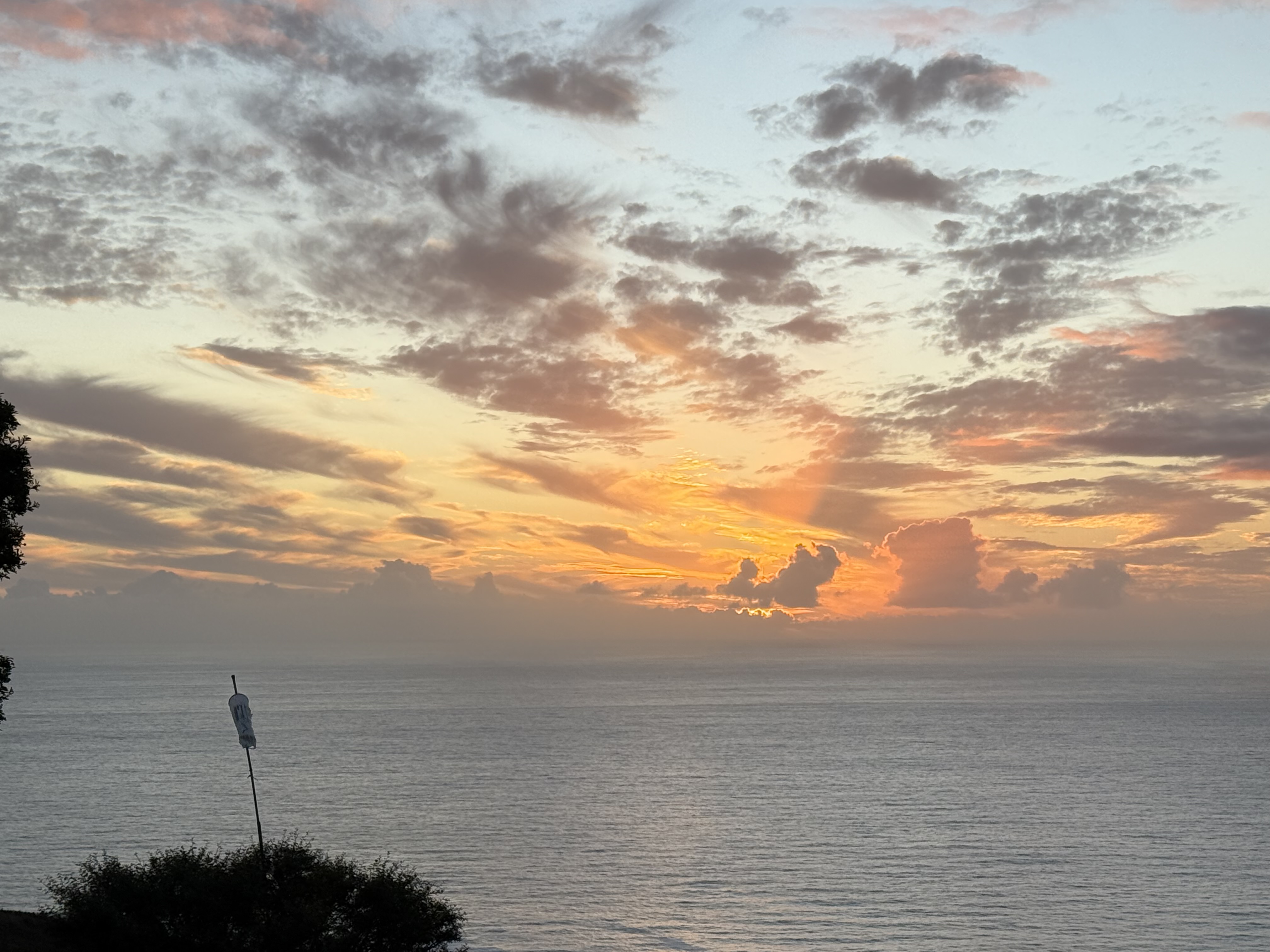
As I said earlier we booked the Hop On Hop Off bus for two days. We didn’t quite know what to expect but it turned out to be one of the best stops so far on this cruise. The first we met up with Marty and Julie, our table mates for dinner and took the red line and blue line from start to finish. We had a fantastic overview of the city and then knew what we wanted to see. First up was the sunset bus. The bus took us up on Signal Hill and we watched the sunset in dramatic fashion. Nana and I hiked around Signal Hill before the sun set and got some great views of the city. The city at night coming down the hill was spectacular.


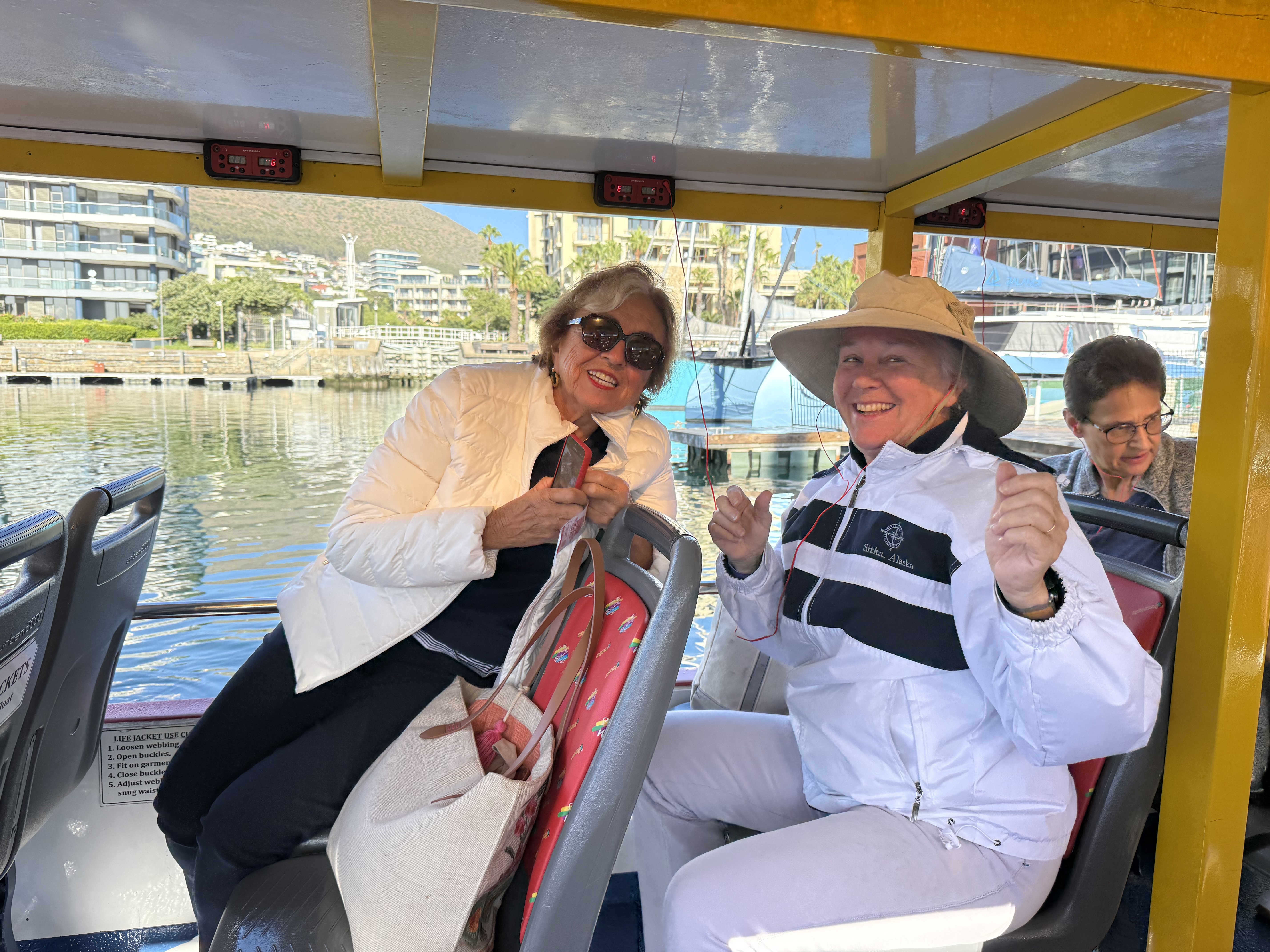
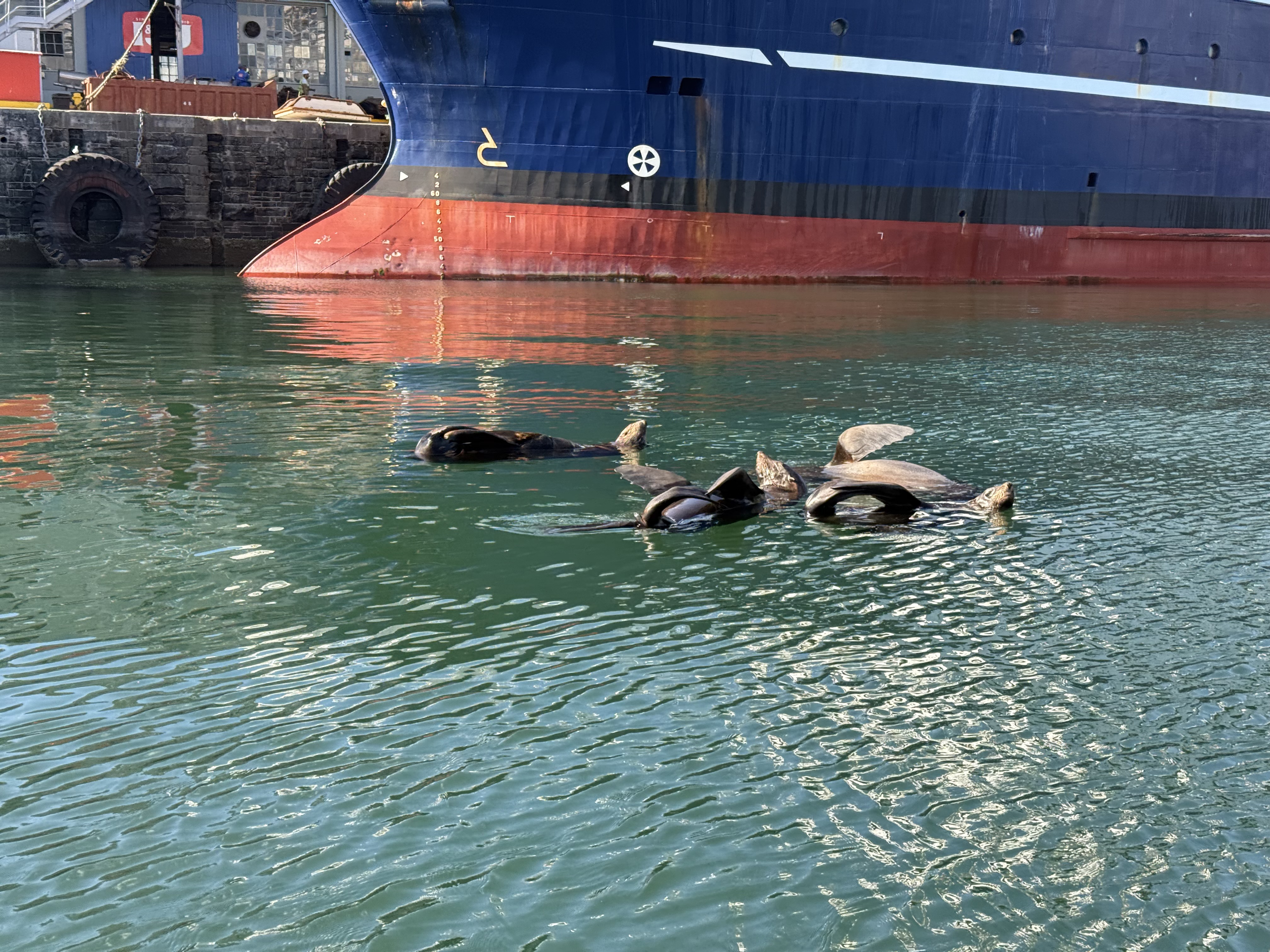
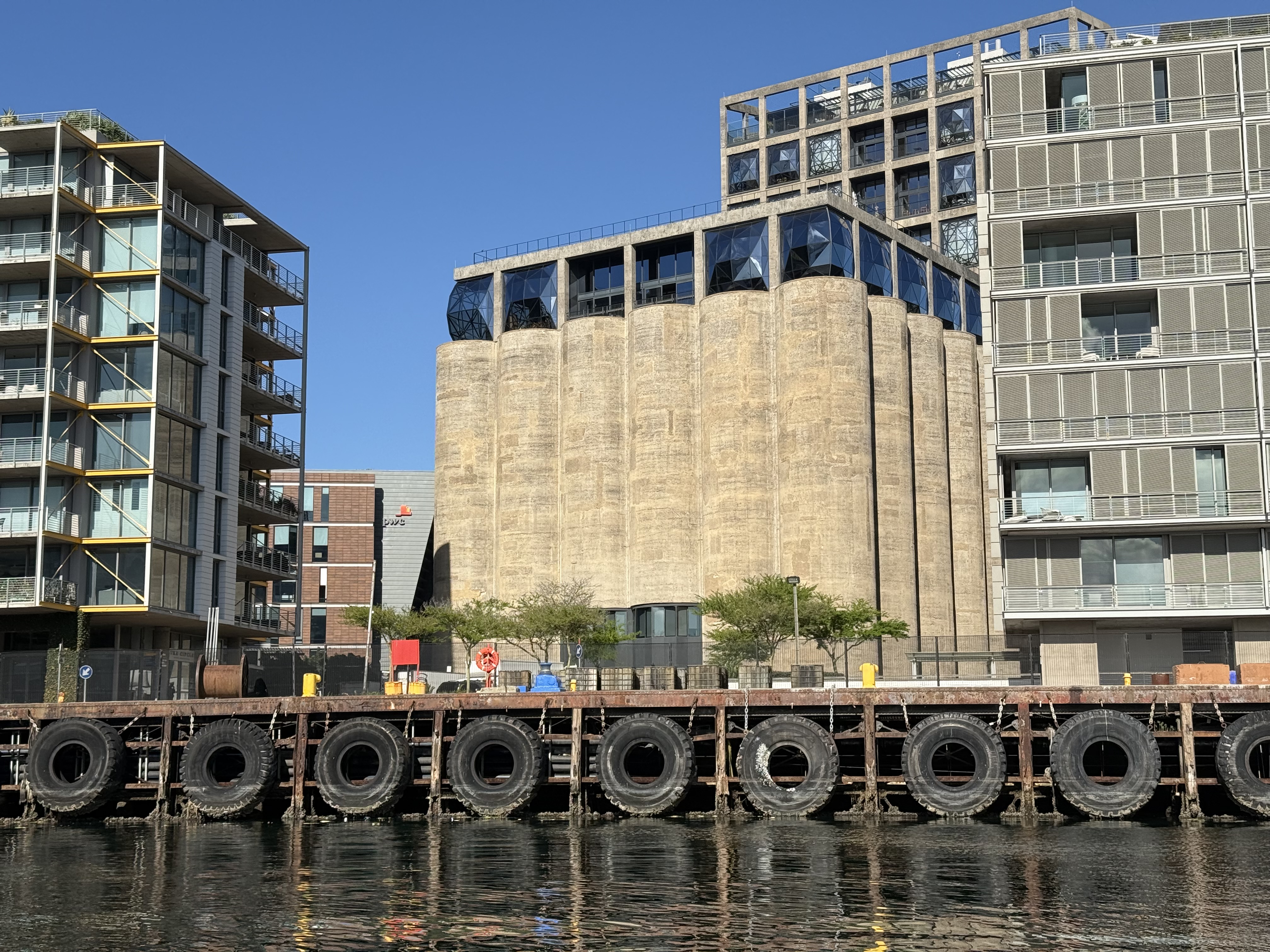
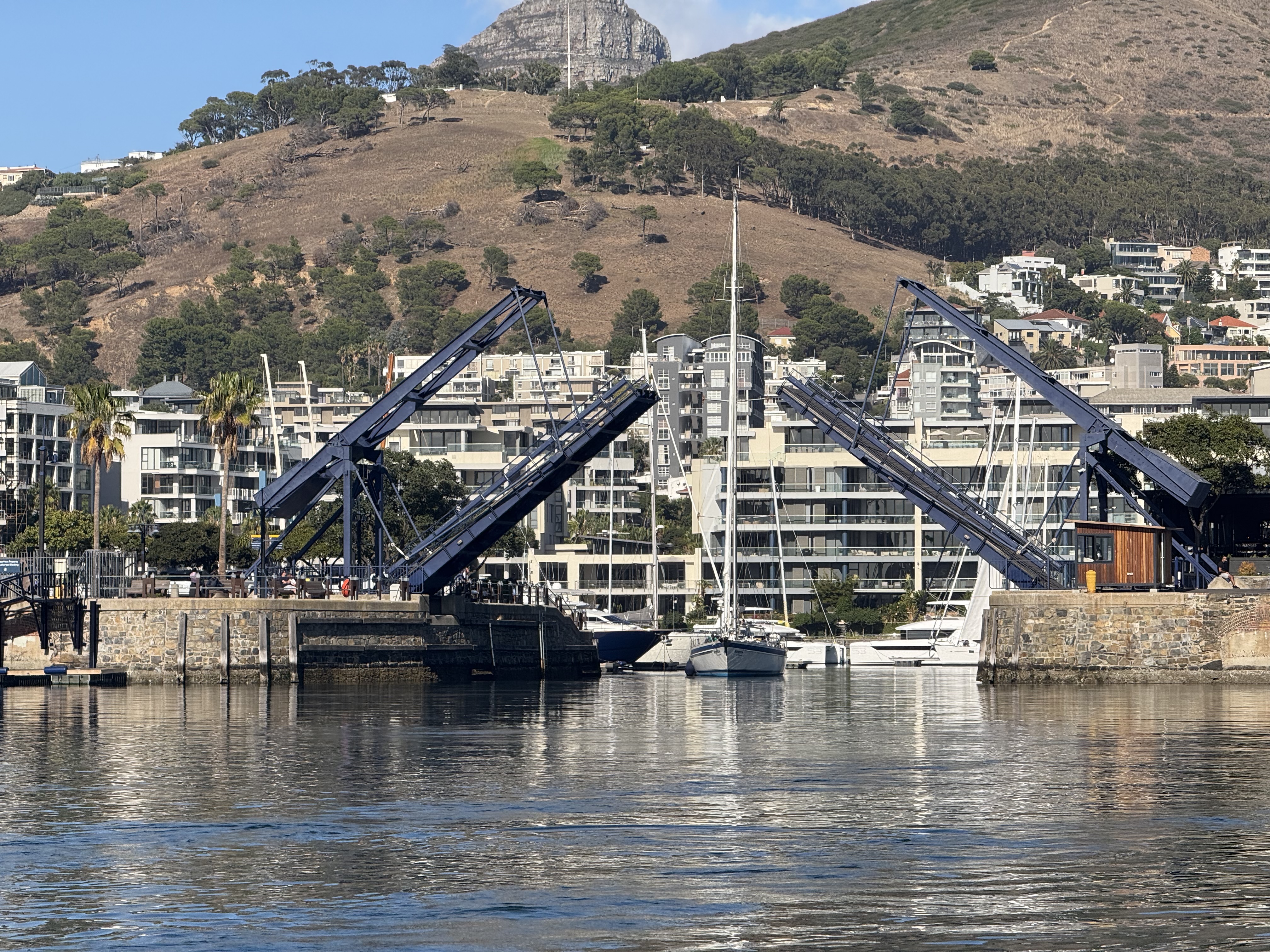
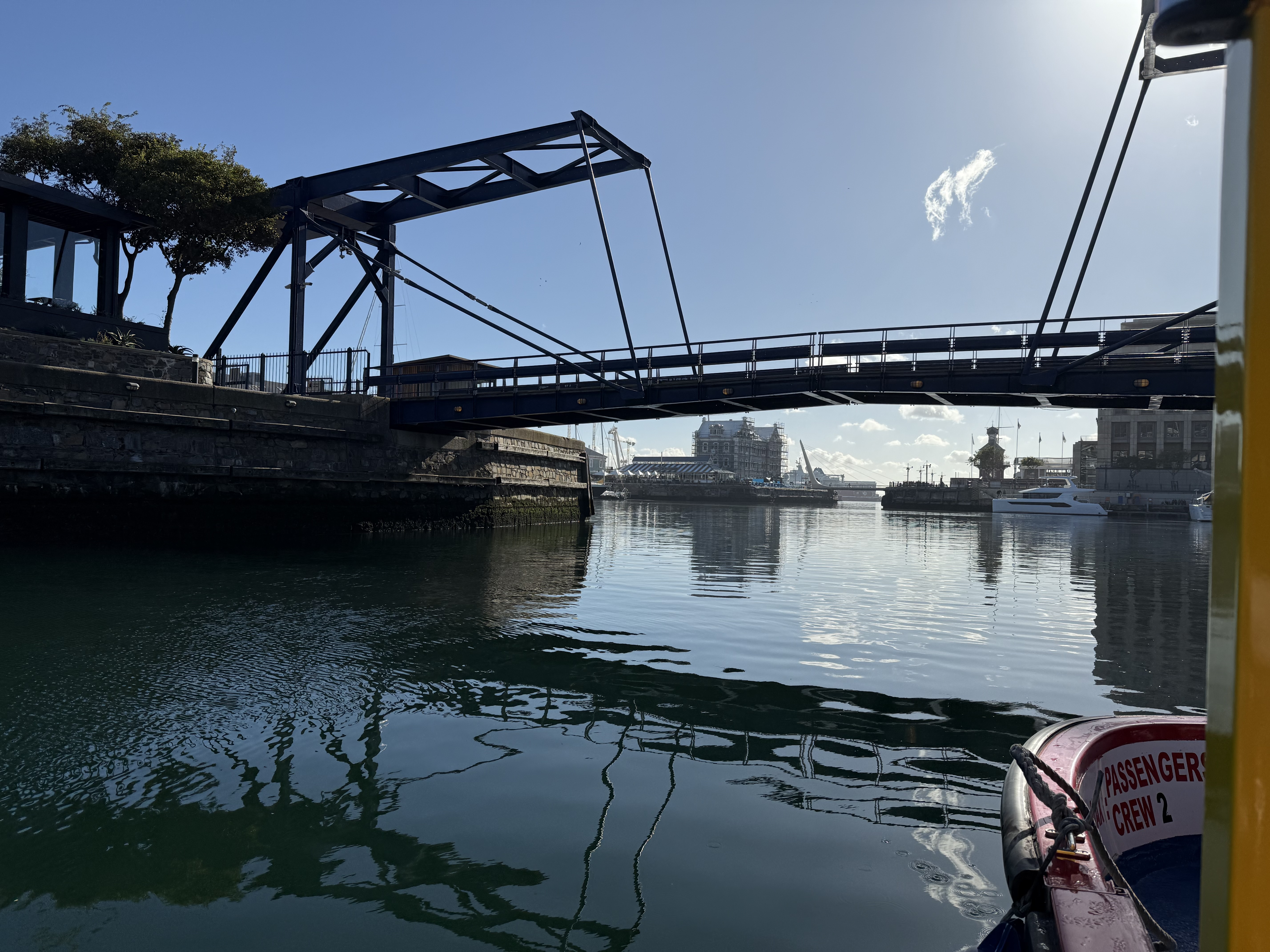
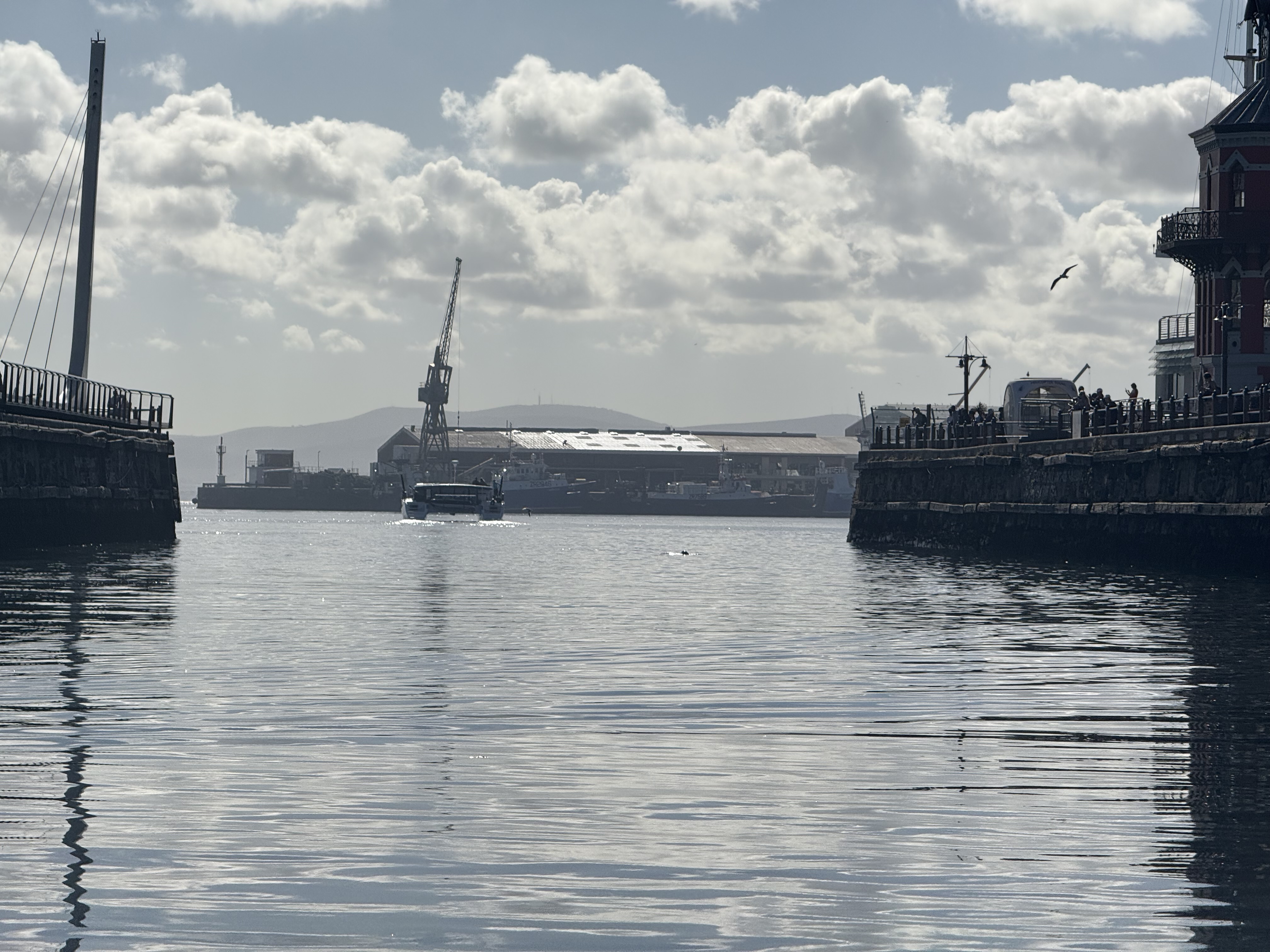
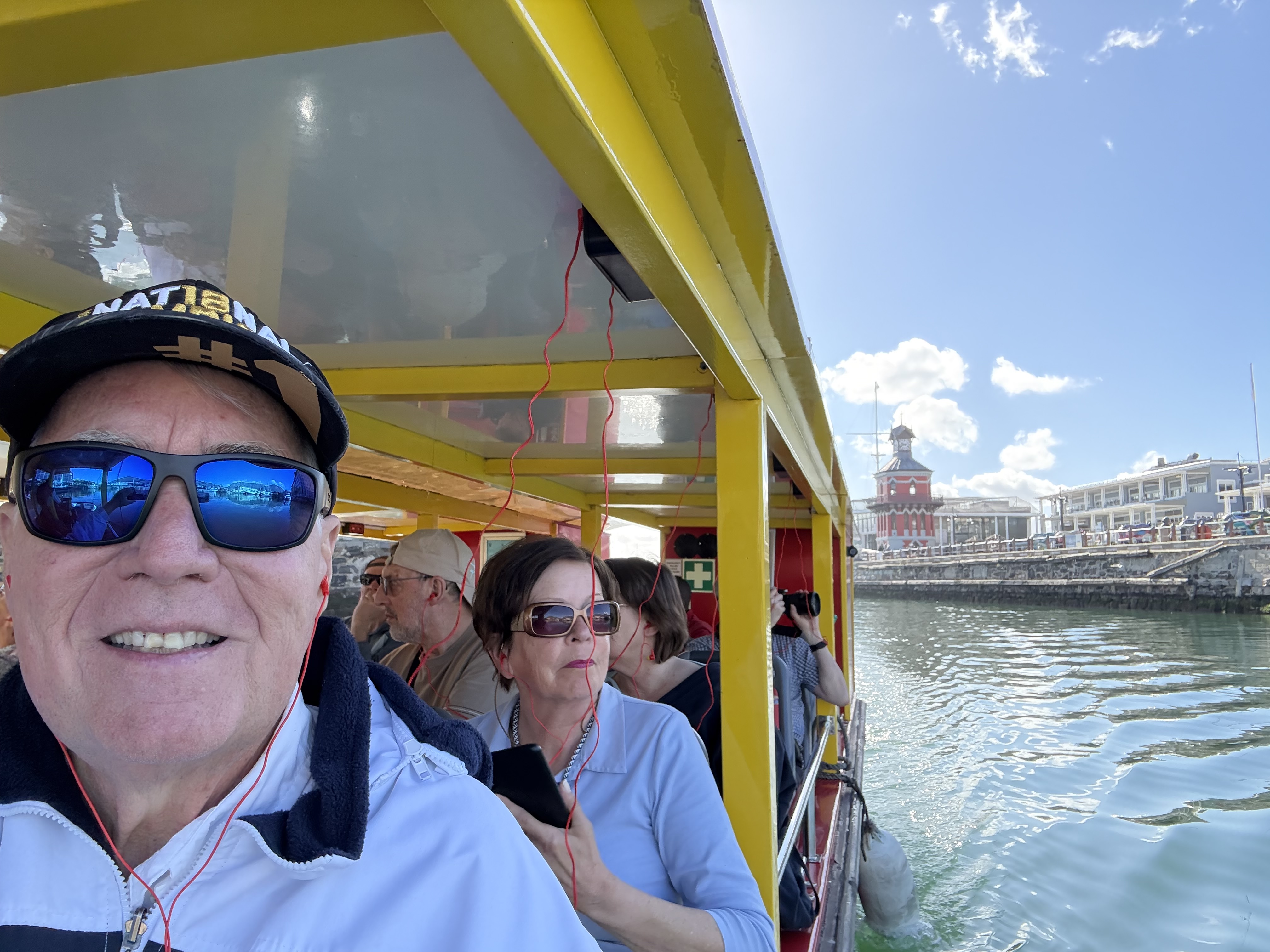
Our second day we started off with the harbor cruise and saw seals playing in the water and on the shore line as well as yachts, fishing boats, research boats and some great waterfront restaurants.






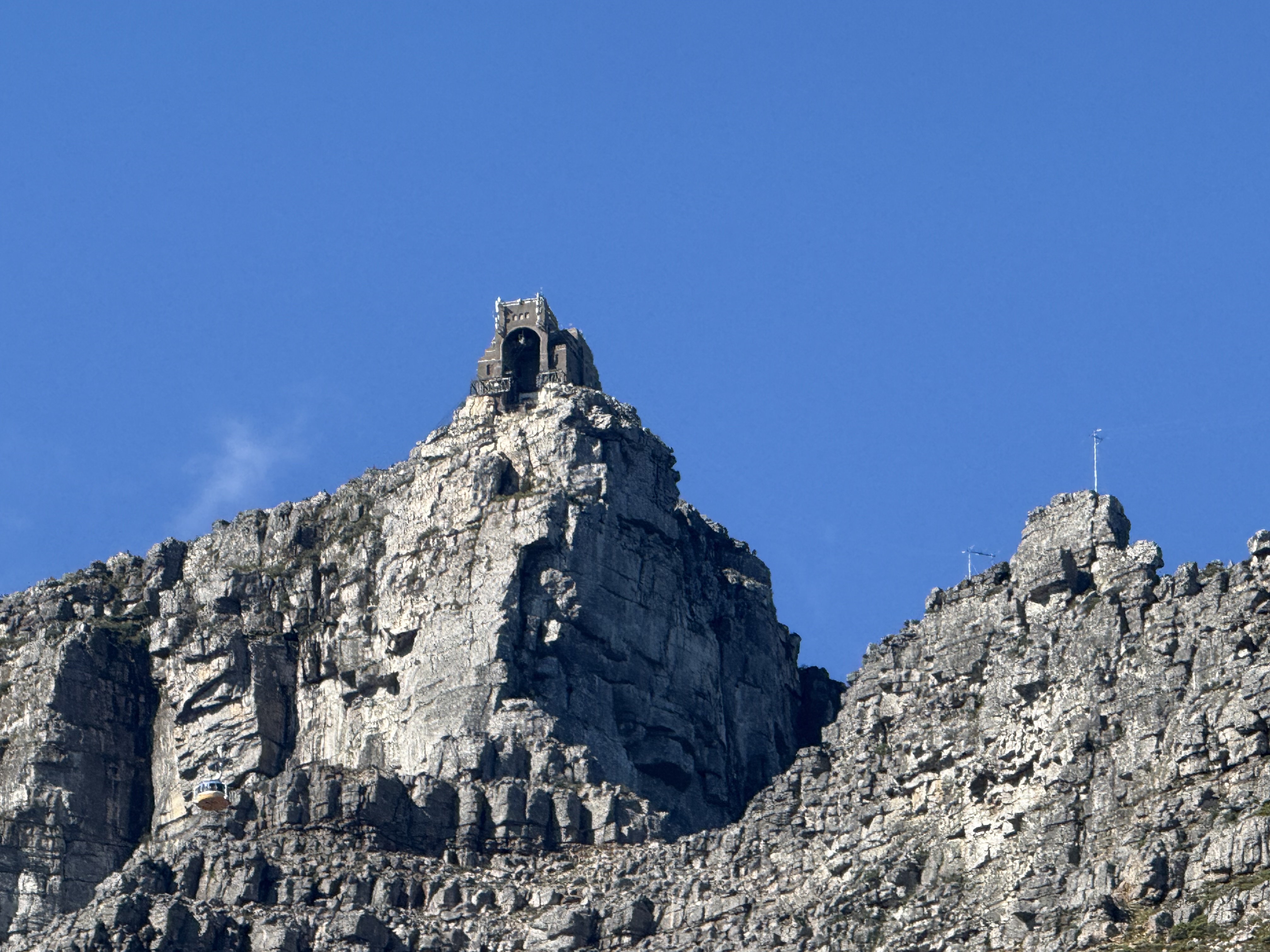
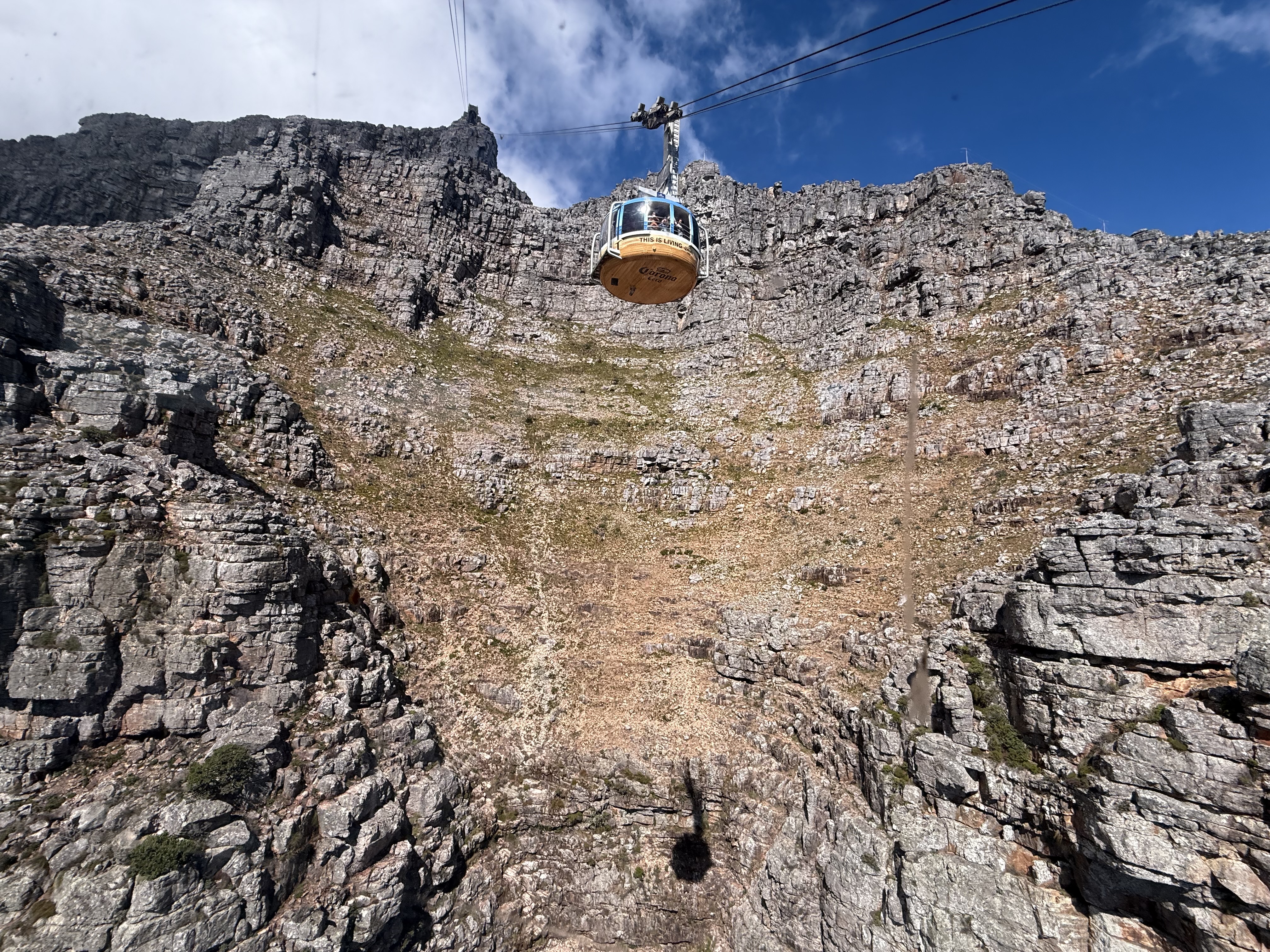
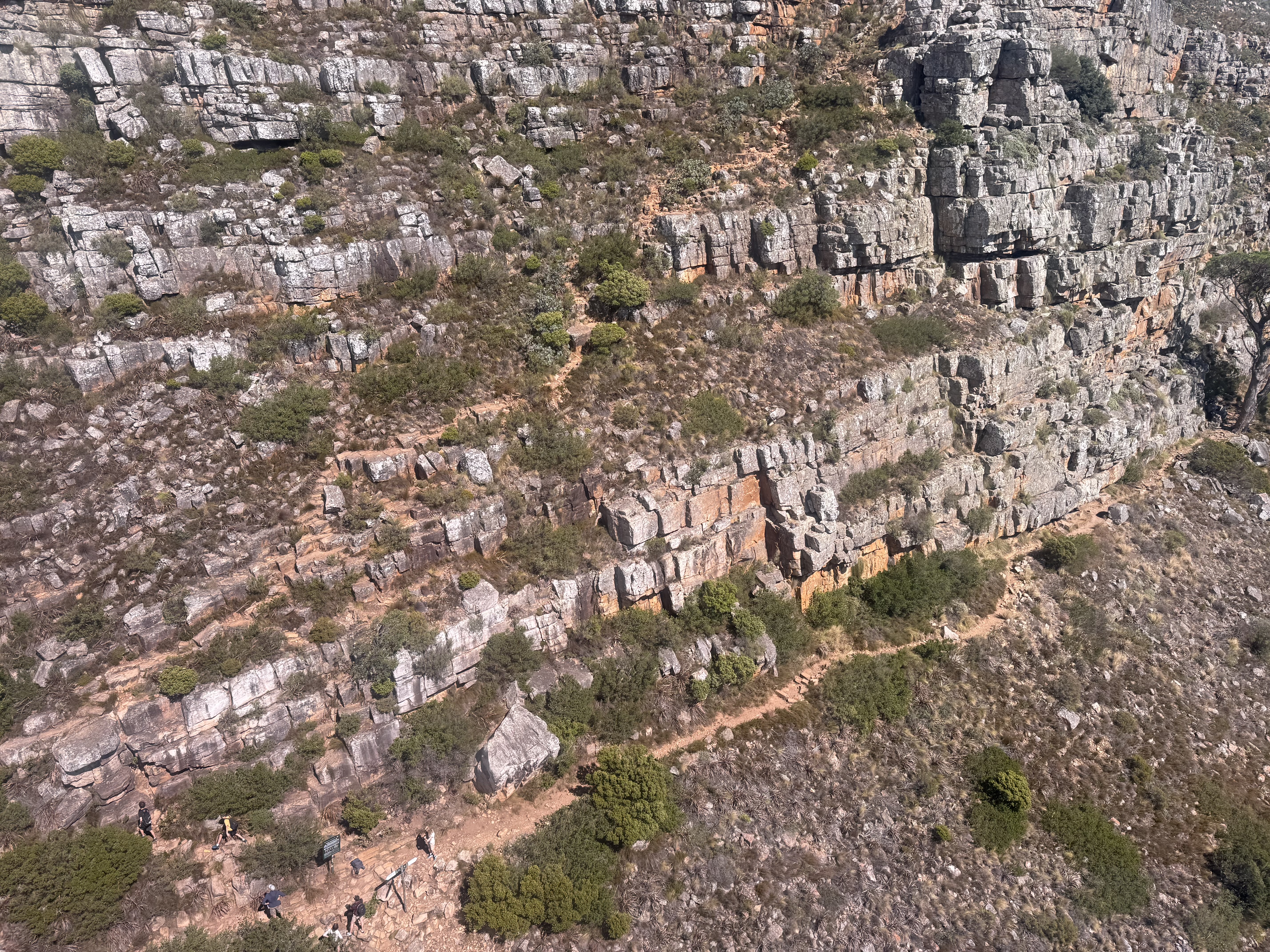
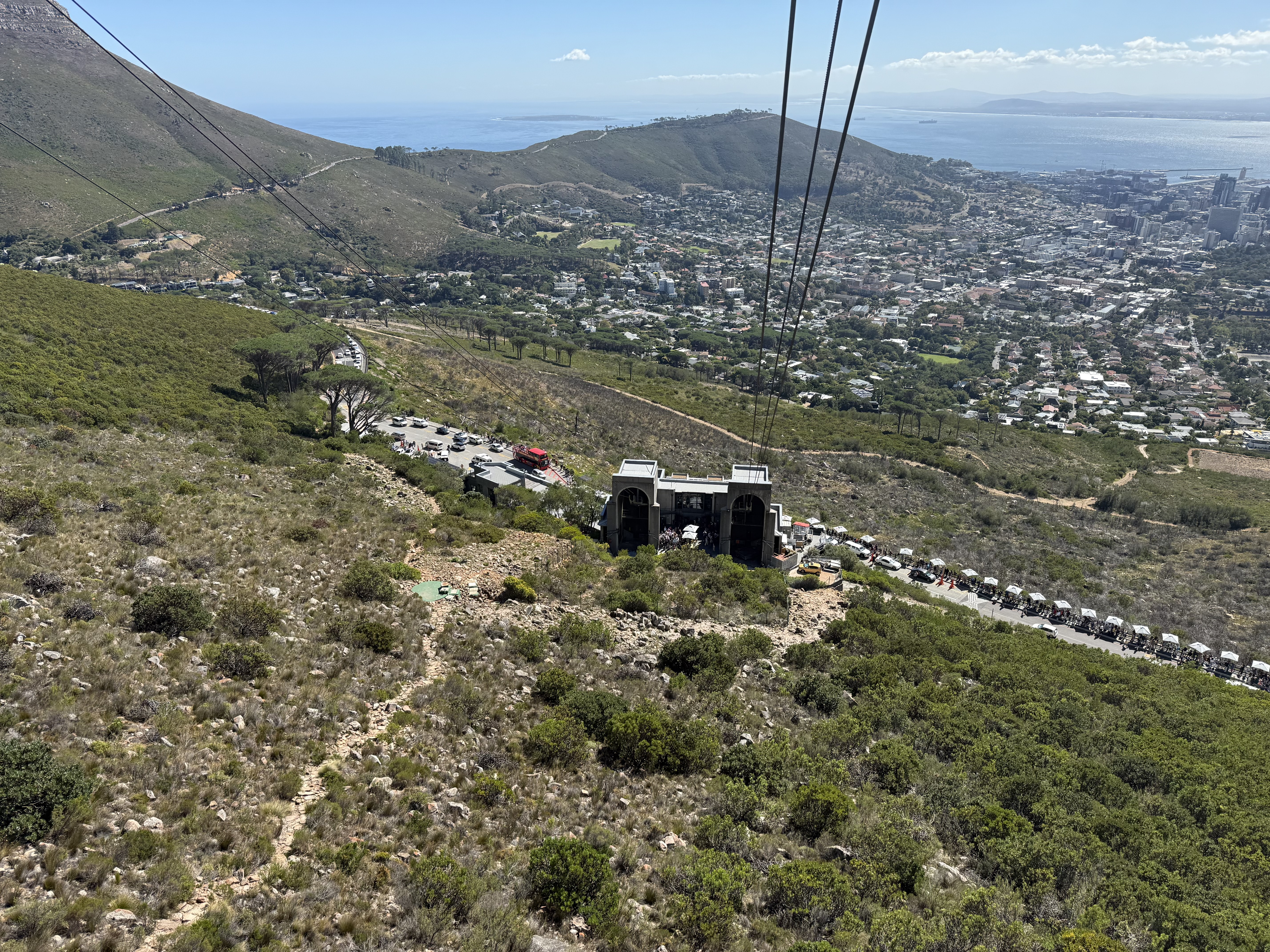
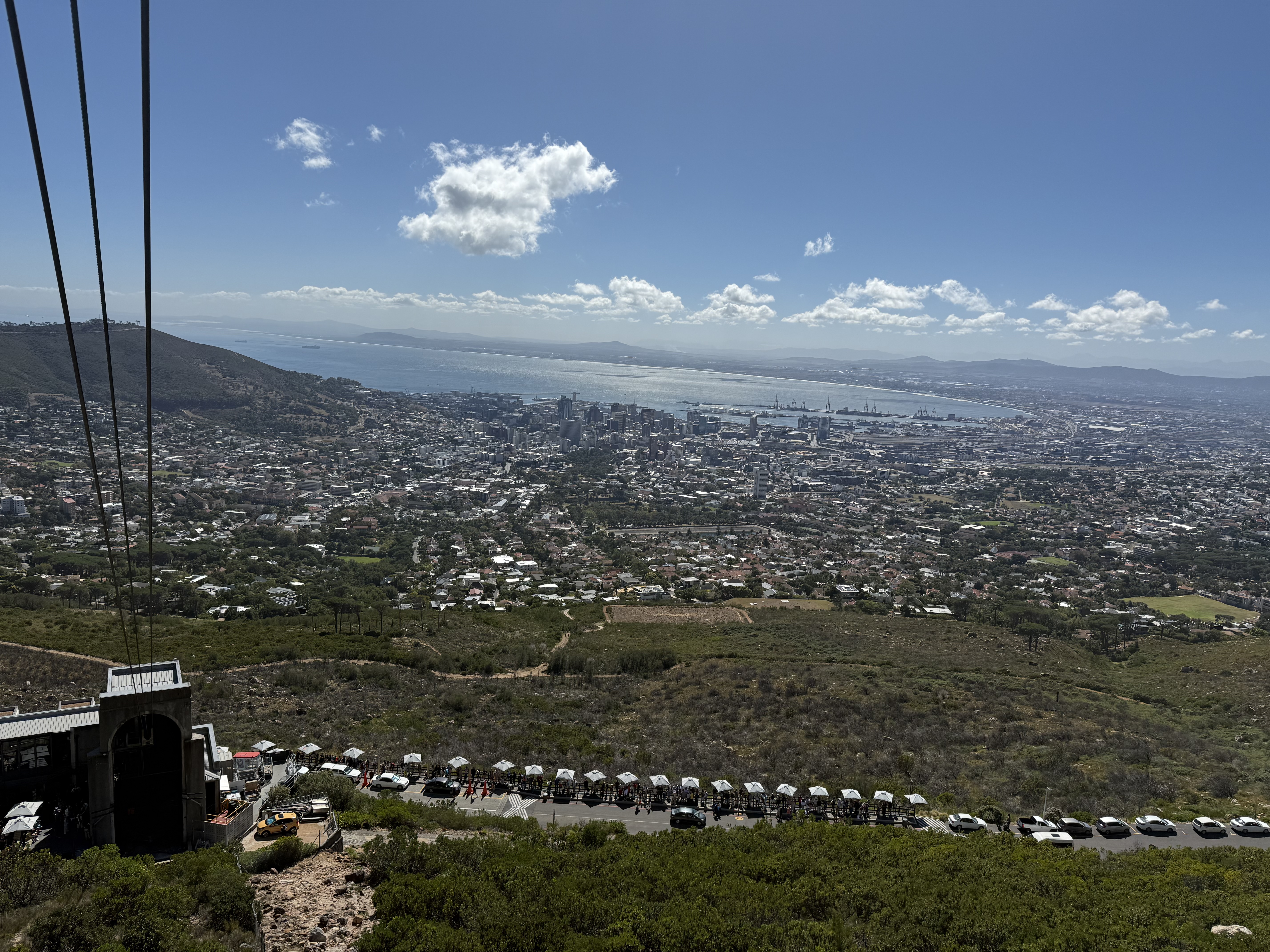
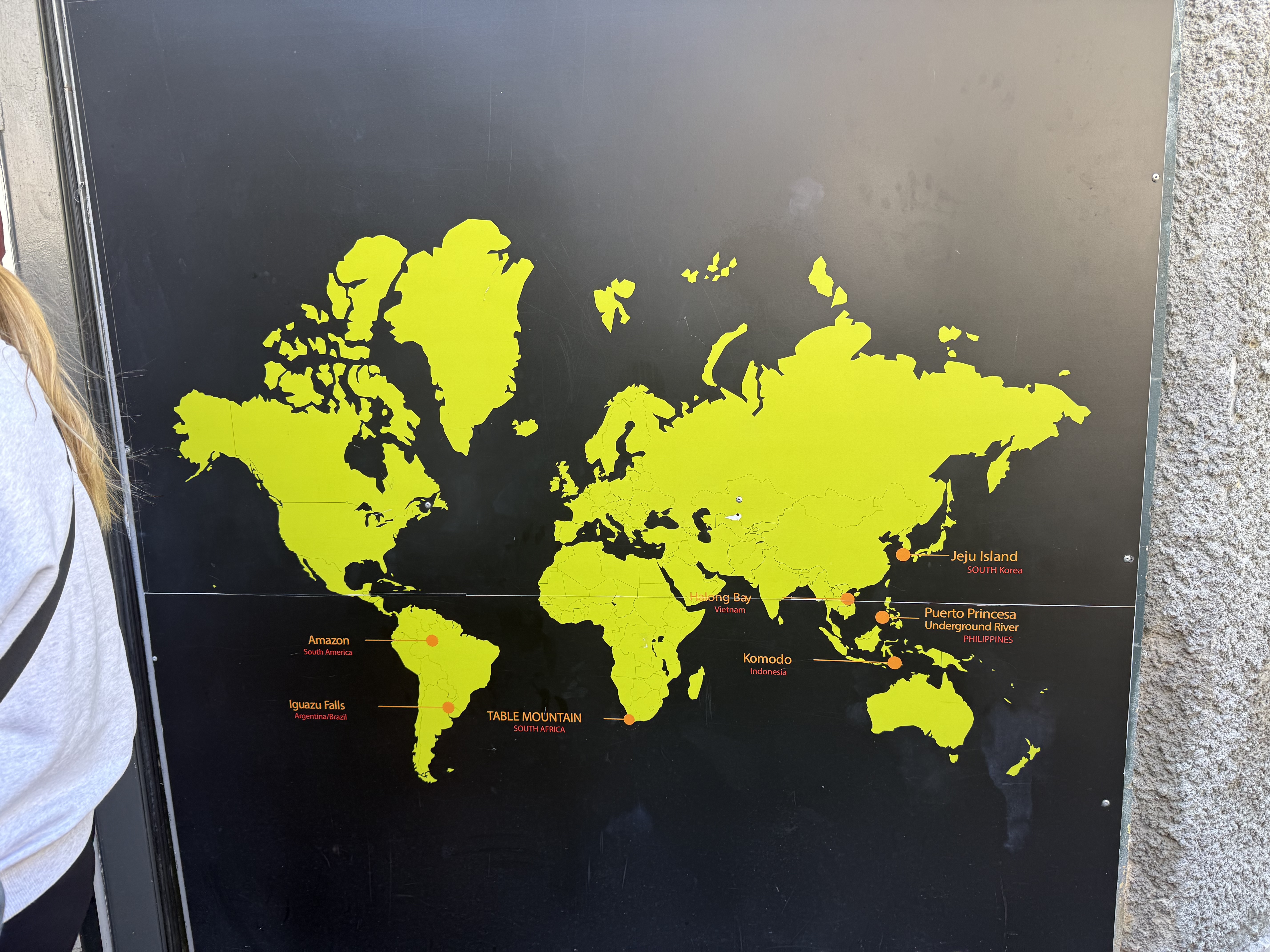
We then took the bus up to the base of Table Mountain and took the cable car up to the top. What a ride it was and the views were stunning. It was hard to understand how they built this cable car station so far up the mountain with no roads leading to it.





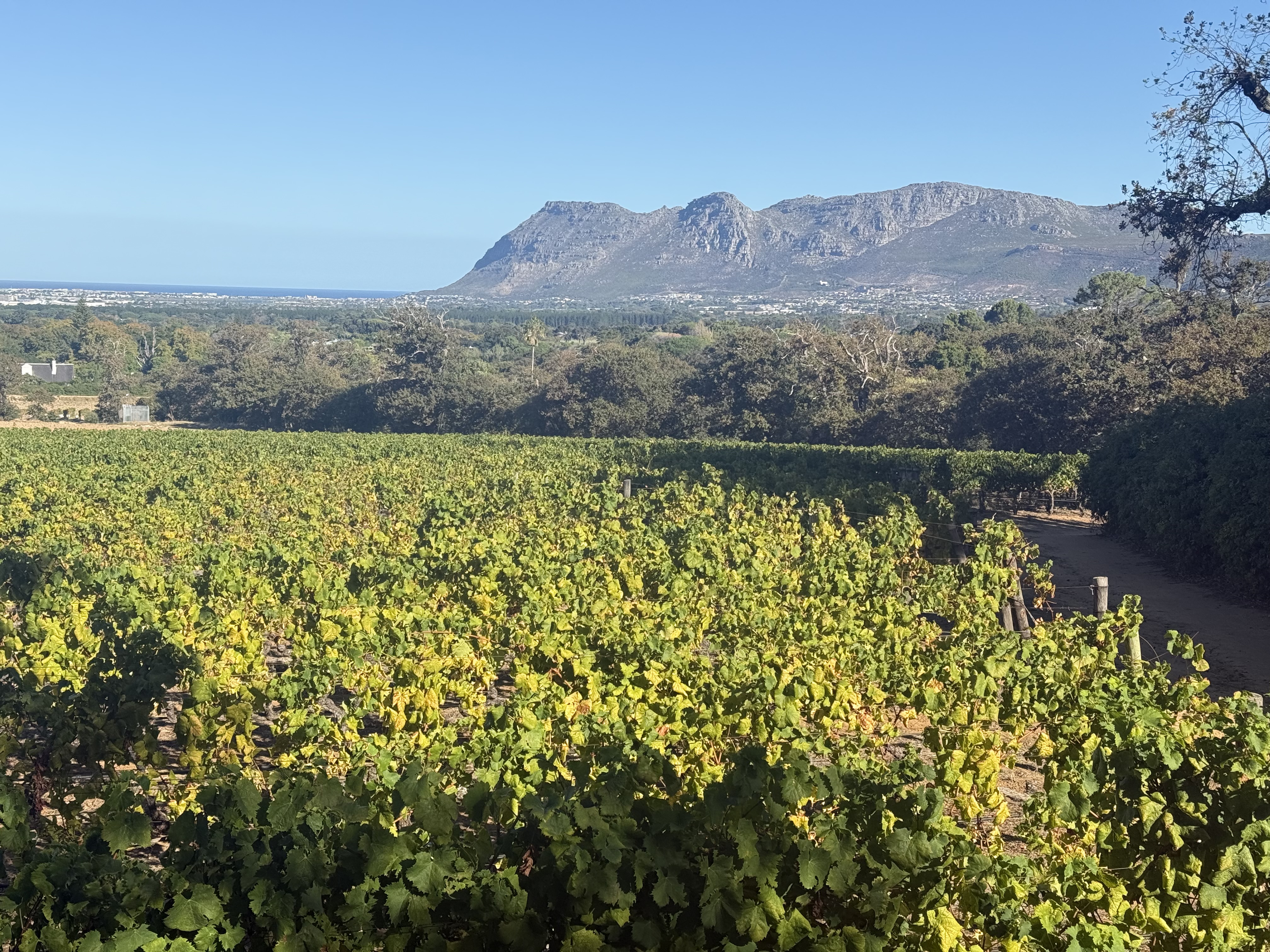
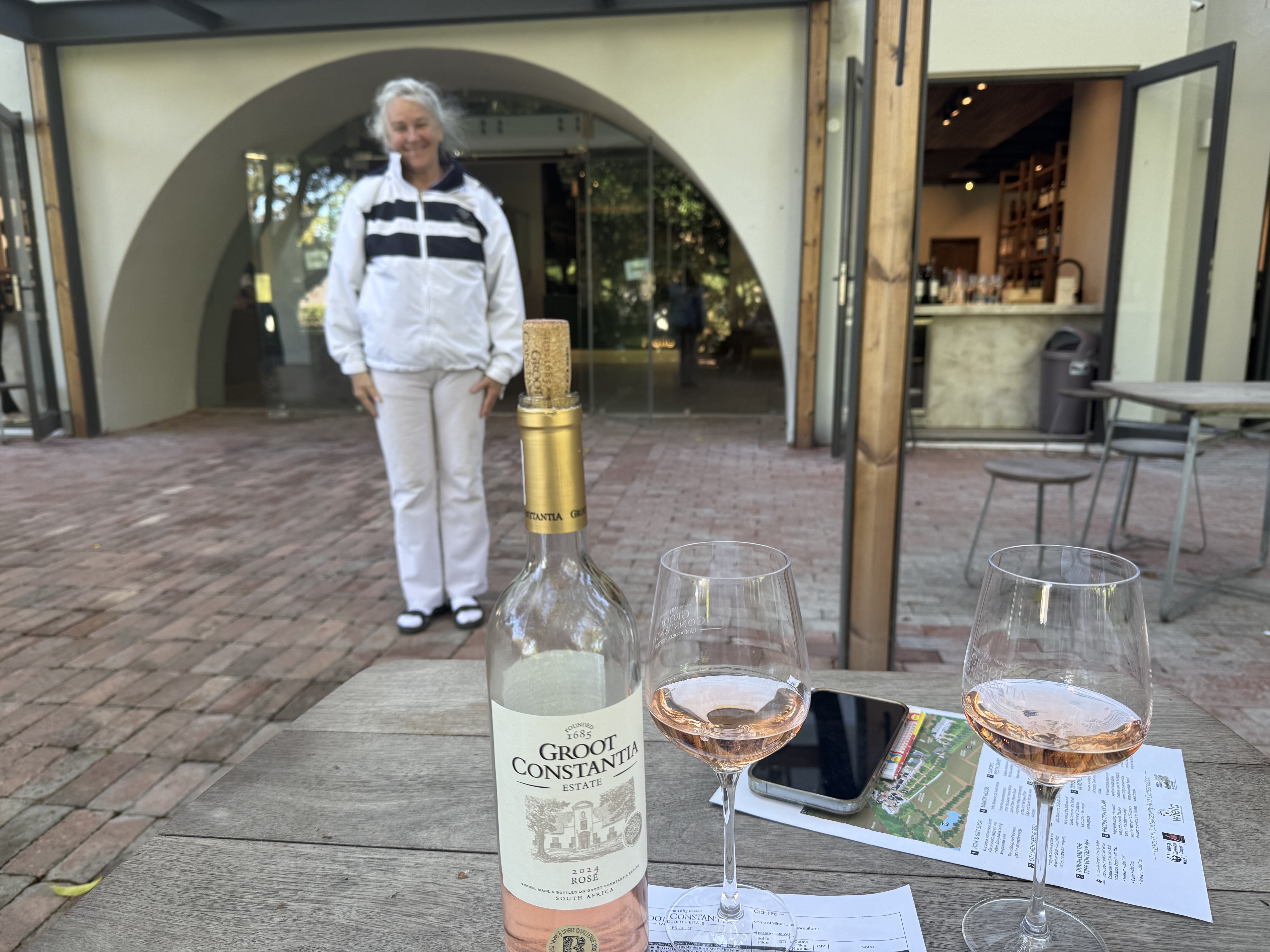
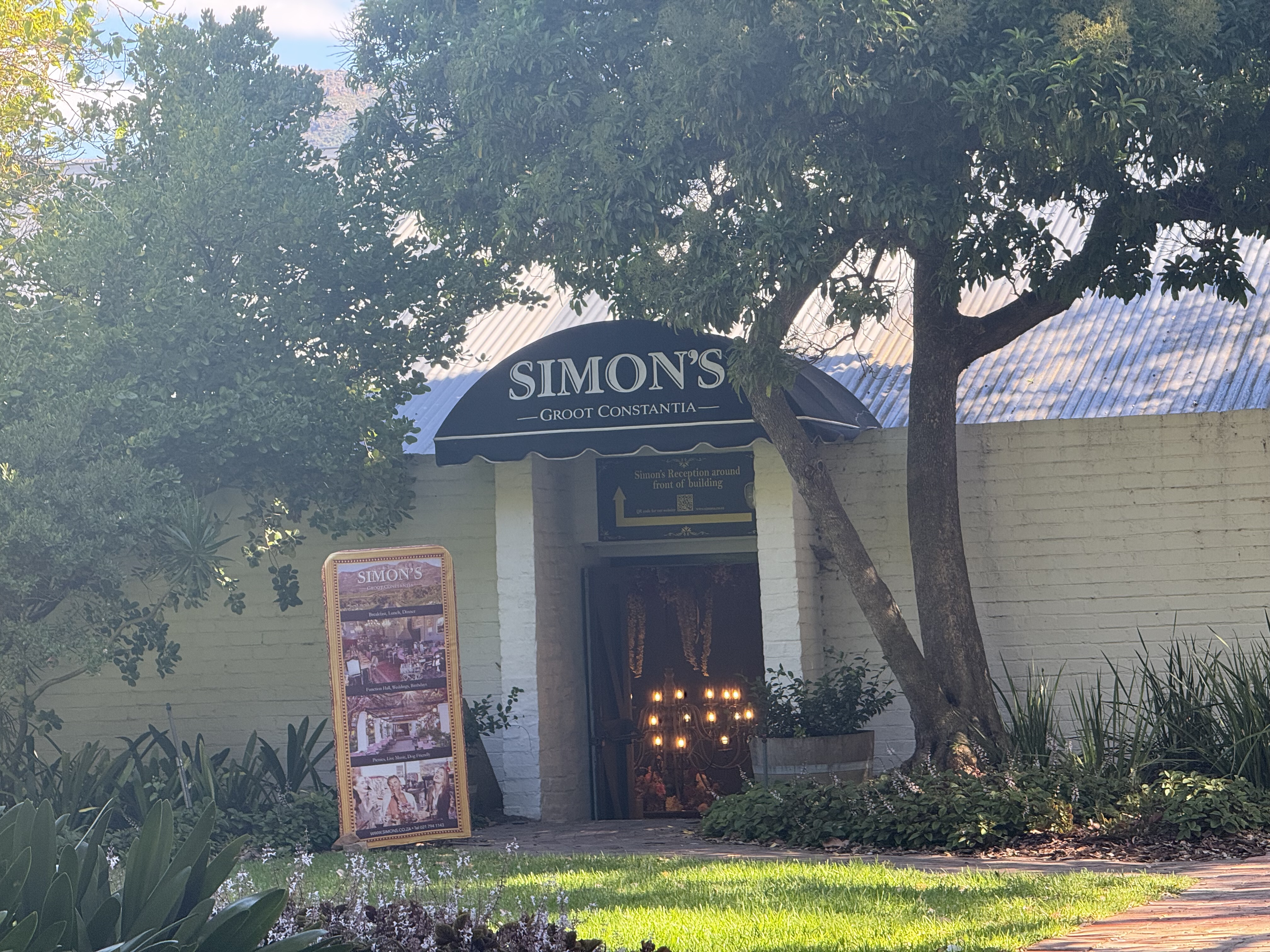
Next stop was the wineries of Constantia. We stopped at Groot Constantia, a must-visit—it’s South Africa’s oldest wine estate, dripping with history and charm, and still producing top-quality wine. It’s not just a winery—it’s a national monument. Think Cape Dutch architecture, leafy avenues, and a deep sense of old-world charm. Famous in Europe in the 1700s. Even Napoleon was known to drink Groot Constantia wines in exile! Their flagship wines include: Shiraz, Cabernet Sauvignon, Groot Constantia, andGrand Constance (sweet wine with historical prestige). We had lunch at Jonkershuis Restaurant: Great for Cape Malay-inspired dishes with a view across the vineyards with tree-shaded outdoor tables. Groot Constantia was established by Simon van der Stel, the first Dutch Governor of the Cape Colony. He was granted a large piece of land on the eastern slopes of Table Mountain, where he started planting vineyards and producing wine. The name “Constantia” is believed to be named either after van der Stel’s daughter or a ship, though the true origin remains a bit of a mystery. In the 18th century, Constantia wine (especially sweet wines) became wildly popular in Europe. Admirers included Napoleon Bonaparte, King Louis Philippe of France, and Frederick the Great of Prussia. Even writers like Jane Austen and Charles Dickens mentioned it in their work. We throughly enjoyed our visit and even brought back some wine to enjoy in Georgia.


We had so much more to see. We wanted to see the botanical gardens, the money and bird sanctuary, take a canal tour as well as visit some of the beaches and enjoy some of the restaurants and bars in the area. We could visit more wineries as well as go up to Table Mountain again. Hopefully we will come back some day and be able to see some more of this cities sites.
We were then back on the ship where we were entertained by a famous children’s choir, The Tygerberg Children’s Choir (TCC) is one of South Africa’s most celebrated youth choirs, and honestly—it’s world-class. Founded in 1972 the children are aged 10–15, selected from across the region. TCC is one of the most awarded children’s choirs in the world, with over 100 national and international awards. It has performed in countries like Germany, Austria, Spain, USA, Japan, Canada, and many more.

Tomorrow is a sea day then we arrive into Walvis Bay, Namibia.

 papa carney