CES 2026 in Las Vegas proved that smart glasses are no longer niche gadgets of the future—they’re rapidly becoming practical, AI-powered wearables poised to reshape how we interact with digital information and the world around us. From sleek AI companions to advanced augmented reality (AR) displays and enterprise-ready wearables, this year’s show made one thing clear: smart glasses are entering a new era. But how useful are they really ??




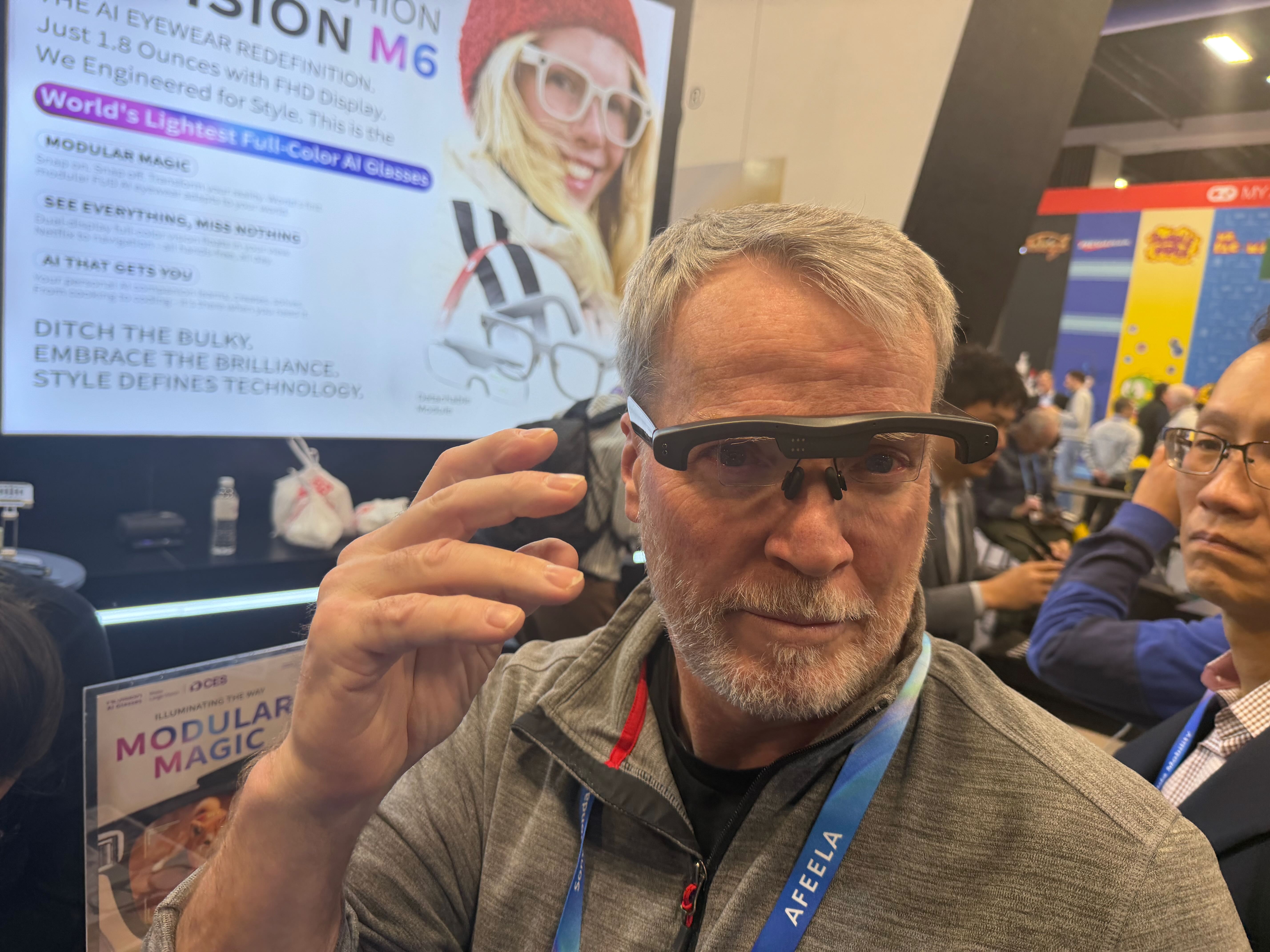
AI Everywhere: Smarter, Hands-Free Interactions
Smart glasses at CES are shifting from simple heads-up displays to fully AI-integrated wearables capable of interpreting sight, audio, text, and context—all hands-free.
Several trends stood out:
• Partnerships between hardware makers and wearable tech specialists hinted at stronger AR ecosystems forming.
• A crowded smart glasses field—with dozens of companies launching products or announcements—suggests 2026 could be the “year of competitive wearable eyewear.”
• Emerging companies are not just building glasses—they’re integrating AI services, developer platforms, and UX innovations that aim to make these devices useful, memorable, and everyday-ready.
Here is the top list of smart glasses at CES
🥇 1. Ray‑Ban Meta Wayfarer Smart Glasses – Best Everyday AI Smart Glasses
• Why it’s great: A tried-and-true favorite in smart eyewear — stylish, lightweight, and packed with AI features like hands-free voice commands, camera, Bluetooth audio, and live translation.
• Use case: Daily wear, travel, social sharing, and hands-free assistance.
• Notes: Often listed as one of the best AI glasses overall in 2025 reviews and buying guides.
🥈 2. Meta Ray‑Ban Display & Neural Band AI Glasses – Best AR-Capable Smart Glasses (Meta)
• Why it’s great: These bring a true in-lens display with interactive AR elements — you can see navigation, captions, translations, messages, and more right in your field of vision.
• Use case: Advanced heads-up experiences, navigation, contextual info overlays.
• Reality check: Early reviews note mixed ratings (reflecting early-gen hardware), but it’s a major step toward mainstream AR glasses from a major tech brand.
🥉 3. XREAL ONE PRO AR Glasses – Best for Immersive AR & Productivity
• Why it’s great: A highly rated AR display glass with a large virtual screen (equivalent to ~171″), great for movies, gaming, multitasking, or productivity.
• Use case: Entertainment, productivity, virtual desktop setups, immersive experiences.
🏆 4. VITURE Luma XR Glasses – Best Display-Focused XR Glasses
• Why it’s great: Excellent display quality (4K-like visuals and high brightness) in a standalone XR form — great for immersive video, spatial work spaces, and entertainment.
• Use case: Home media, video consumption, multi-screen productivity.
🎧 5. Solos AirGo 3 Argon 7 Smartglasses – Best Value Everyday AI Glasses
• Why it’s great: Affordable, AI-enabled smartglasses with ChatGPT/OpenAI integration, decent battery life, audio quality, and modern lightweight design.
• Use case: Daily AI tasks, voice-queries, casual use.
📌 Honorable Mentions
• RayNeo Air 3s Pro XR Glasses – Great budget-friendly AR/XR glasses with a large virtual screen for gaming and media.
• Sport & Active Models: Meta’s Oakley Meta HSTN blends AI features with sporty durability and action-camera capture capabilities.
🧠 Notes on Google Smart Glasses
True Google smart glasses running Android XR / Android-native AI (e.g., Project Aura) are expected soon via ecosystem partners like Xreal + Warby Parker or Gentle Monster. Google itself has showcased such devices, but as of now there aren’t widely available retail models yet — we’ll update you once they launch.
| Glasses | Approx. Price |
| Entry AI Smart Glasses (Meta Wafer/Wayfarer) | $246 – $379+ |
| Meta AR Display Glasses (with Neural Band) | $799 |
| XREAL ONE PRO AR Glasses | $649 – $649.99 |
| VITURE Luma XR | $399 |
| VITURE Luma Pro XR | ~$449 – $499.99 |
| Solos Argon 7 AI Glasses | ~$249 |
So a real test of these glasses would be to show me the arc of my shot in basketball and then overlay what should have been the arc of the shot ….. to improve my basketball
🏀 Can smart glasses show the correct shot trajectory while you’re playing?
❌Real-time, in-game trajectory overlay not capable at this time !
There are no consumer or pro-level smart glasses today that can, Track the ball live, Calculate optimal arc, release angle, and force, Overlay that trajectory instantly in your field of view while you’re shooting
Why this is hard:
• Requires sub-10 ms latency, Needs precise 3D tracking of ball, rim, and your body, Needs safe, lightweight glasses (most AR glasses aren’t sports-safe), Computer vision struggles with fast ball motion
Even advanced AR glasses from Meta, Google, or Apple are not there yet.
So not quite there yet but a lot of potential.

 papa carney