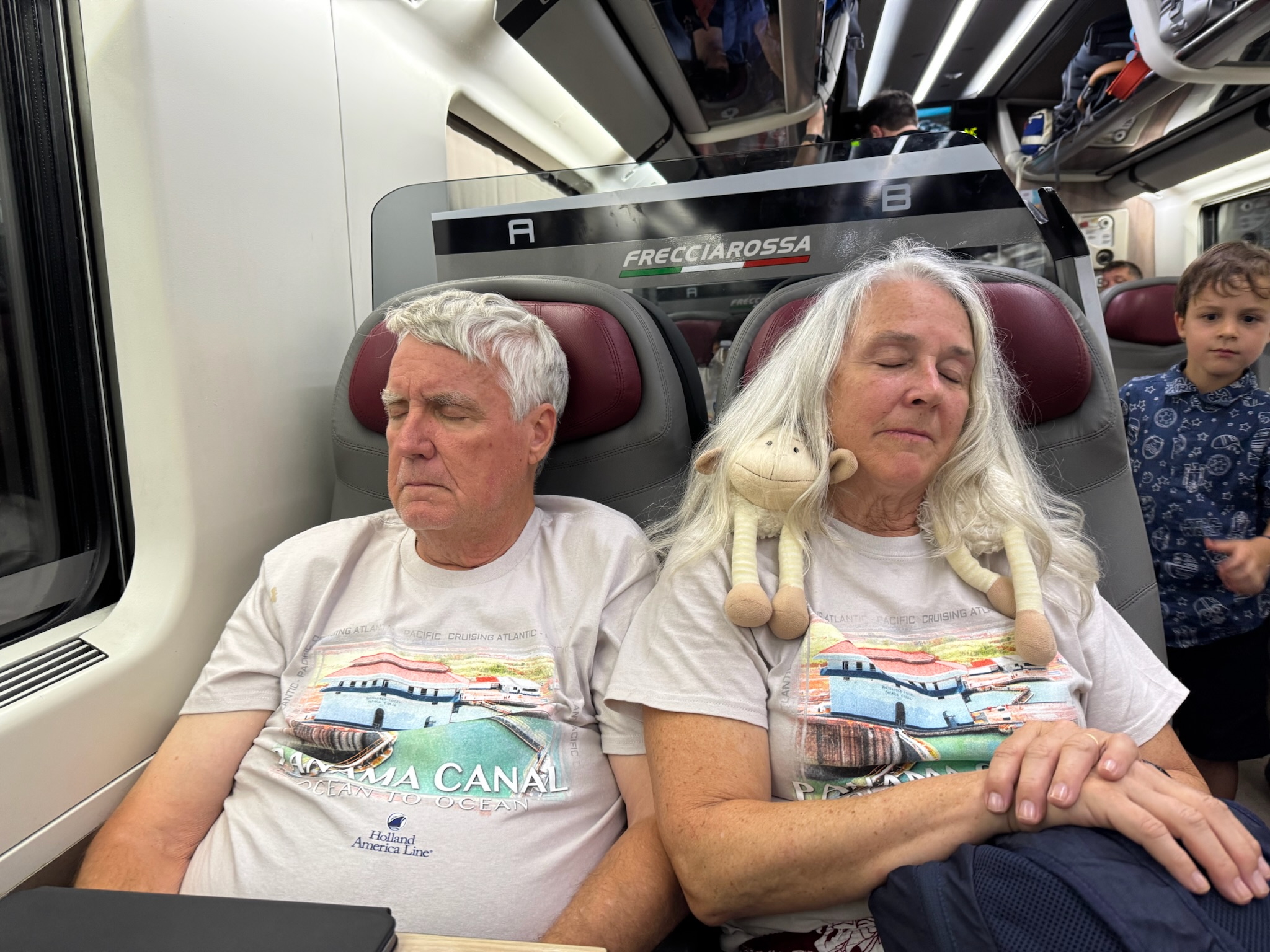
The next day we boarded a train and headed to Rome. All of the grandchildren loved riding the trains. JP said it was the favorite part of his trip. We arrived into Rome, took the Metro to our VRBO apartments (3 in the same building). The apartments are close to the Metro, on a bus line so getting around town hasn’t been a huge issue. Some take taxis, some Uber, some walk, some take the Metro and some take the bus depending on where we go and how tired everyone is. It has been so hot here and everyone runs out of steam a lot earlier.
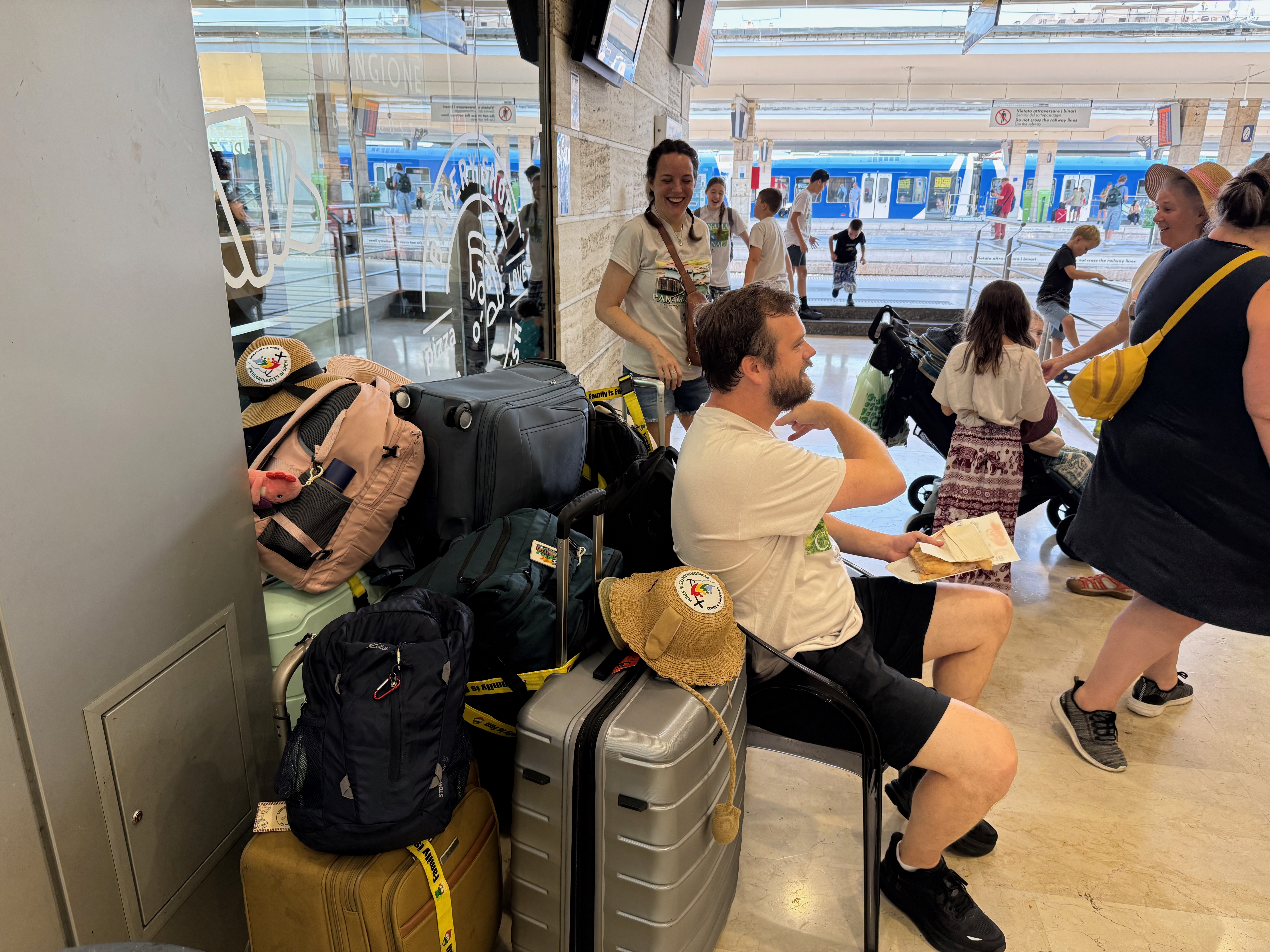

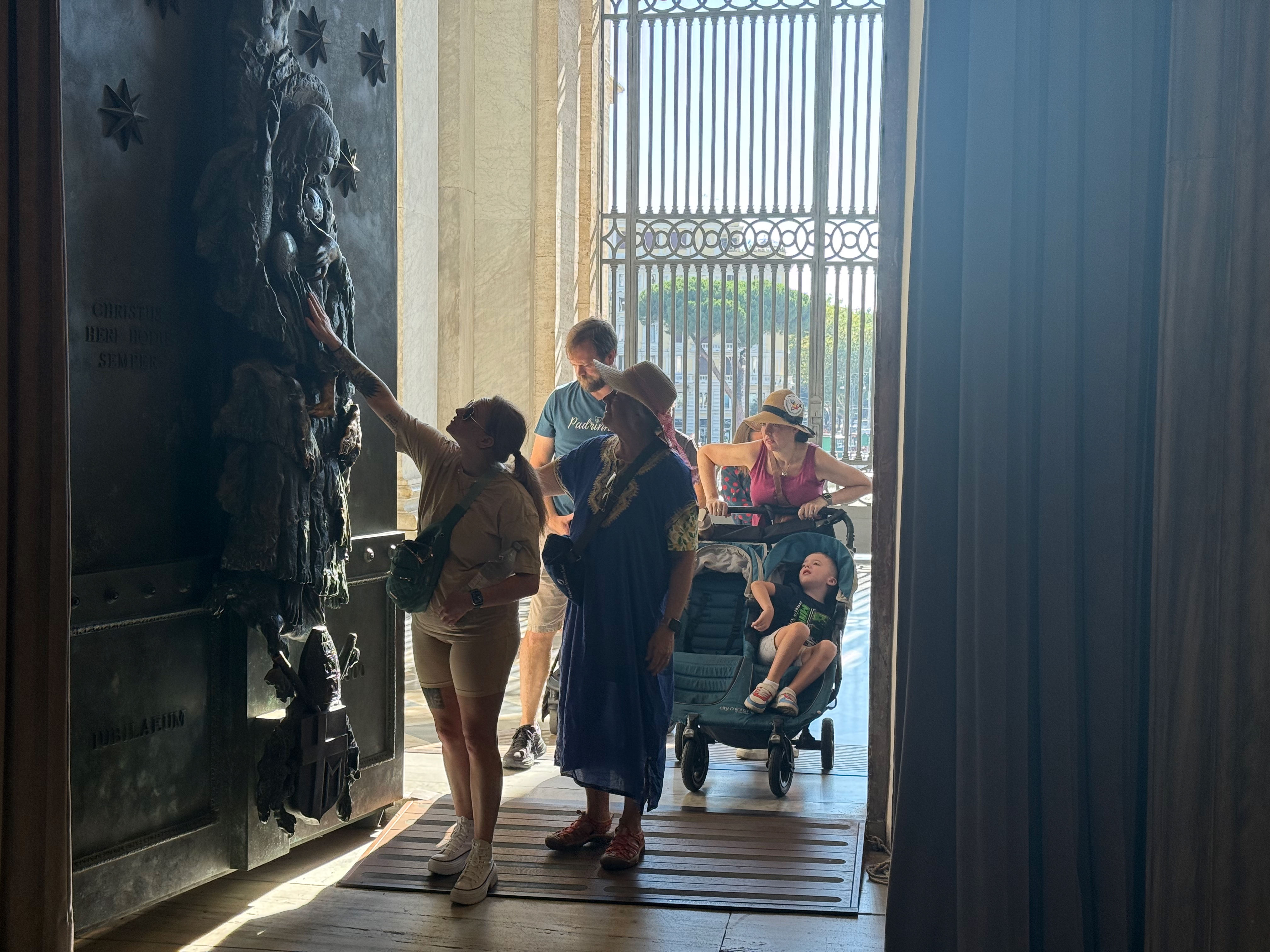
Rome has been very busy. On the next day after arriving, we walk St John Lateranl Church to visit our first Jubilee door in Rome. A Jubilee door is only open every 25 years and is very special in the Catholic faith. The Holy Doors, or Jubilee Doors, are special entrances found in four major basilicas in Rome. Traditionally sealed shut, they are opened only during a Holy Year (Jubilee), which occurs every 25 years or by papal decree. Pilgrims pass through them as a symbol of spiritual renewal and forgiveness. The tradition dates back to 1300, when Pope Boniface VIII declared the first Jubilee. When the Jubilee ends, the doors are sealed until the next Holy Year. We will have visited 3 of the 4 Jubilee doors during our visit to Rome.


The churches in Rome are unbelievable and each church has so much history. There are over 900 churches in Rome way too many to visit. After visiting St. John Laterani we board a Hop on Bus and soak up some of the city and learn its history. We then get off and walk to Pantheon to revel in the architecture and engineering of this building. The Pantheon in Rome is one of the best-preserved monuments of ancient Rome. Originally built around 27 BCE by Marcus Agrippa, it was later rebuilt by Emperor Hadrian around 126 CE after a fire. Dedicated to all Roman gods, its massive dome—with a central oculus open to the sky—remains an architectural marvel. In the 7th century, it was converted into a Christian church, which helped preserve it through the centuries. Today, the Pantheon stands as a symbol of Roman engineering and timeless beauty.
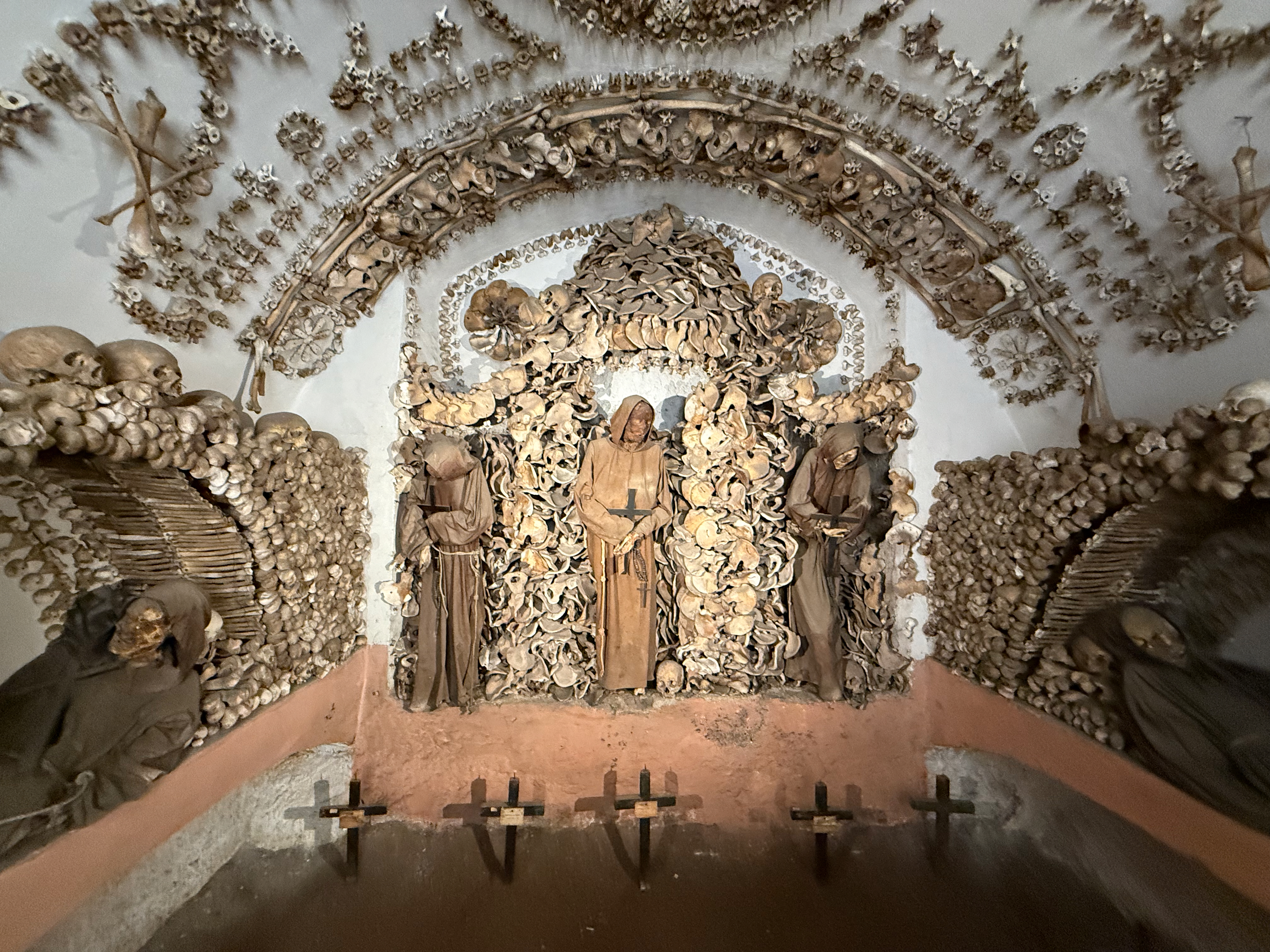
Next a family lunch where we enjoyed pasta and pizza. Next stop was the Trevi Fountain and the Spanish Steps. Last stop is the Capuchin Crypt. The Capuchin Crypt in Rome, located beneath the Church of Santa Maria della Concezione dei Cappuccini, is a haunting yet sacred site. In the 1600s, Capuchin friars began decorating the crypt with the bones of over 3,700 monks, arranging them into intricate designs, altars, and chandeliers. Far from morbid, the display serves as a reflection on mortality and the passage of time. A plaque inside reads: “What you are now, we once were; what we are now, you shall be.” It remains one of Rome’s most thought-provoking and unforgettable sites.
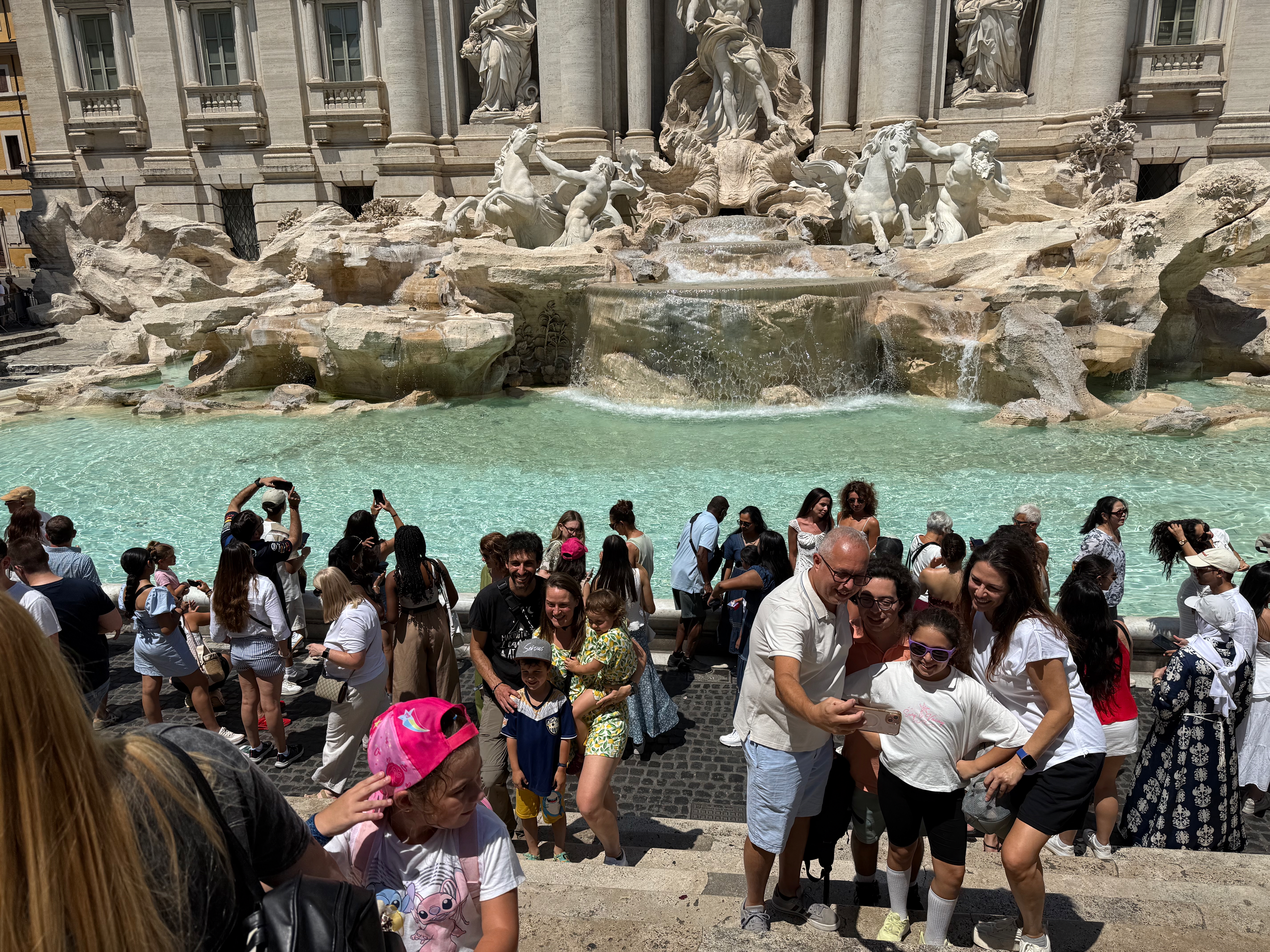

It was very hot in Italy, have I mentioned that before. We did take regular breaks and the cousins loved their play time.


On our next day, Saturday, we visit the Coliseum. We have booked with a tour guide which allows us to bypass the long line at the entrance and we get a tailored tour from a children’s perspective about the coliseum. So much history here. The Colosseum, or Flavian Amphitheatre, was built in Rome around 70–80 CE under Emperor Vespasian and completed by his son Titus. It could hold up to 50,000 spectators and hosted gladiator battles, animal hunts, and public spectacles. A marvel of Roman engineering, it featured underground tunnels, elevators, and even retractable awnings. Though damaged by earthquakes and stone scavengers, the Colosseum remains a powerful symbol of ancient Rome’s grandeur—and a testament to its complex mix of entertainment and empire.

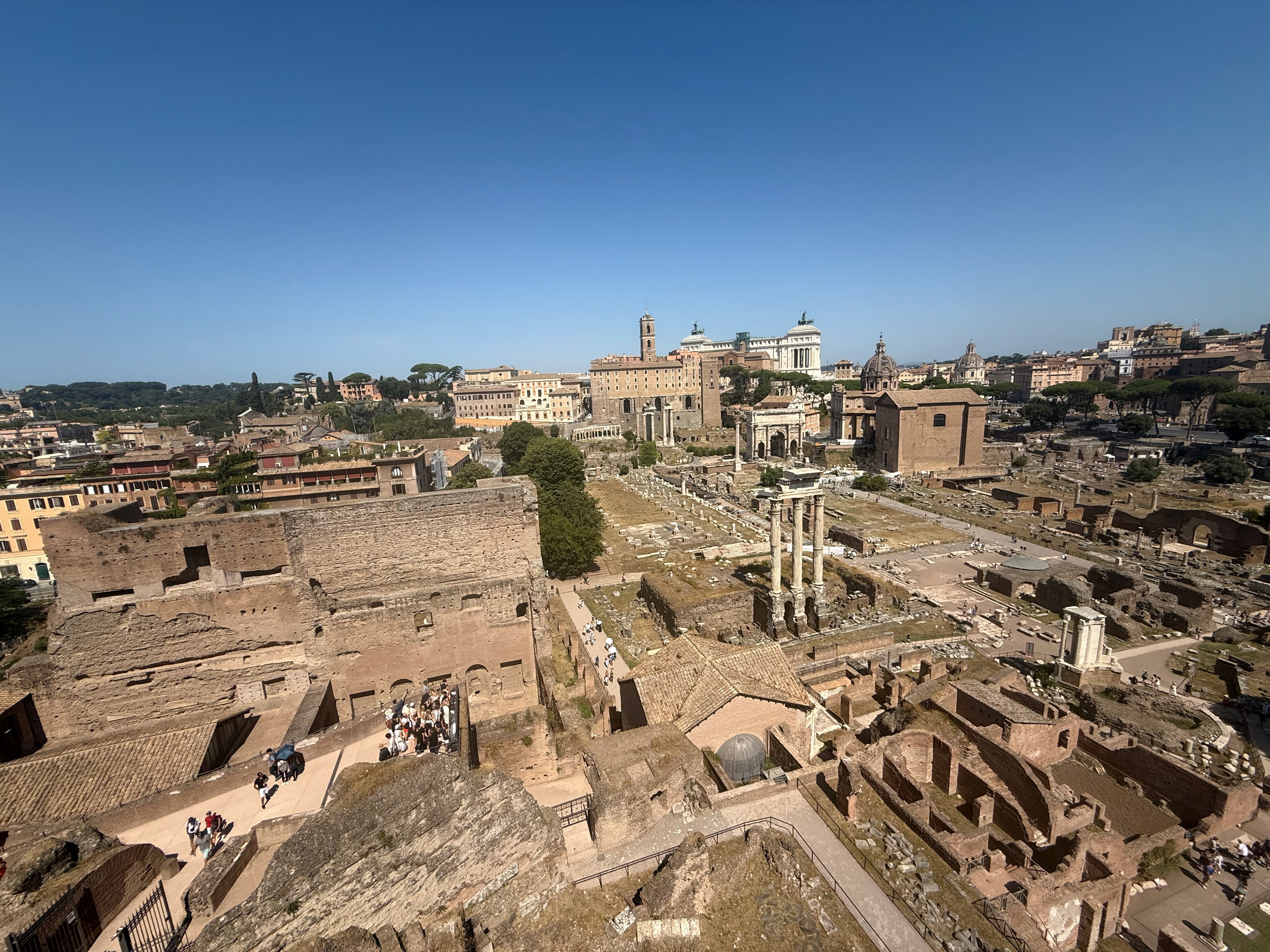
Next stop is the Roman Forum, which was the center of the city for hundreds of years and above which the palace for the Ceasers was built. Still lots of restoration going on and a lot of decay in over 2,000 year old buildings, who would have thought. The Roman Forum was the political, religious, and social heart of ancient Rome. Dating back to the 7th century BCE, it evolved over centuries into a grand plaza filled with temples, basilicas, and government buildings. It was where speeches were made, elections held, and triumphal processions passed. Key sites include the Temple of Saturn, the Arch of Titus, and the Curia (Senate House). After the fall of Rome, the Forum fell into ruin, buried by time. Today, it stands as a remarkable window into the life and power of ancient Rome.



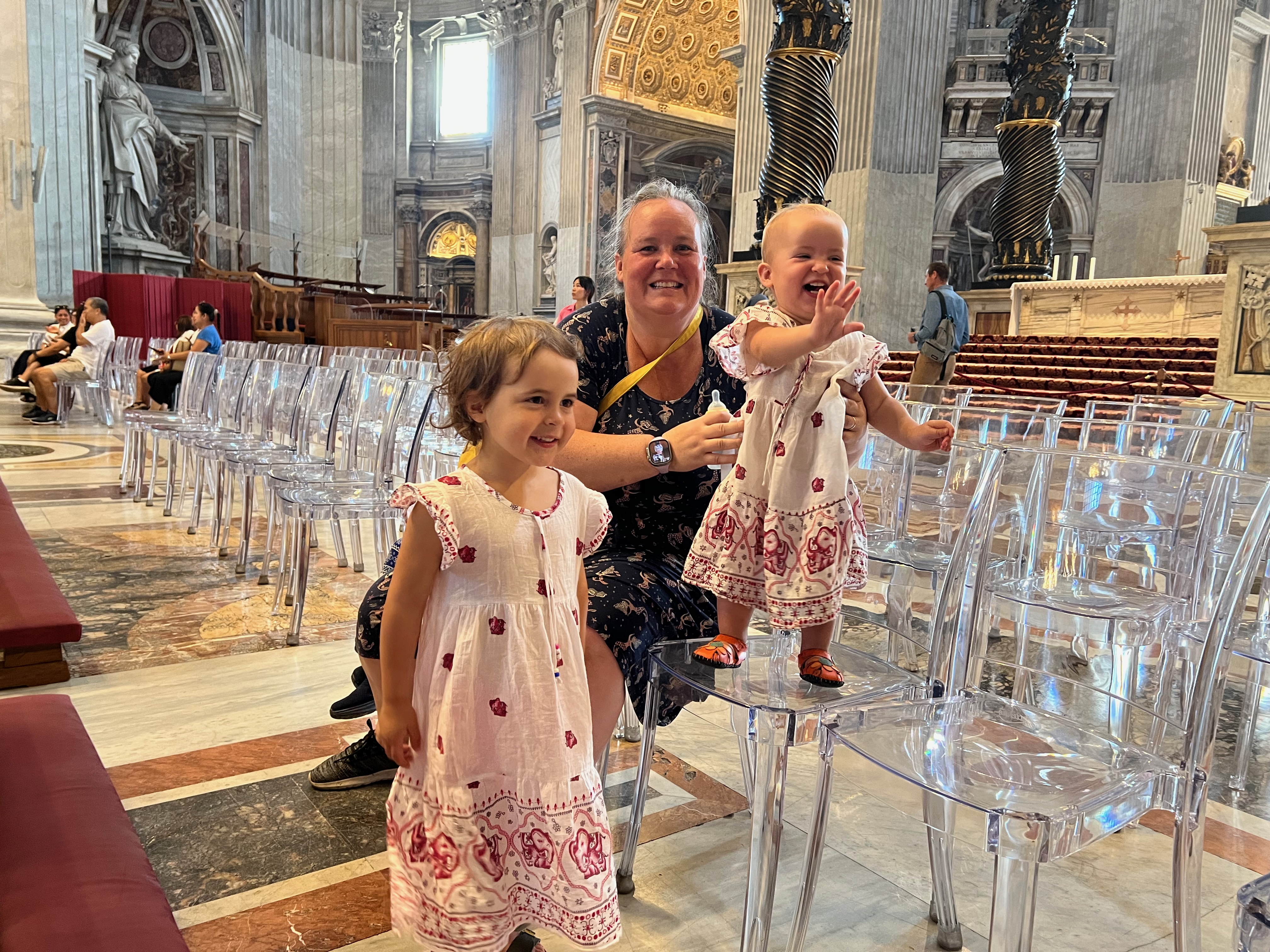
On Sunday we get up early to visit the Vatican and St. Peters. We arrive early before the crowds and explore St. Peters. At 9am we attend Mass at one of the side chapels which was fantastic with the whole family. The Vatican, the world’s smallest independent state, has been the spiritual center of the Catholic Church for centuries. It sits on the site where Saint Peter, one of Jesus’ apostles, was martyred and buried. In the 4th century, Emperor Constantine built the first basilica here. Over time, the Vatican grew in importance, especially with the construction of St. Peter’s Basilica and the Sistine Chapel. In 1929, the Lateran Treaty established Vatican City as a sovereign state. Today, it is home to the Pope, stunning art, and centuries of religious history.


Another family lunch and then some people head to the Castel Sant’angelo and some head home to rest. The heat has been brutal and we are finding that we need to rest a lot more often and give the younger children some down time. Some headed off in the later afternoon to a children’s museum. We have been typically doing on big lunch or dinner per day and then everyone is on their own for the rest of the meals. It is getting harder and harder to get all 26 people to follow the same itinerary but I find we can do it for part of the day.
Tomorrow more Rome sights !


 papa carney
[heart] Nunes, Renato reacted to your message:
Wow,
Thank you,
Lee
I don’t know how you did it with the family. The one where the grandkids were tuckered out on the bed (well, not exactly), still makes a fantastic time.