My theme for this Barcelona trip continues: “Why Barcelona Feels So Alive.”
Today’s answer came through its architecture — the imagination, faith, and creativity that shape the city’s skyline.
———————
Morning Lecture – Understanding Gaudí
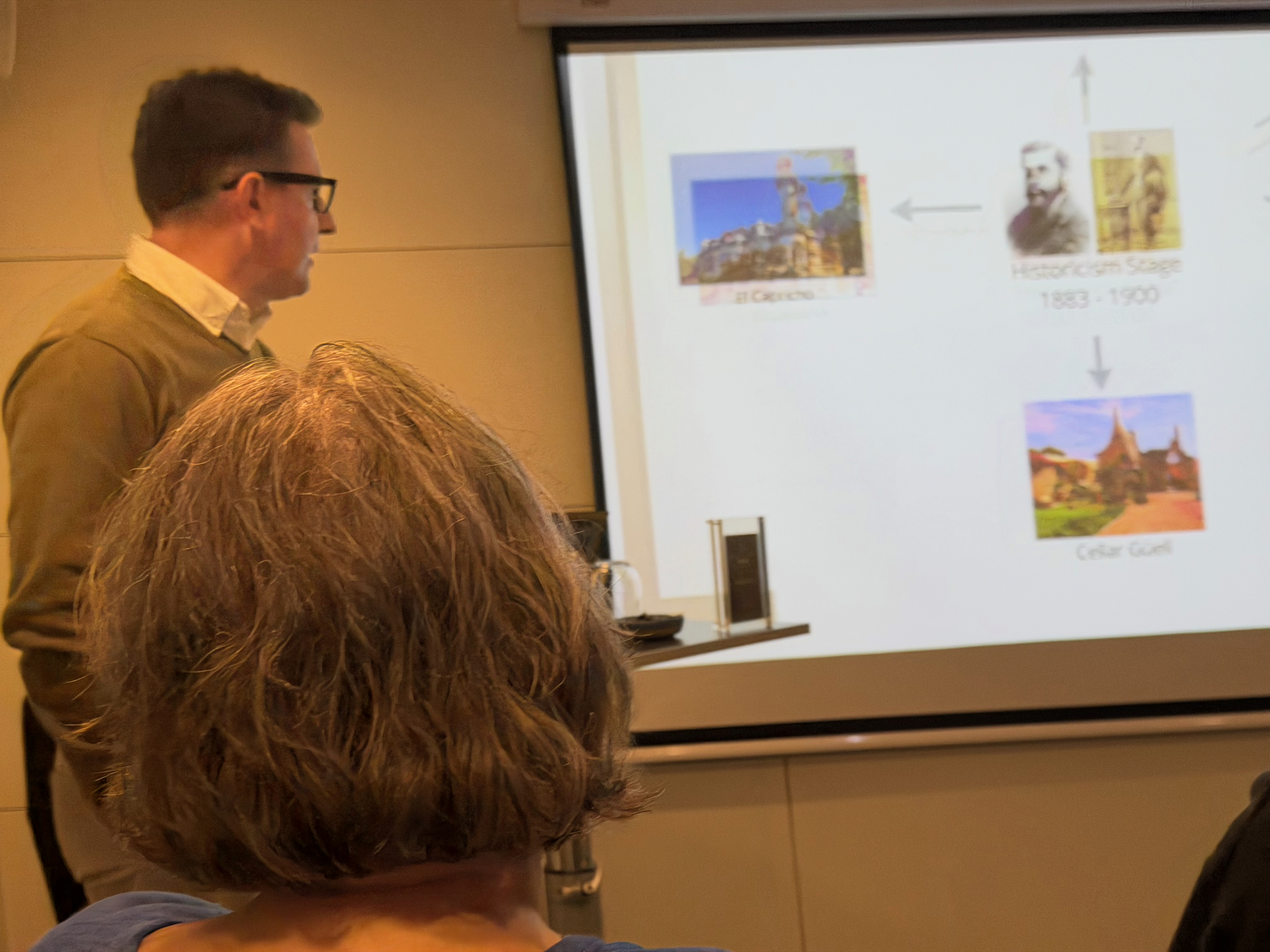
Our day began with an enrichment lecture on Catalan Modernisme and the extraordinary architect Antoni Gaudí.
Gaudí is one of the most influential figures in Catalan architecture. His designs are instantly recognizable — organic shapes, flowing lines, vibrant colors, and structures that feel as if they grew naturally out of the earth.
Gaudi’s design were controversial at the time and many neighbors of the houses that he designed and built were questioned, tried to be blocked, and generally not accepted. It is only after time have they become the pride and joy of Barcelona.
What struck me most during the lecture was learning how deeply faith influenced his work. Gaudí was a devout Catholic who believed architecture could be a form of prayer. He loved both God and nature, and he blended the two constantly in his designs. Because of this devotion, many people referred to him as “God’s Architect.”
His life’s work was La Sagrada Família, the massive basilica that has been under construction for more than a century. Gaudí devoted over 40 years of his life to designing it. In 2026 they are honoring 100 years after his death. Even the Pope will be here for a special dedication.
—————————
La Pedrera
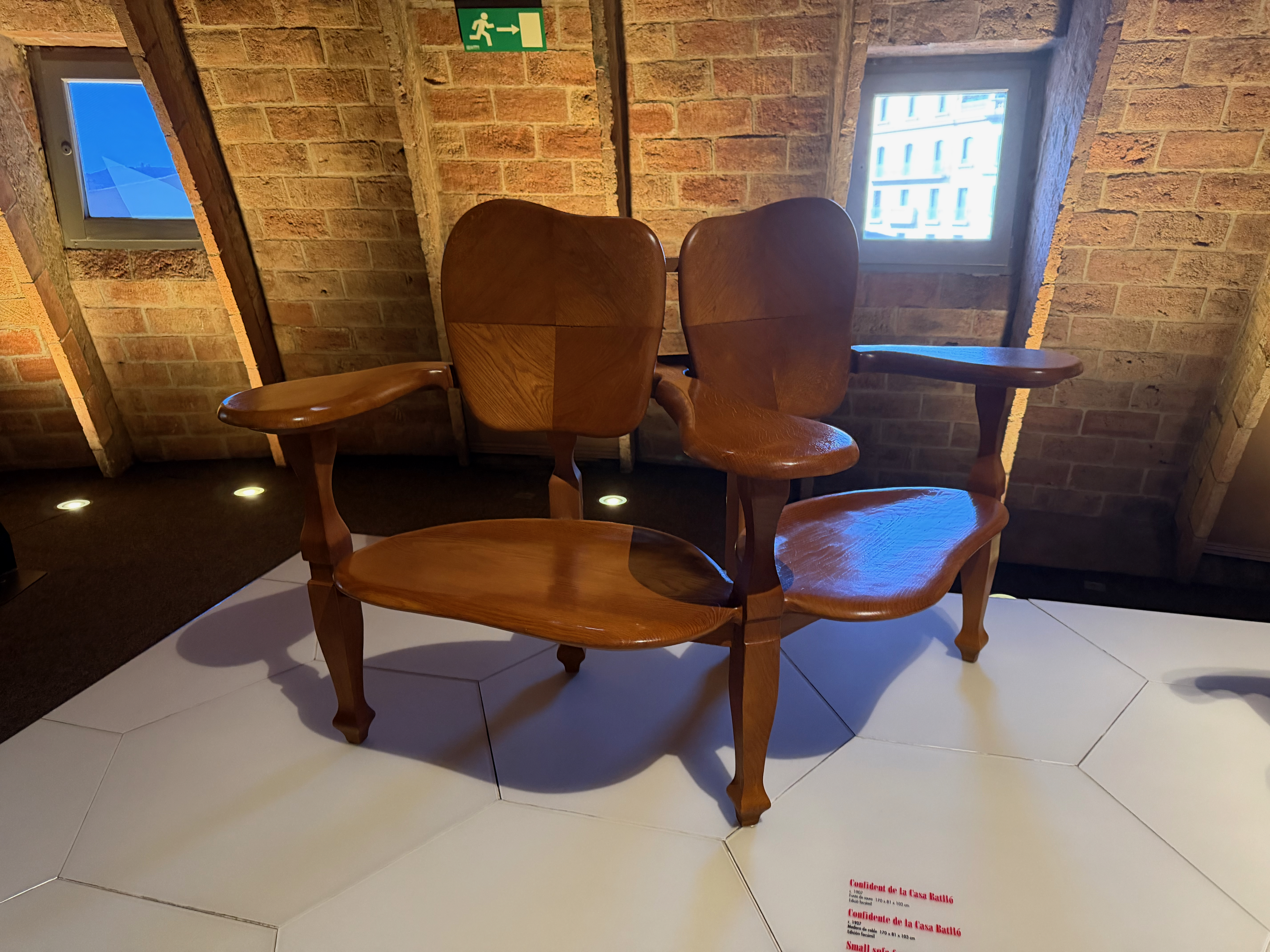
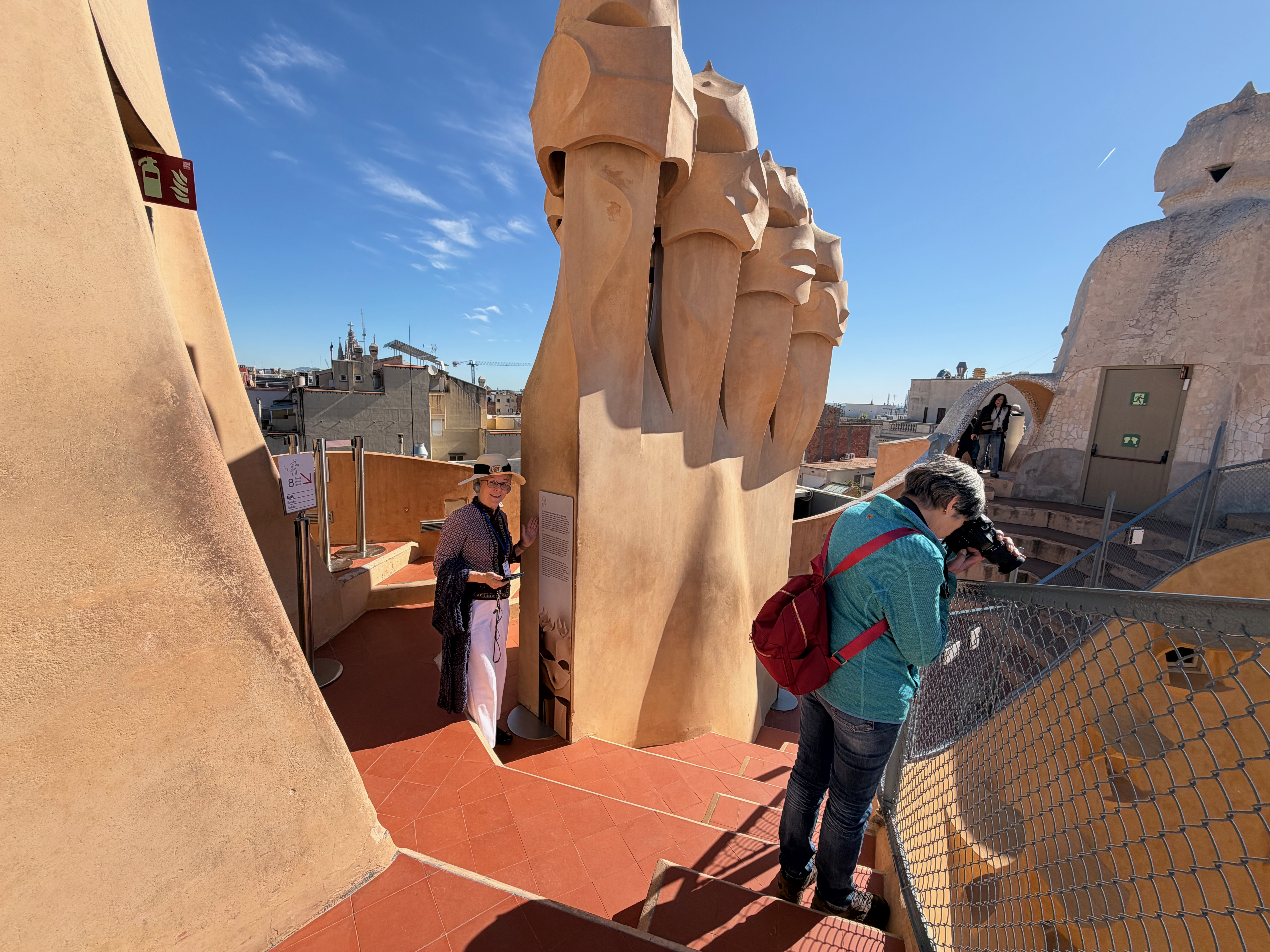
After the lecture we visited one of Barcelona’s most unusual buildings is La Pedrera, also called Casa Milà, designed by the famous Catalan architect Anotoni Gaudi.
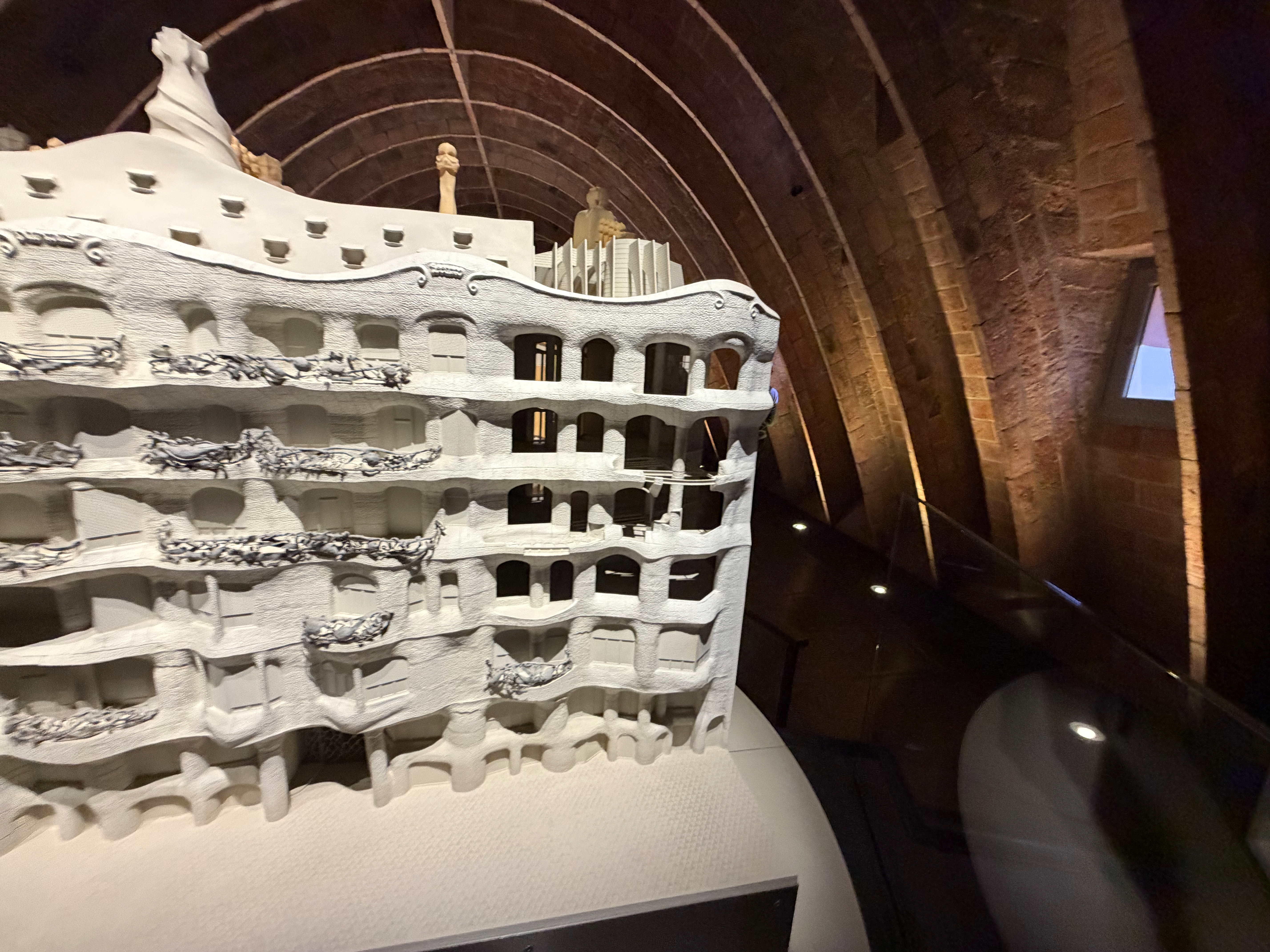
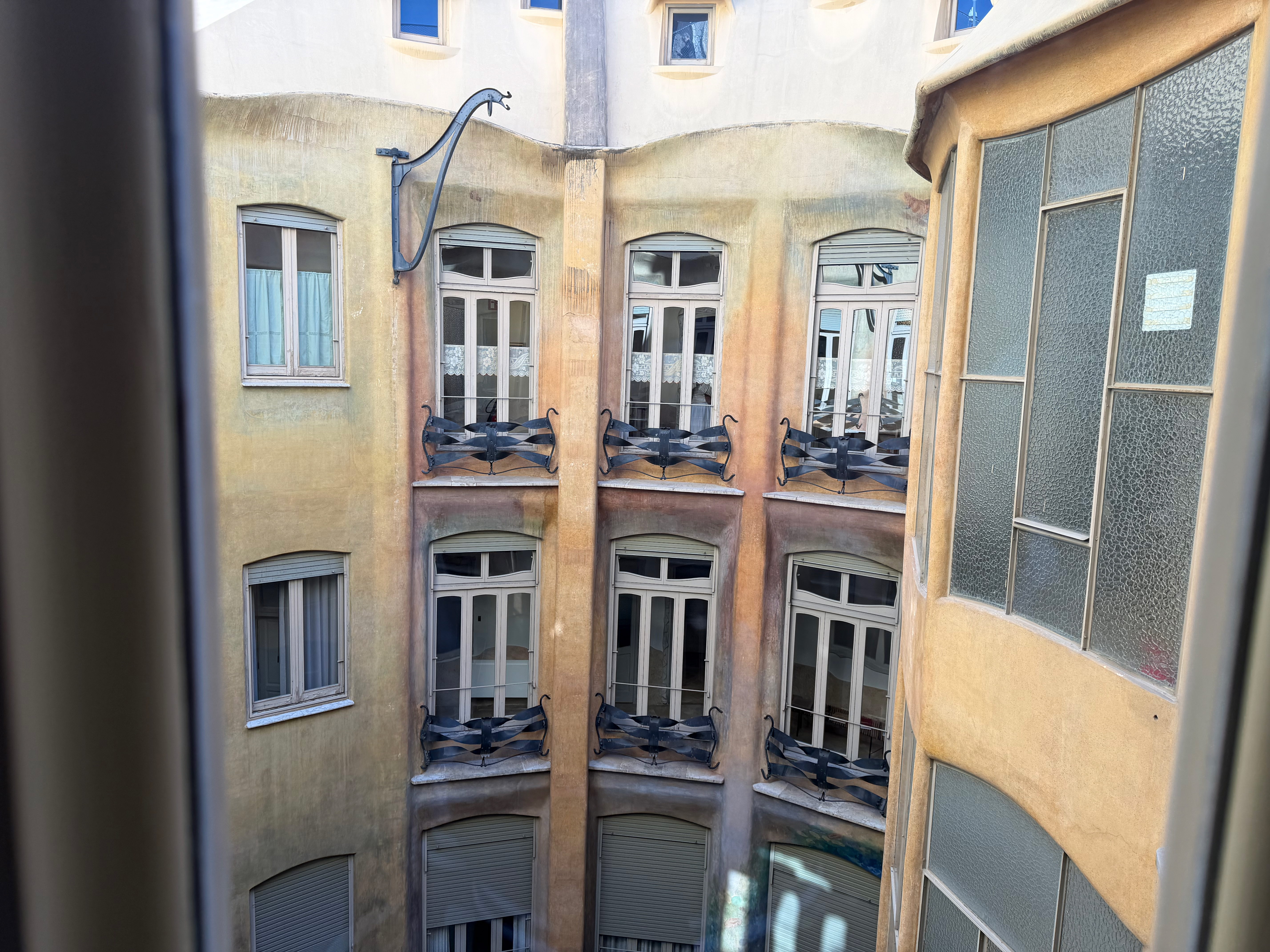
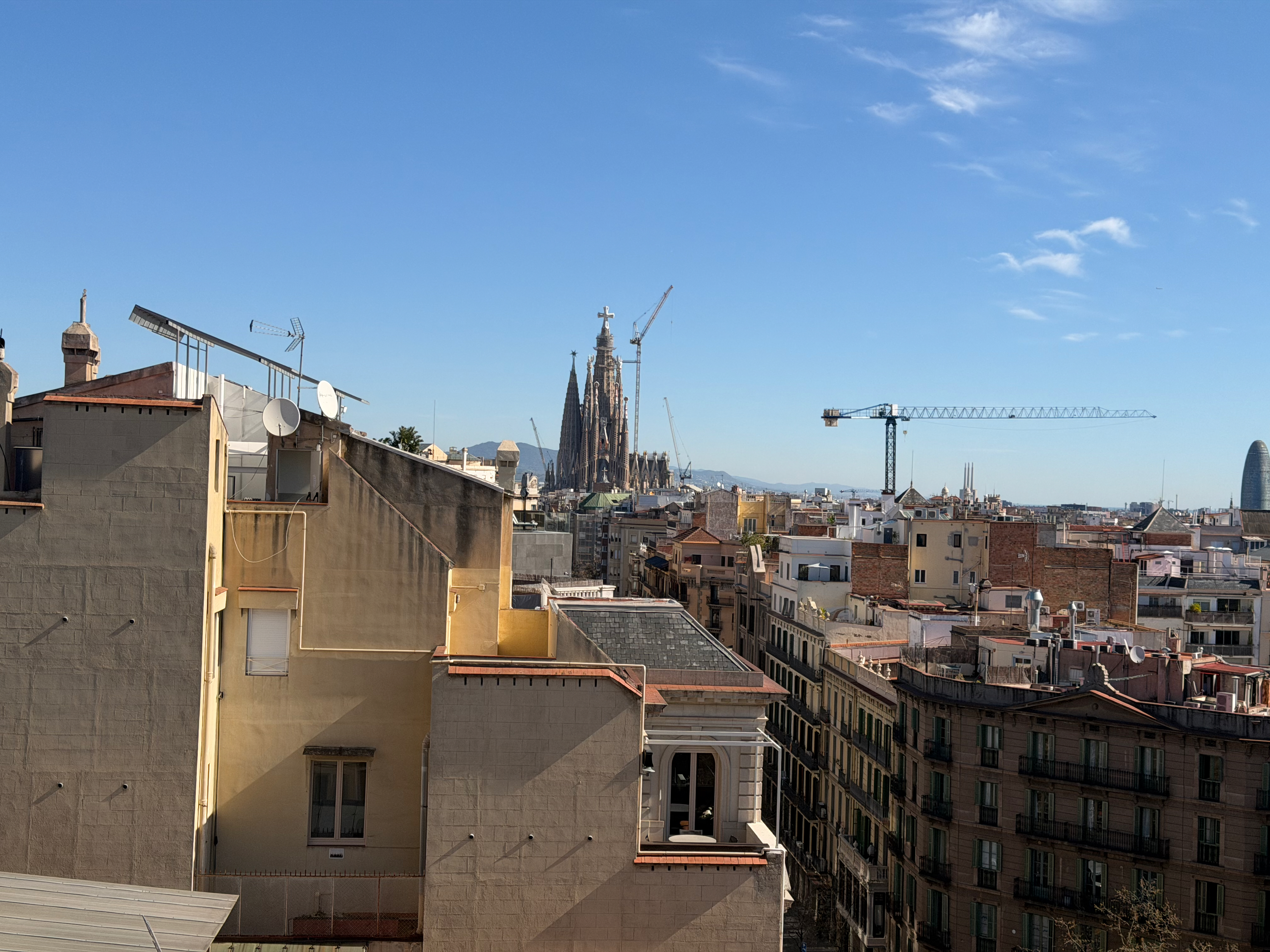
Completed in 1912, the building is known for its flowing stone façade that looks like ocean waves. Gaudí avoided straight lines, giving the structure an organic, almost natural appearance. Its twisting iron balconies and curved walls make it feel more like sculpture than architecture. The rooftop is especially memorable, where Gaudí turned chimneys and ventilation towers into dramatic stone figures that resemble silent warriors overlooking the city.
La Pedrera is a perfect example of Gaudí’s creativity and his belief that architecture should be inspired by nature.
—————————-
Sant Pau Art Nouveau Site
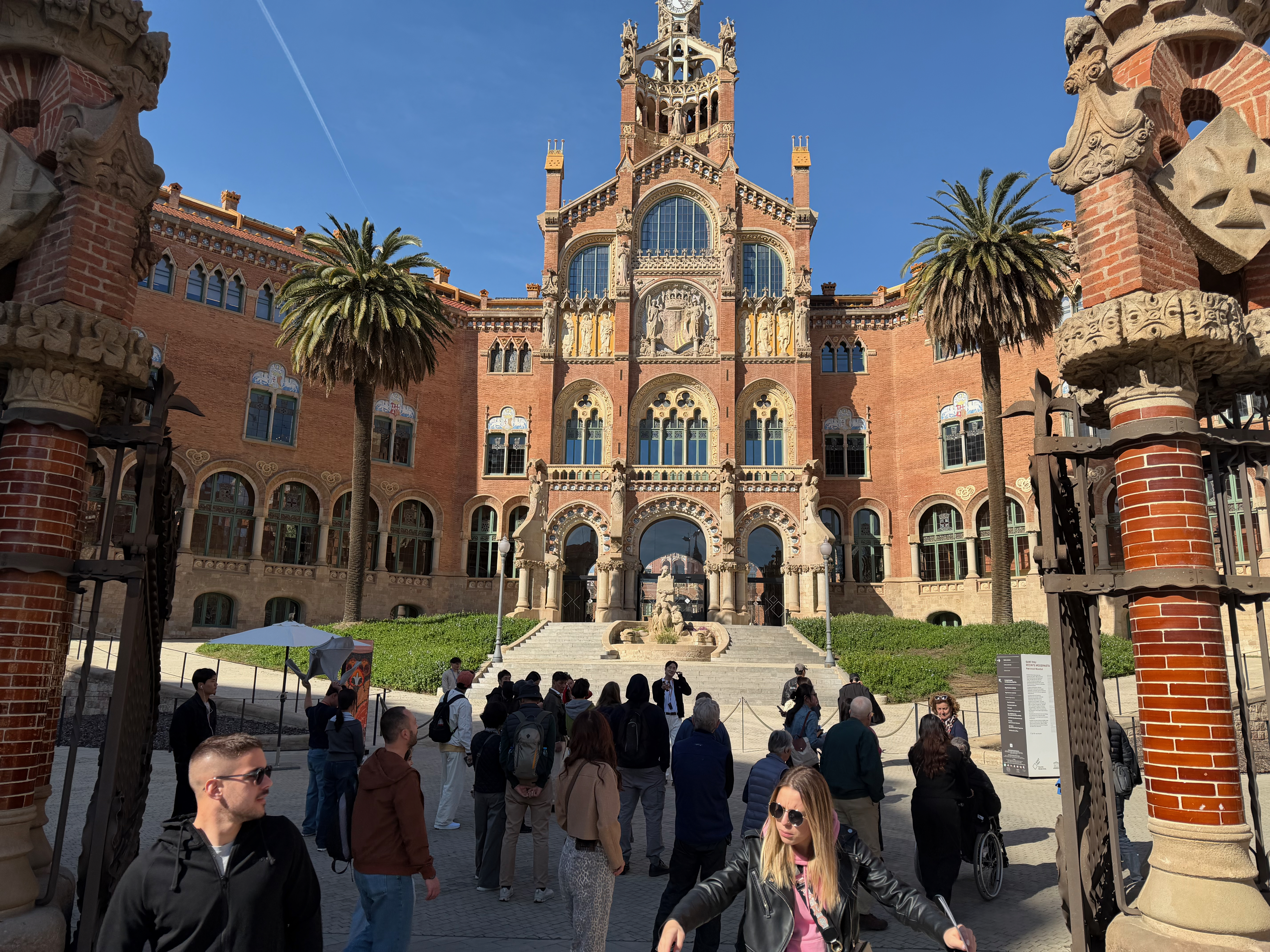
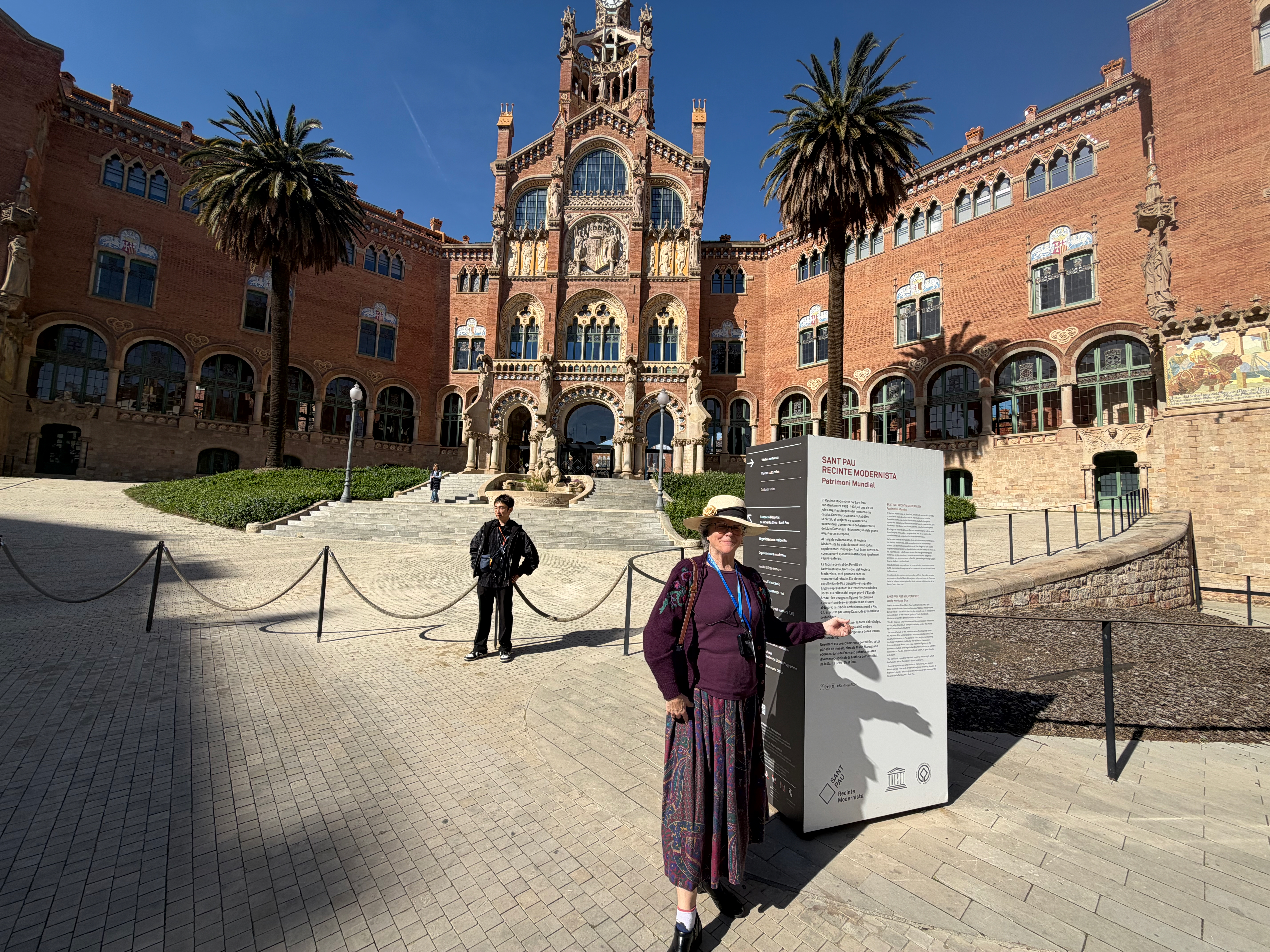
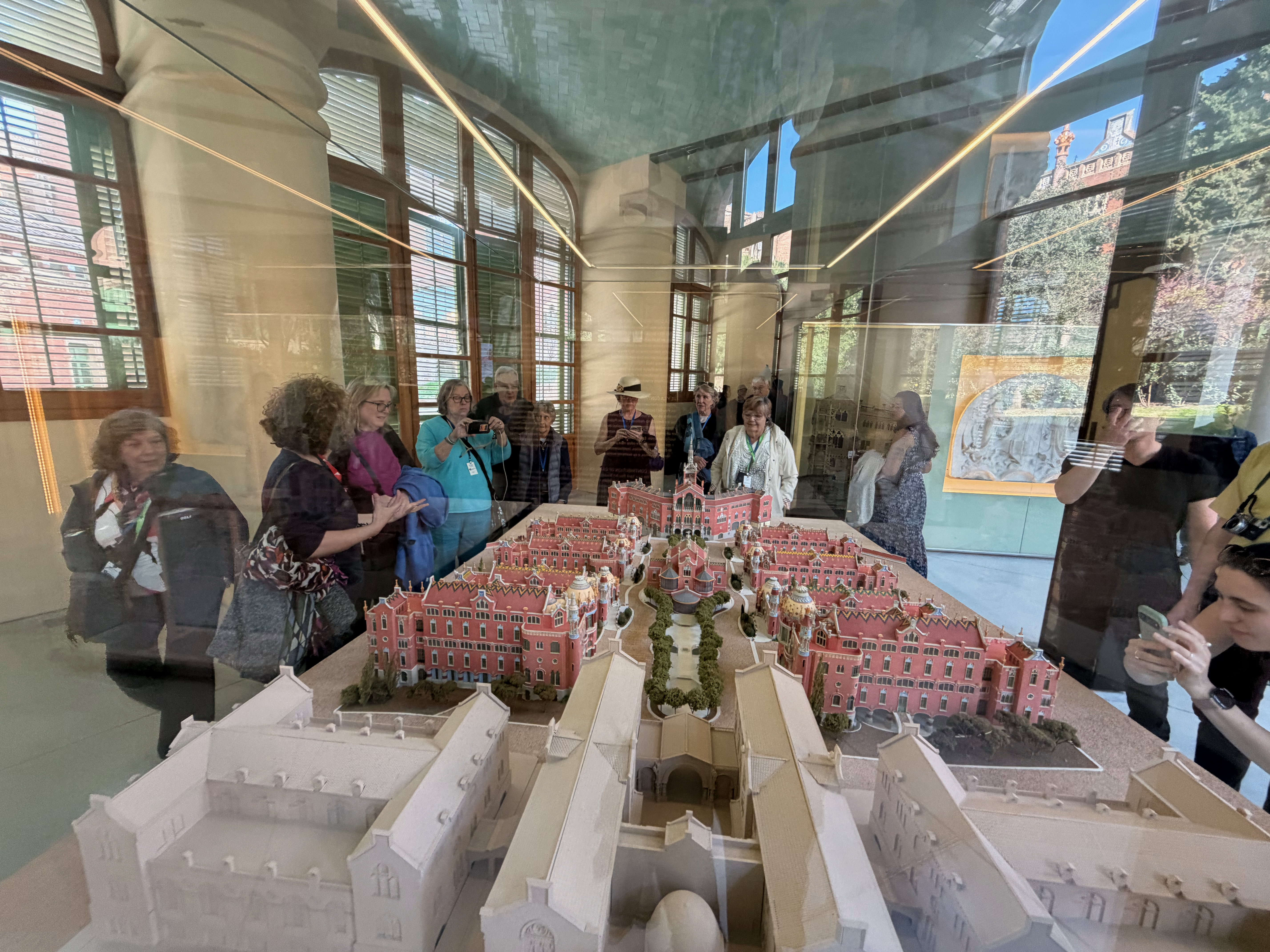
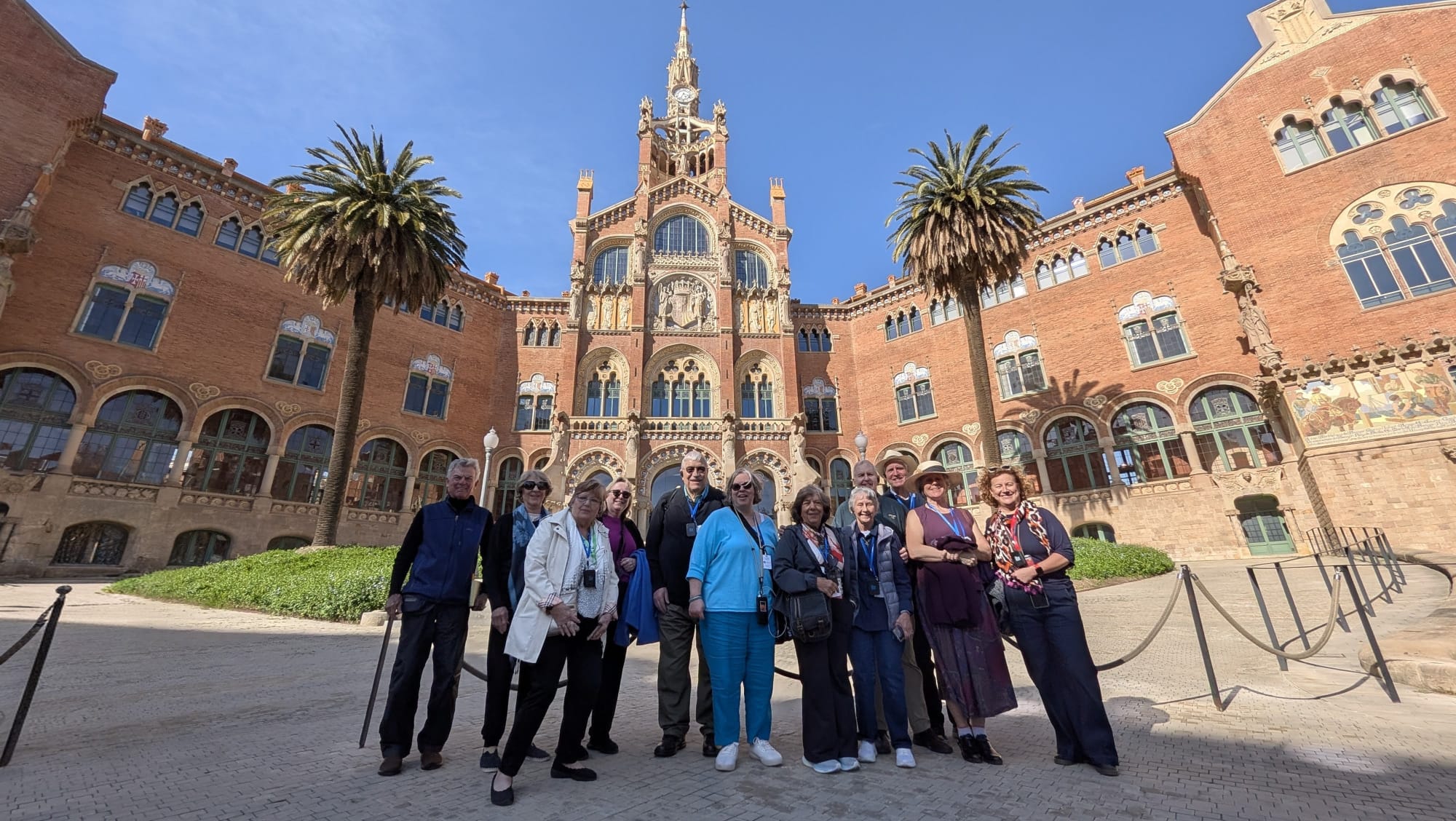
Our afternoon began at Sant Pau Recinte Modernista, a spectacular architectural complex that many visitors don’t even realize exists in Barcelona.
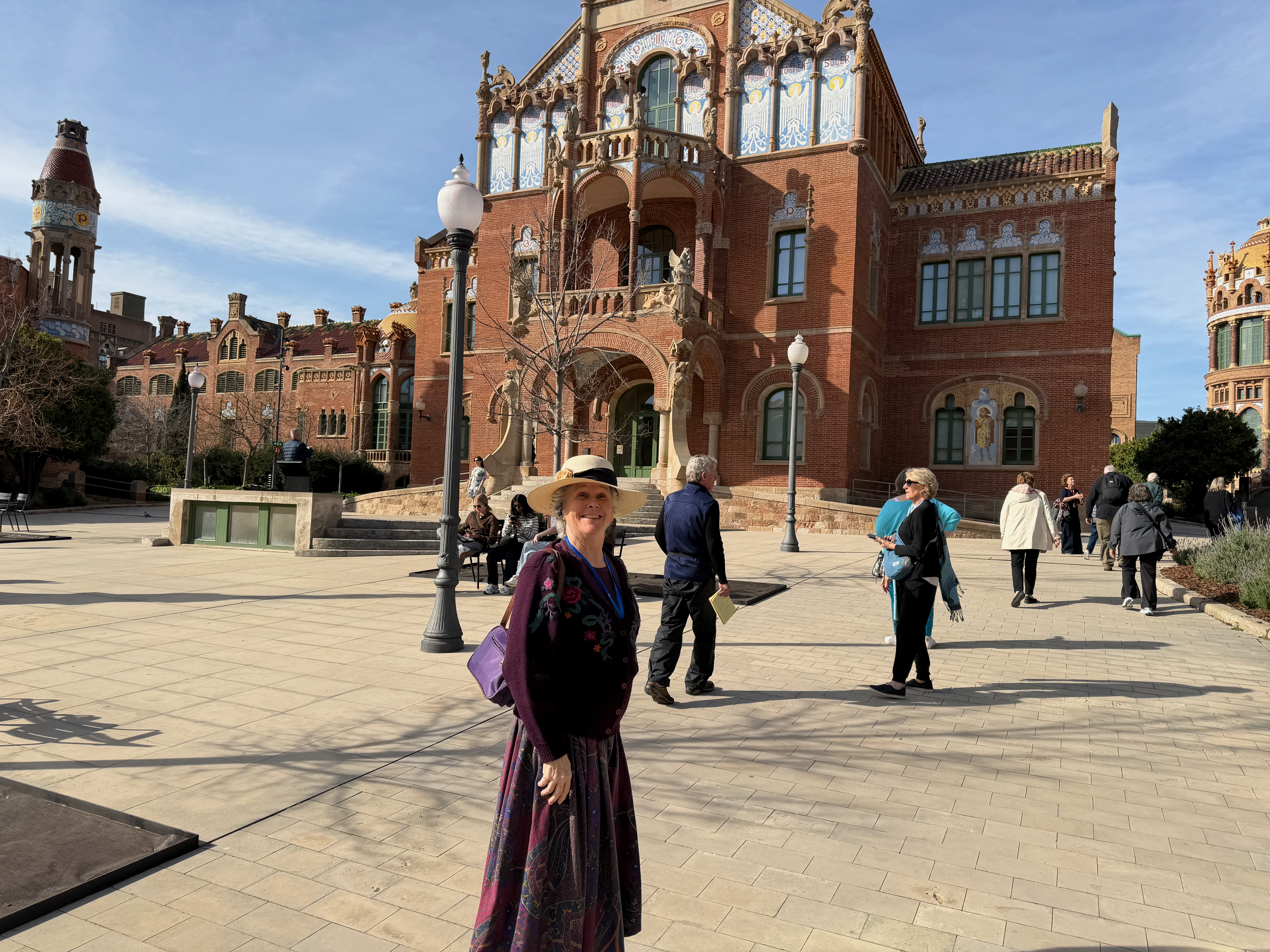
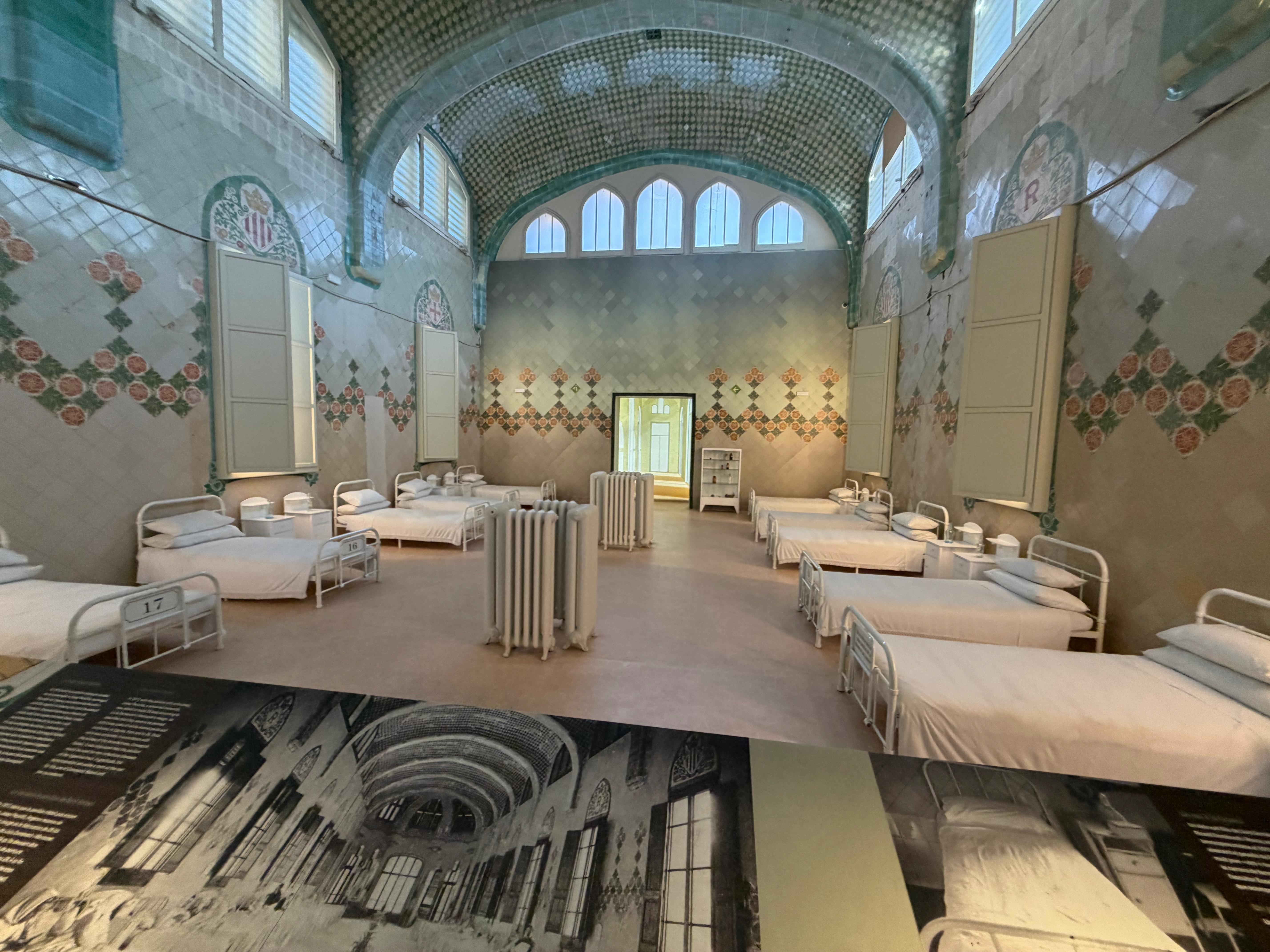
Originally built as the Hospital de la Santa Creu i Sant Pau, the campus operated as a hospital for more than a century. It was designed by architect Lluís Domènech i Montaner, another master of Catalan Modernisme.
The complex looks nothing like a traditional hospital. Instead, it feels like an artistic village. The campus is filled with colorful ceramic tiles, intricate mosaics, decorative towers and domes, sculptures, and symbolic elements. Gardens and open courtyards surround each building, and the pavilions are connected by underground tunnels so doctors could move patients between buildings.
Despite the variety of structures and decoration, the entire campus feels harmonious and balanced. It’s a remarkable example of how architecture can combine beauty, function, and symbolism. After operating for over a century, hospital activities moved to a new facility in 2009. The historic buildings were carefully restored and reopened as the Sant Pau Art Nouveau Site, now a UNESCO World Heritage site.
It is so large and inventive that some say it’s the only building complex in Barcelona that rivals the Sagrada Família.
—————————
La Sagrada Família – Gaudí’s Masterpiece
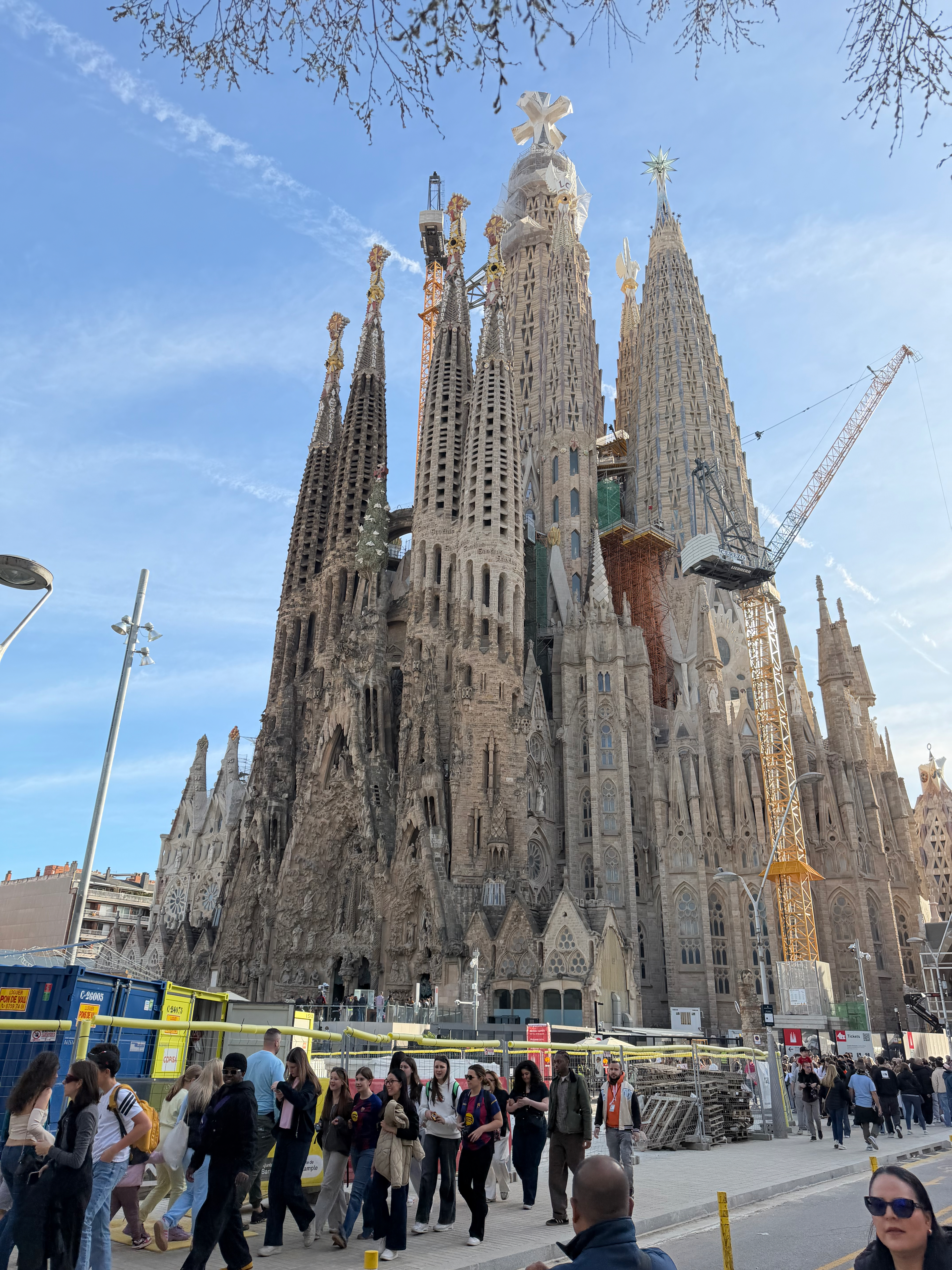
From Sant Pau we continued to the most iconic structure in Barcelona — La Sagrada Família.
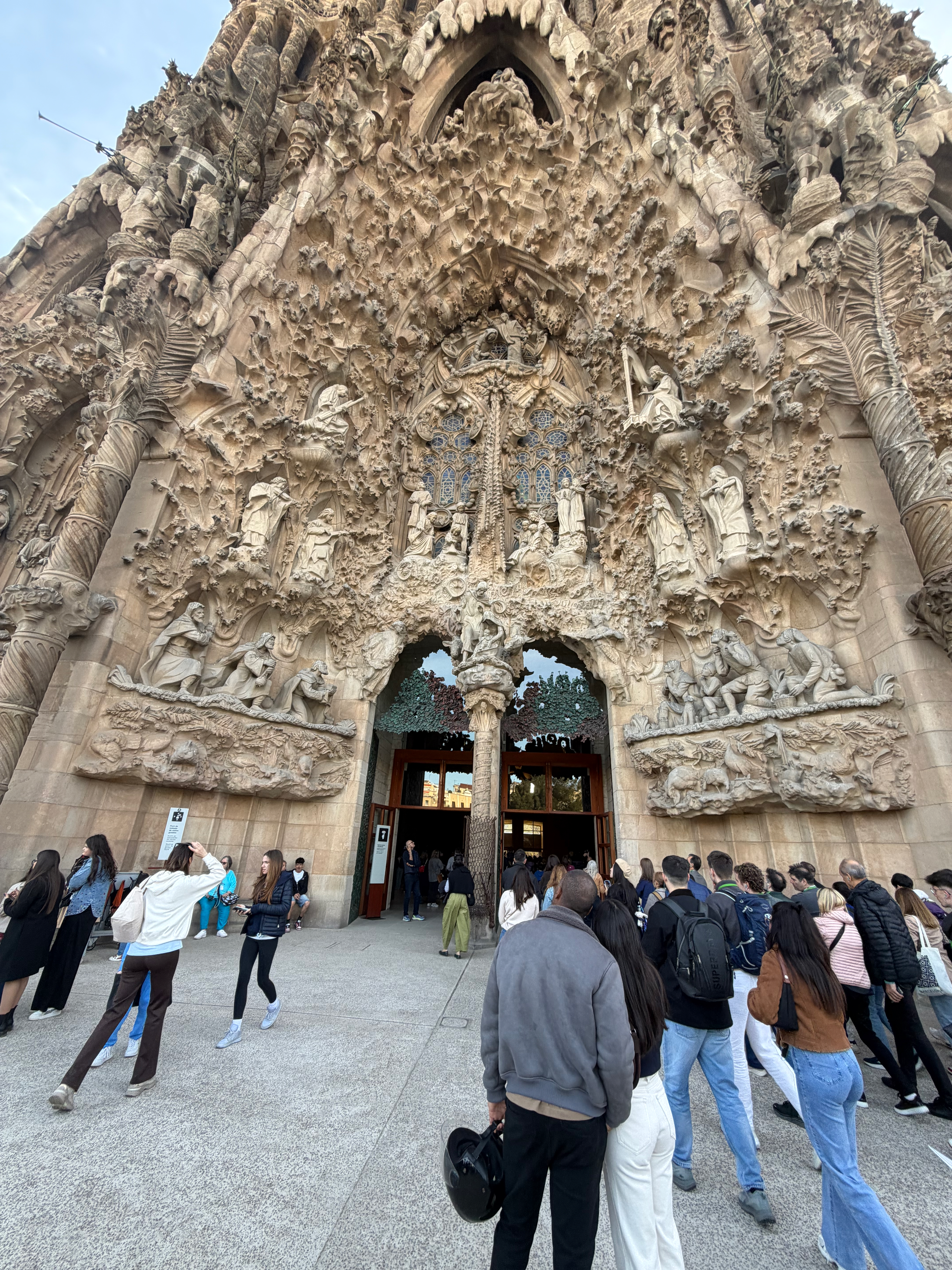
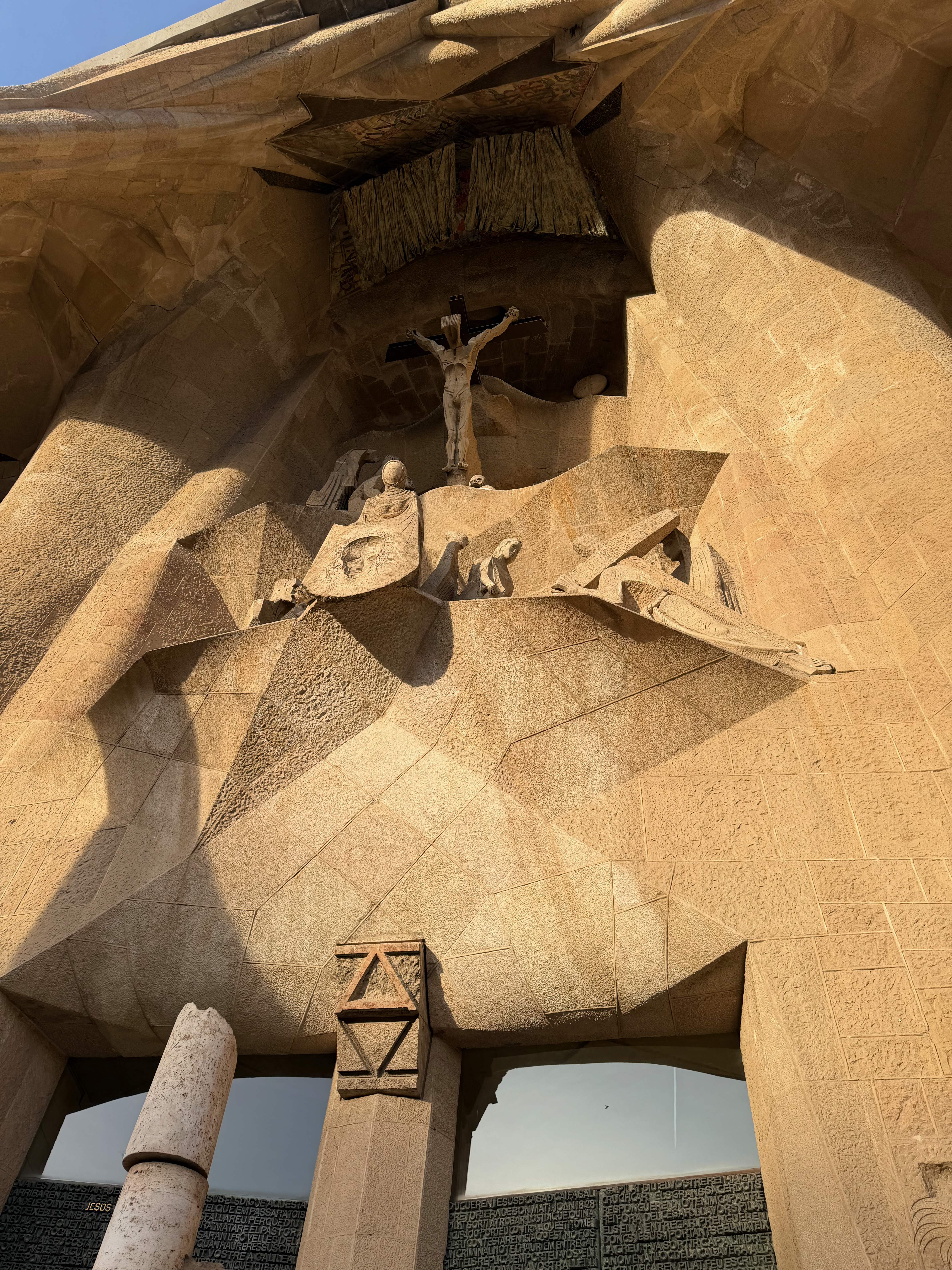
Even after seeing countless photos and visiting 3 times before it was still overwhelming. The towers seem to rise endlessly, covered in sculptures and intricate details.
Gaudí began work on the basilica in 1882 and spent the final decades of his life almost entirely devoted to it. When finished, the church will have 18 towers, representing the 12 Apostles, the 4 Evangelists, the Virgin Mary, and the tallest tower representing Jesus Christ.
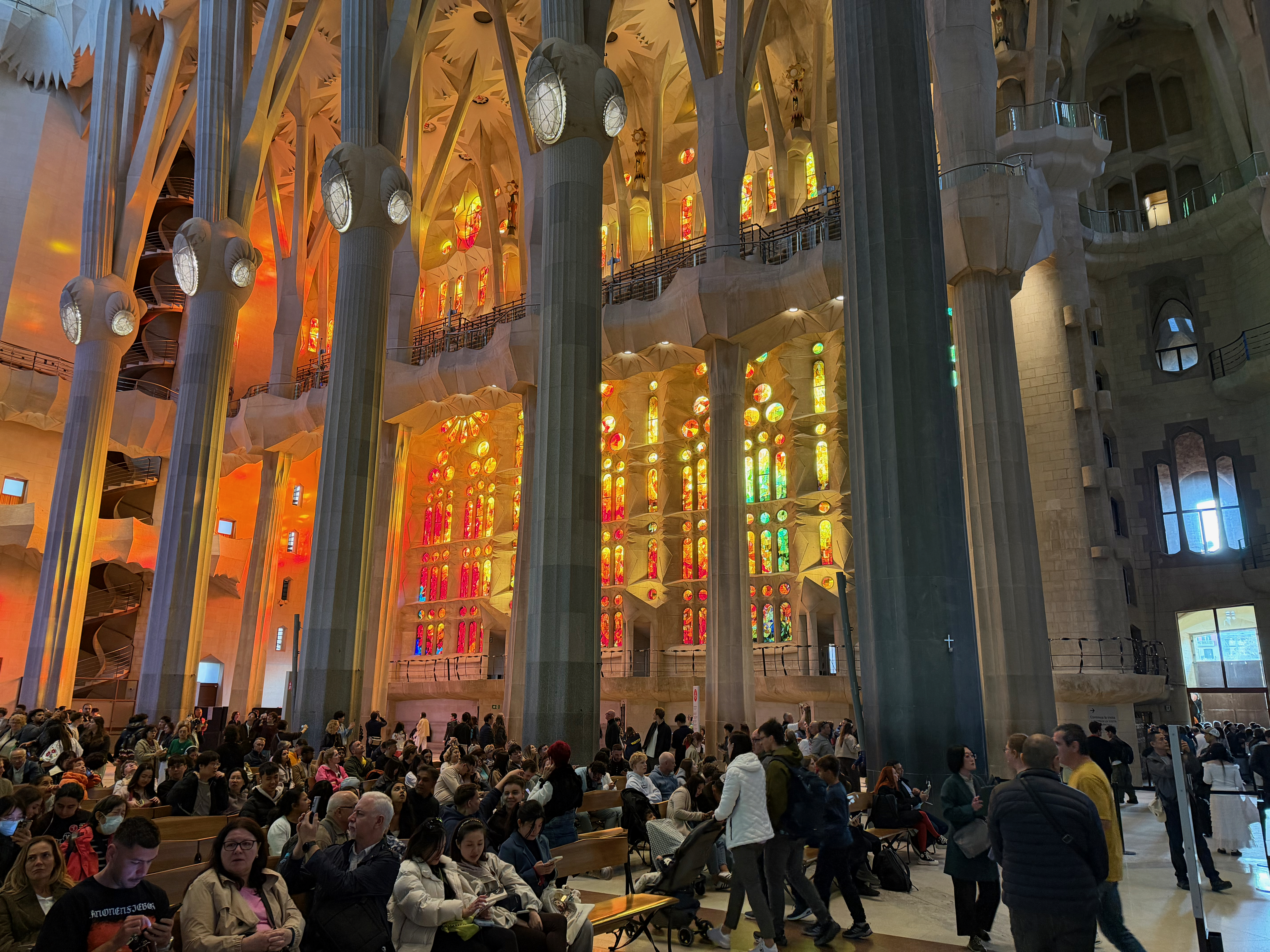
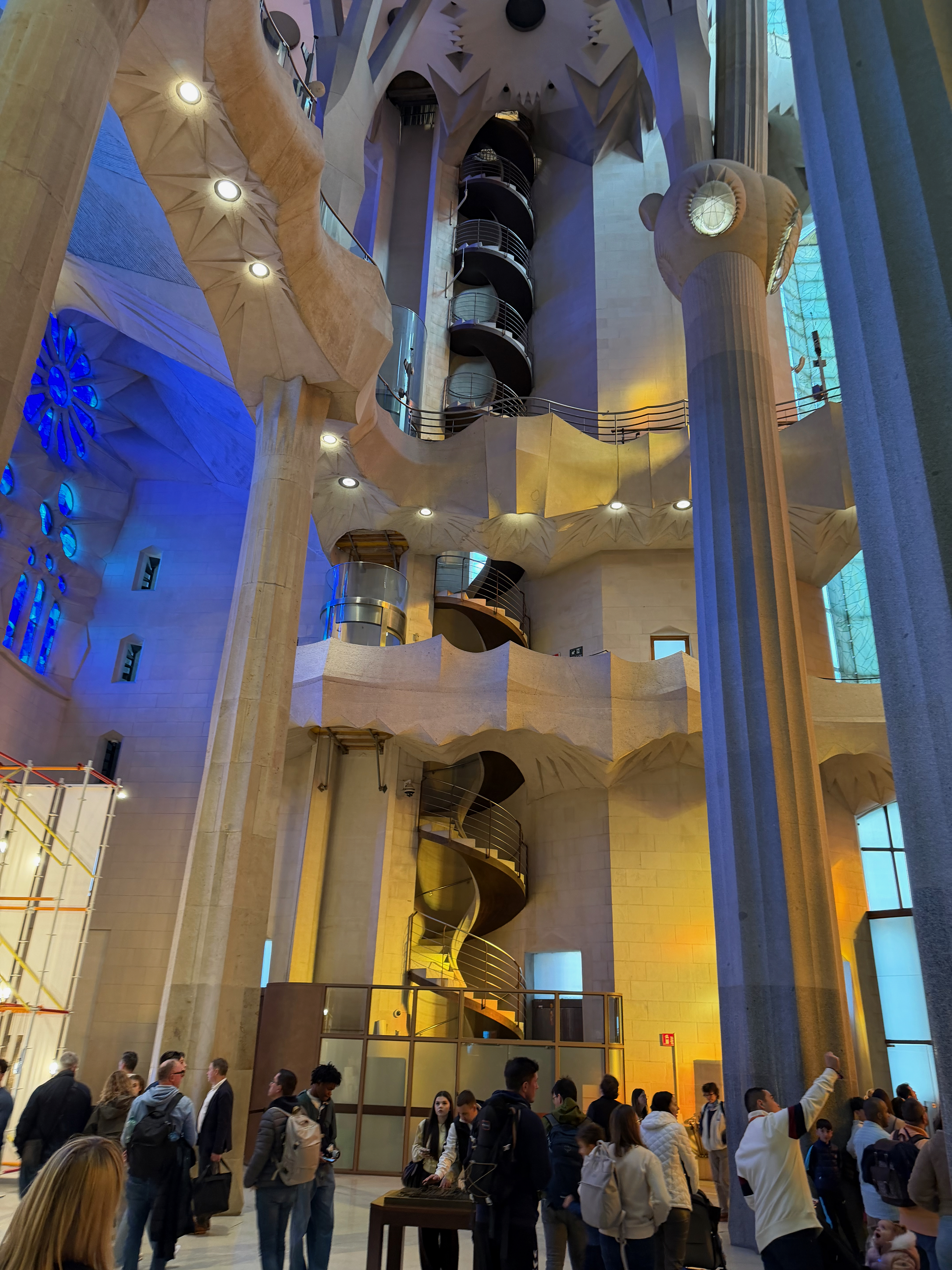
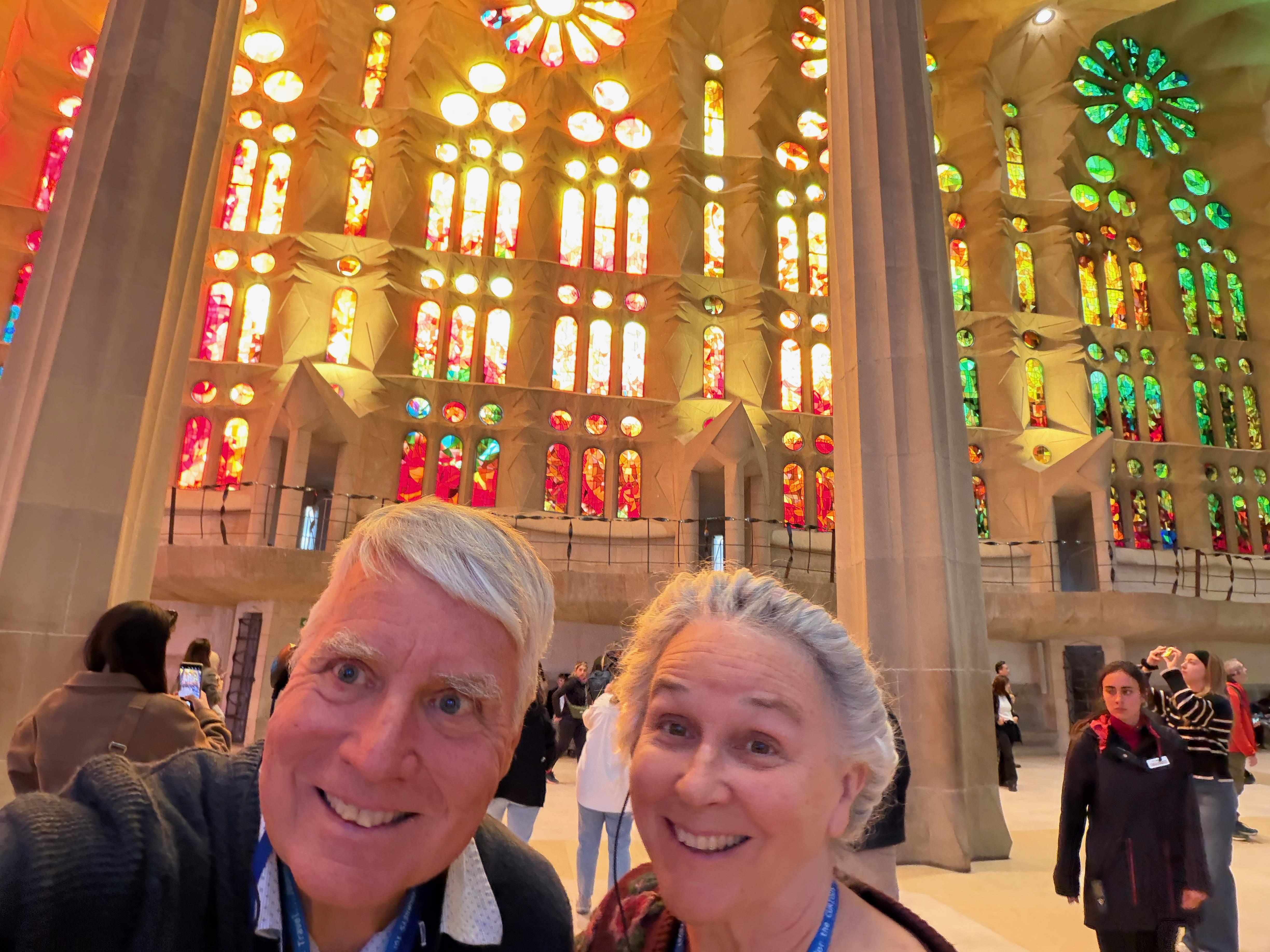
What makes the building truly extraordinary is the interior. Instead of traditional columns, Gaudí designed pillars that branch upward like trees, creating the feeling of standing inside a forest. The ceiling resembles a canopy of leaves, while sunlight pours through stained glass windows, filling the space with shifting colors.
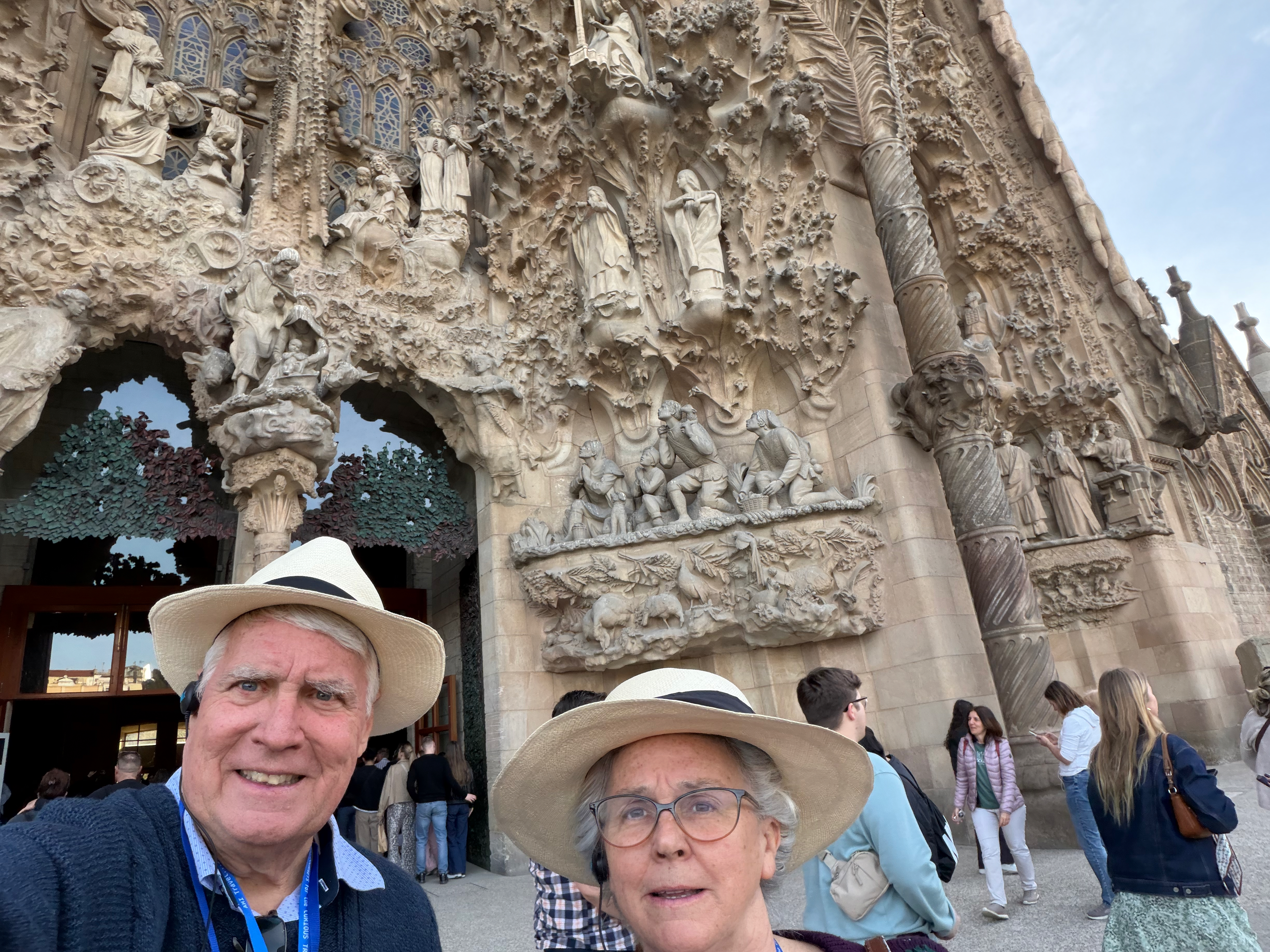
It feels less like a building and more like a living environment. During Gaudí’s lifetime, only the crypt and the Nativity façade were completed. After his death, construction continued using his surviving drawings and models, funded entirely by private donations.
Remarkably, 2026 is projected to be the completion year — 144 years after construction began. Standing inside during what is considered the final stage of construction felt like witnessing history. It became clearer though that completion is not really completion. Only one of 12 bell towers is up, they need to build the main entrance stairs, which would require demolishing a whole block next to the Bascilica. Many outside features need to be finished. The main church inside still needs to be finish, they will be working on this for years to come.
Evening Reflections
After a long and inspiring day, we returned to the hotel for a relaxing group dinner. The dinner featured traditional Barcelona food. A lot different than you can find in the US.
Pictures
Today made something very clear to me. Barcelona doesn’t just feel alive because of its people, food, or energy.
It feels alive because its buildings seem alive too — full of color, imagination, faith, and symbolism. It is interesting that this type of architecture is limited to this area and has not spread to other parts of the world, at least not that I have seen. The question is why not ? Is it engineer challenges, cost of the project, cost of maintaining, or just the builder’s or owner’s preference of style ?
Gaudí once said:
“The straight line belongs to man, the curved line belongs to God.”
Walking through Barcelona today, you can see exactly what he meant.

 papa carney
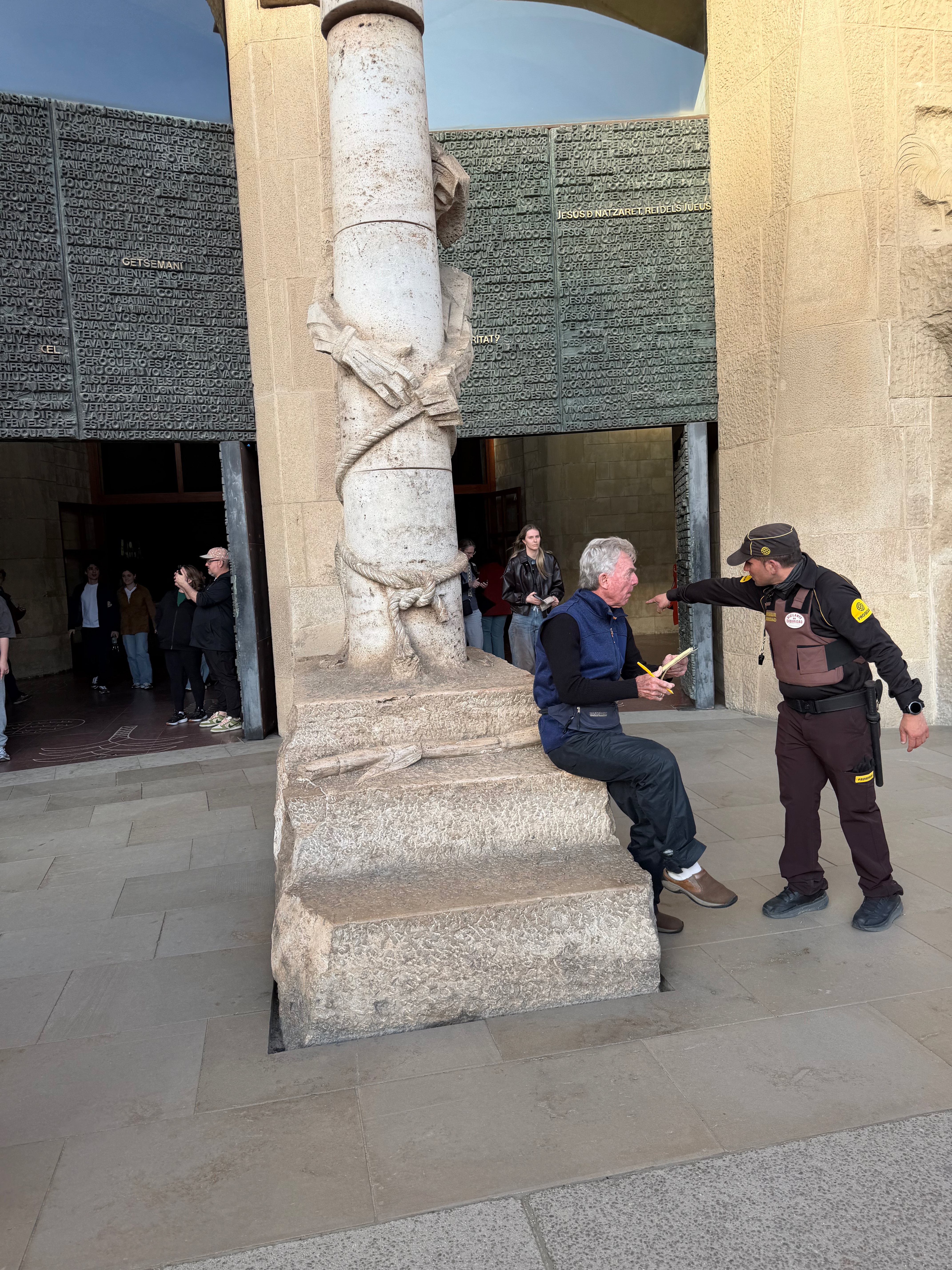
Mike, Nice description of La Sagrada Família. It allowed me to relive it again when I was last there. I could spend a whole day looking at the exterior of the cathedral. Even the Passion motif includes many biblical stories, such as Christ falling with the cross, Veronica’s veil, and of course, his death on the cross. Just beautiful.
Thanks for the blog, Ron